IMPACT REPORT
A decade of impact: The reach, influence, and evolution of the Journal of Community Safety and Well-Being
SG Publishing Inc.∗
A DECADE OF THEMATIC AND SCHOLARLY DEVELOPMENT
Over the past decade, the Journal of Community Safety and Well-Being has grown alongside the field of community safety and well-being (CSWB), emerging as a respected and influential forum for advancing knowledge, informing practice, and supporting system-level approaches to CSWB.
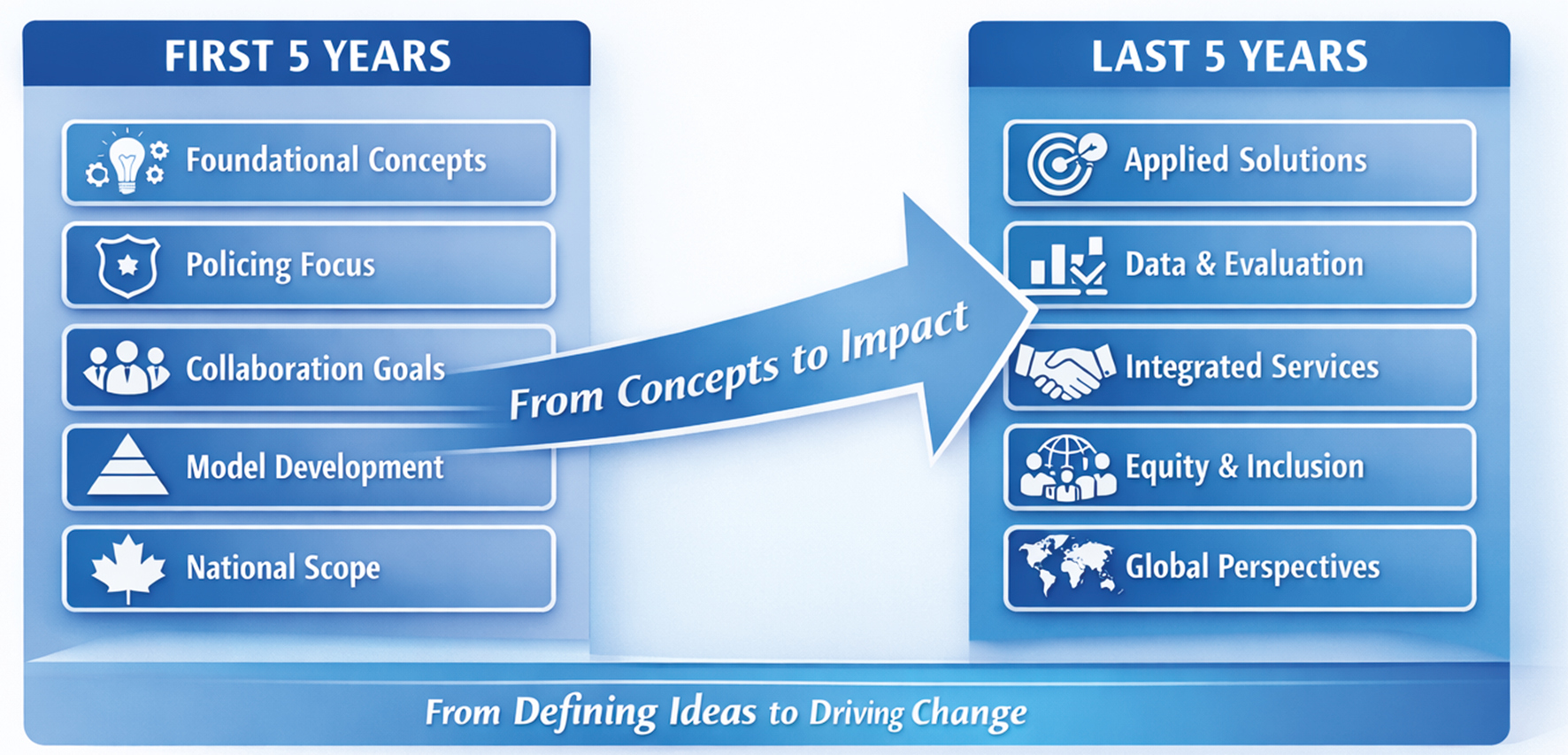
Throughout this period, the Journal has both reflected and contributed to the evolution of the field of CSWB. Its thematic focus has progressed from introducing foundational concepts and models to showcasing real-world application, measurable outcomes, and scalable approaches. Early discussions, often grounded in policing and sector-specific perspectives, have expanded into a more integrated systems approach—one that emphasizes multi-sector collaboration, upstream prevention, and shared responsibility for outcomes. At the same time, the discourse has evolved from highlighting innovation to placing greater emphasis on accountability, with increasing attention to measurement, evidence-based decision-making, and continuous improvement. This progression has been accompanied by a notable expansion in reach, as the Journal has developed from a primarily Canadian initiative into a globally recognized platform contributing to international dialogue on CSWB (see Figure 1).
|
|
|
|
FIGURE 1 Evolution of themes in the Journal of Community Safety and Well-Being, illustrating the shift from foundational concepts and practitioner-led innovation to integrated systems approaches, evidence-based decision-making, and global engagement.
|
The Journal’s content has evolved in parallel, growing in both depth and relevance. Early contributions established foundational understanding, introduced collaborative approaches, and called for system change. More recent work increasingly moves from concept to implementation when evaluating outcomes and exploring coordinated responses for individuals and families with complex needs. These contributions also engage with intersecting challenges such as mental health, human services, and systems integration, reflecting a domain that continues to mature. Together, they point to a clear progression, from innovation toward accountability, and from emerging ideas toward measurable, system-level impact.
TRENDS IN KEYWORDS PUBLISHED
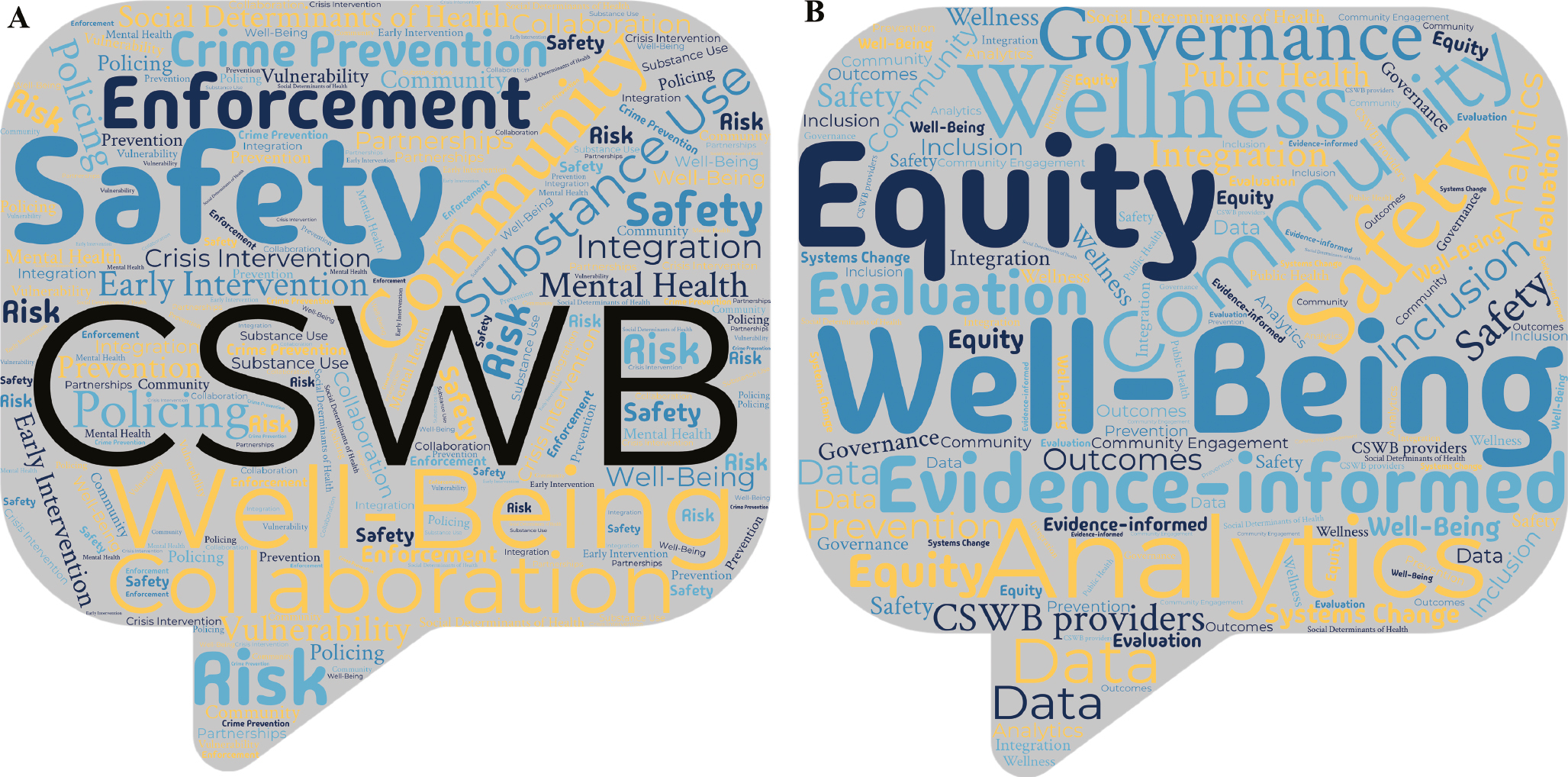
Across its first decade, the Journal’s keyword profile reflects a clear and meaningful evolution in the field of CSWB. In the first 5 years (2016–2020), dominant terms such as policing, law enforcement, risk, vulnerability, and early intervention point to a strong justice-sector foundation, with an emphasis on identifying and responding to individuals experiencing acutely elevated risk. These were complemented by consistent attention to mental health, substance use, and collaboration, signalling early movement toward multi-sector engagement (Figure 2A). In contrast, keywords from the most recent 5 years (2021–2025) demonstrate a shift toward a more mature, systems-oriented, and evidence-driven discourse (Figure 2B). Terms such as outcomes, evaluation, data, analytics, and accountability reflect an increasing focus on measurement and impact, while the growing prominence of equity, inclusion, social determinants of health, and public health highlights a broader and more holistic understanding of community well-being. At the same time, concepts such as integration, governance, and systems change underscore the field’s progression from collaboration toward sustained, coordinated system transformation. Together, these shifts illustrate the Journal’s role in advancing CSWB from an emerging, evidence-based framework to a more established, globally relevant, and evidence-based field.
|
|
|
|
FIGURE 2 Word clouds illustrating the relative frequency of keywords in articles published in the Journal of Community Safety and Well-Being during 2016–2020 (A) and 2021–2025 (B).
|
EVOLUTION OF AUTHORSHIP
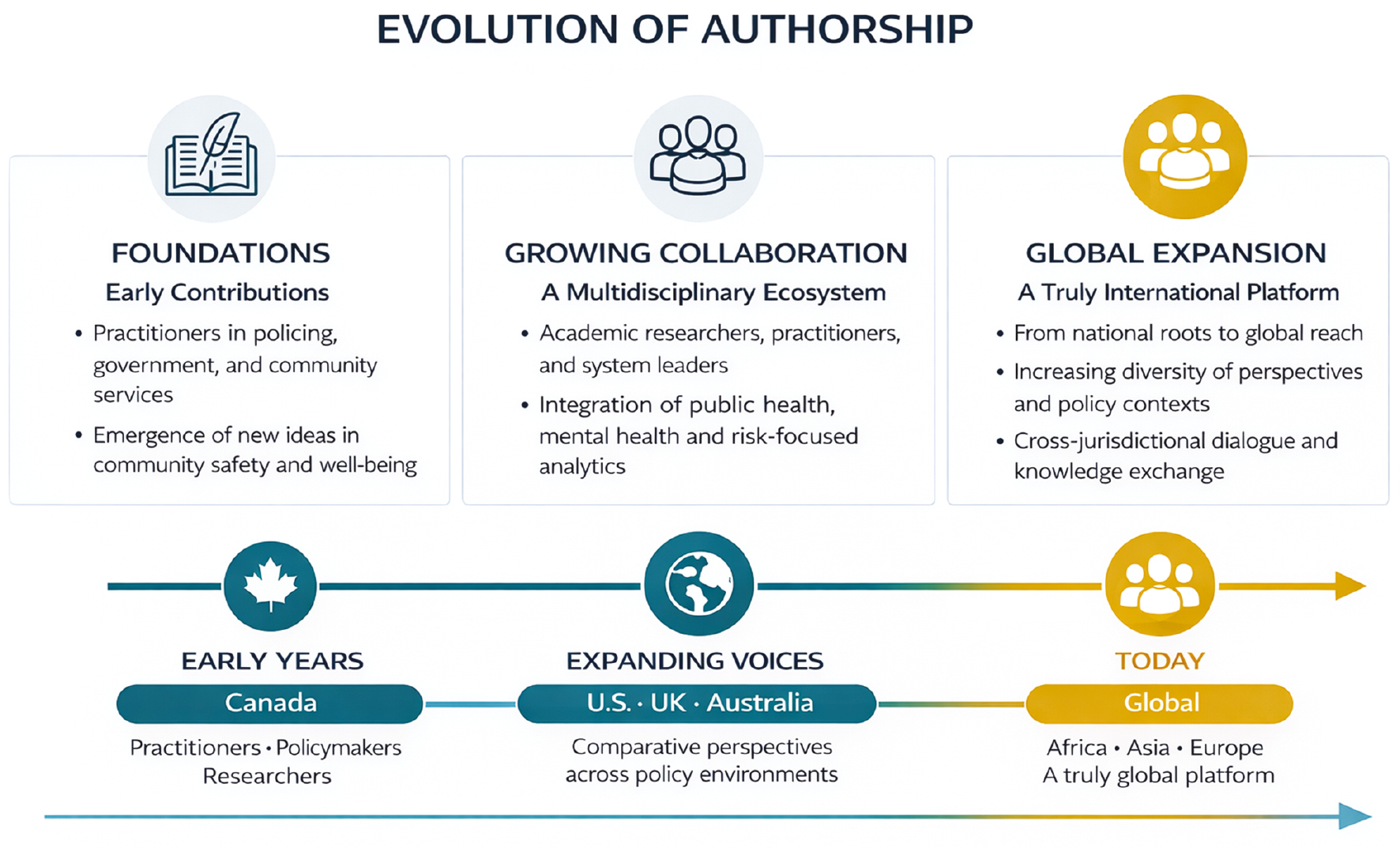
The Journal’s evolution is reflected in its authorship. Early contributions, primarily from practitioners in policing, government, and community services, established the foundation of the field and introduced new ways of thinking about CSWB. Over time, this base has expanded into a collaborative knowledge ecosystem, bringing together academic researchers, practitioners, and system leaders in multidisciplinary partnerships. The growing integration of expertise across public health, mental health, and risk-focused analytics has strengthened the Journal’s ability to bridge research and practice, supporting the application of evidence-based approaches in real-world settings (see Figure 3).
|
|
|
|
FIGURE 3 Evolution of authorship in the Journal of Community Safety and Well-Being.
|
A similar progression is evident in the geographic profile of contributors. Early volumes were largely authored by Canadian practitioners, policymakers, and researchers, reflecting the Journal’s roots within a national movement. As the field continued to evolve, contributions broadened to include authors from the United States, the United Kingdom, and Australia, introducing comparative perspectives across aligned policy contexts. More recently, the Journal has seen increasing participation from authors across Africa, Asia, and Europe, marking its transition to a truly global platform. This shift underscores both the expanding international relevance of CSWB approaches and the Journal’s role in fostering cross-jurisdictional dialogue and knowledge exchange.
GROWTH, REACH, AND IMPACT
The data presented in Tables I and II reflect a period of strong growth for the Journal of Community Safety and Well-Being, highlighting its increasing influence within the field. Submissions more than doubled between year 5 and year 10, rising from 214 to 497, while manuscripts published increased from 158 to 339. This growth signals rising interest from authors and reinforces the Journal’s role as a trusted platform for advancing knowledge and sharing innovation. The increase in social media followers further reflects the development of an engaged and supportive community around the Journal.
TABLE I Growth in submissions, publications, and social media reach at year 5 and year 10, illustrating increased author engagement and expanded dissemination of the Journal’s content
| Metric |
Year 5 |
Year 10 |
| Submissions received |
214 |
497 |
| Manuscripts published |
158 |
339 |
| Social media followers |
488 |
1,895 |
TABLE II Comparison of average monthly website engagement metrics at year 5 and year 10, demonstrating increased visibility, readership, and access to journal content over time
| Metric |
Year 5 |
Year 10 |
| Article views |
2,541 |
10,935 |
| Page views |
4,858 |
14,000 |
| Website visitors |
2,312 |
6,716 |
Social media has become an important extension of the Journal’s platform, creating space for dialogue, knowledge sharing, and connection among researchers, practitioners, and policymakers. Through these channels, articles reach broader and more diverse audiences, increasing opportunities for engagement and impact, while fostering a sense of community where ideas are shared, collaborations emerge, and collective learning is encouraged.
This momentum is also evident in the Journal’s online engagement. Average monthly article views were 2,541 at year 5 and 10,935 at year 10, alongside strong gains in page views and website visitors, reflecting not only increased visibility but sustained interaction with the Journal’s content.
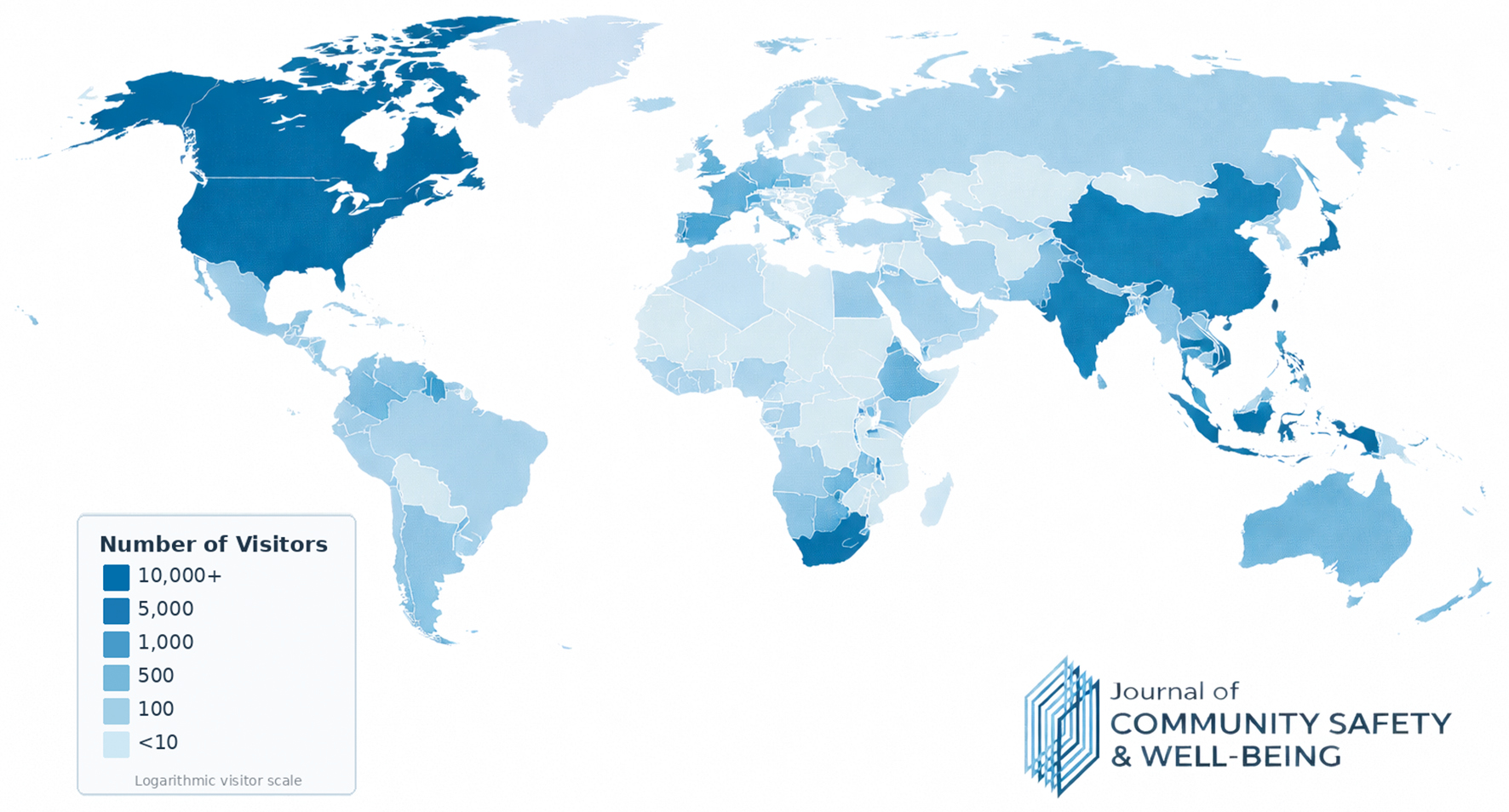
The Journal has also achieved a truly global reach, with readership spanning more than 150 countries (Figure 4). While the largest audiences are in Canada (27.06%) and the United States (26.09%), strong engagement is also evident in the United Kingdom, South Africa, the Philippines, and China. Beyond these regions, content is accessed widely across Europe, Asia, Africa, Oceania, and Latin America, reflecting a diverse and expanding international audience (see Figure 4). This broad distribution underscores both the global relevance of CSWB and the Journal’s growing role as a platform for international knowledge exchange.
|
|
|
|
FIGURE 4 Map demonstrating the geographic distribution of Journal visitors and the extent of international engagement.
|
Together, these trends reflect a publication that is not only growing but also gaining influence, expanding its reach, and strengthening its impact across the field.
PARTNERSHIPS THAT STRENGTHEN REACH, LEARNING, AND IMPACT
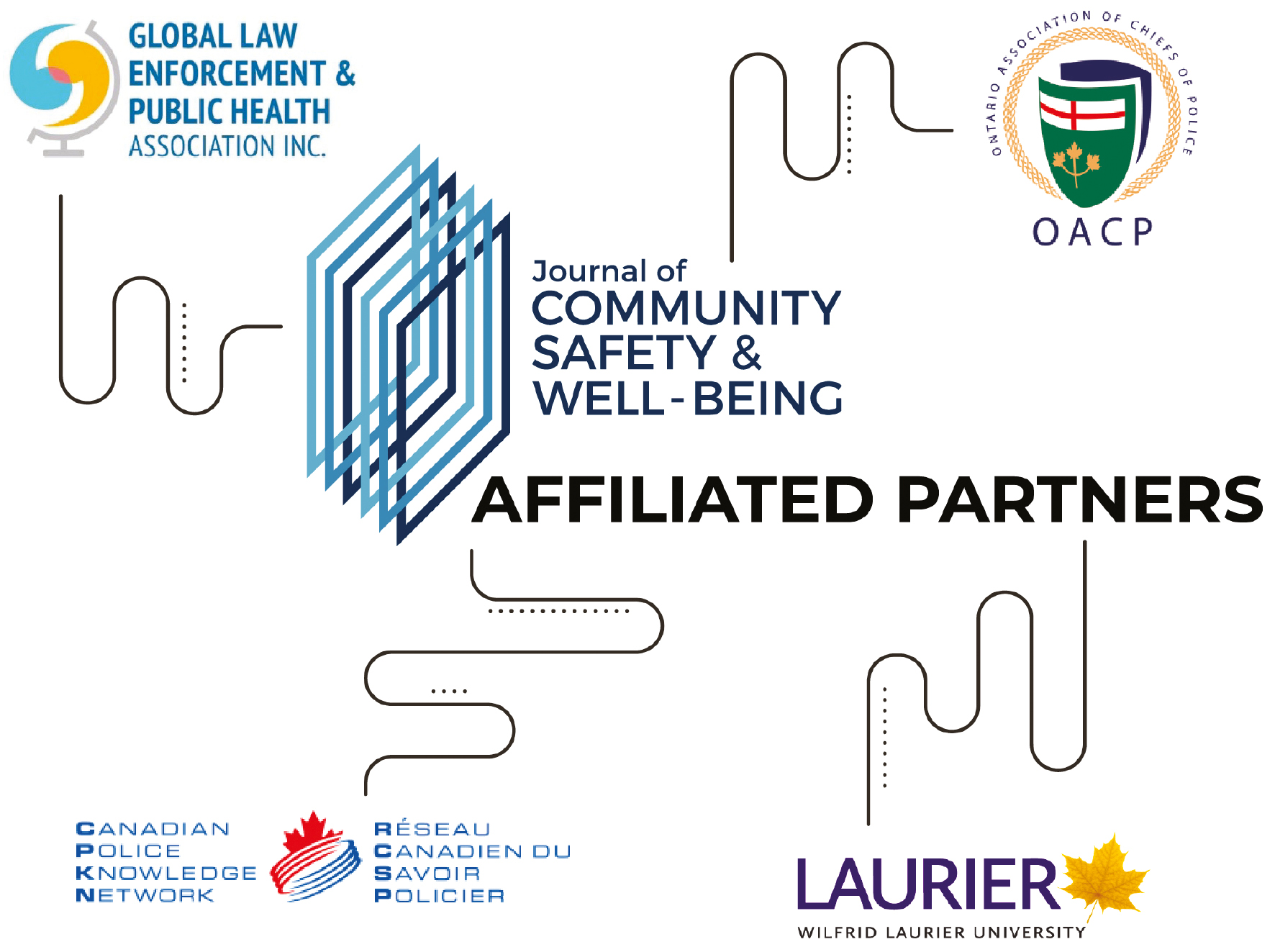
The Journal’s affiliated partners play a vital and complementary role in advancing its reach, credibility, and educational impact (see Figure 5).
|
|
|
|
FIGURE 5 The Affiliated Partners of the Journal of Community Safety and Well-Being.
|
The Global Law Enforcement and Public Health Association (GLEPHA) brings a global and interdisciplinary perspective, connecting the Journal to an international community focused on the intersection of public health and policing. As the official publication of the Law Enforcement and Public Health Conference (LEPH), the Journal provides a platform for sharing conference proceedings, extending the reach and impact of this global dialogue. This partnership strengthens the Journal’s international presence and supports integrated, cross-sector approaches to CSWB.
The Ontario Association of Chiefs of Police (OACP) strengthens the Journal’s connection to policing leadership, creating pathways for research to inform frontline practice and policy, while encouraging practitioner engagement across Canada.
The Canadian Police Knowledge Network (CPKN) expands the Journal’s educational reach by connecting its content to a broad national audience of justice and community safety professionals.
Wilfrid Laurier University provides academic affiliation, supporting the Journal’s connection to the research community and contributing to its scholarly credibility.
Collectively, these partnerships expand the Journal’s reach, strengthen its recognition, and deepen its educational value, ensuring that it is not only a platform for publication but also a catalyst for learning, collaboration, and impact across the field.
ADVANCING VISIBILITY THROUGH INDEXING
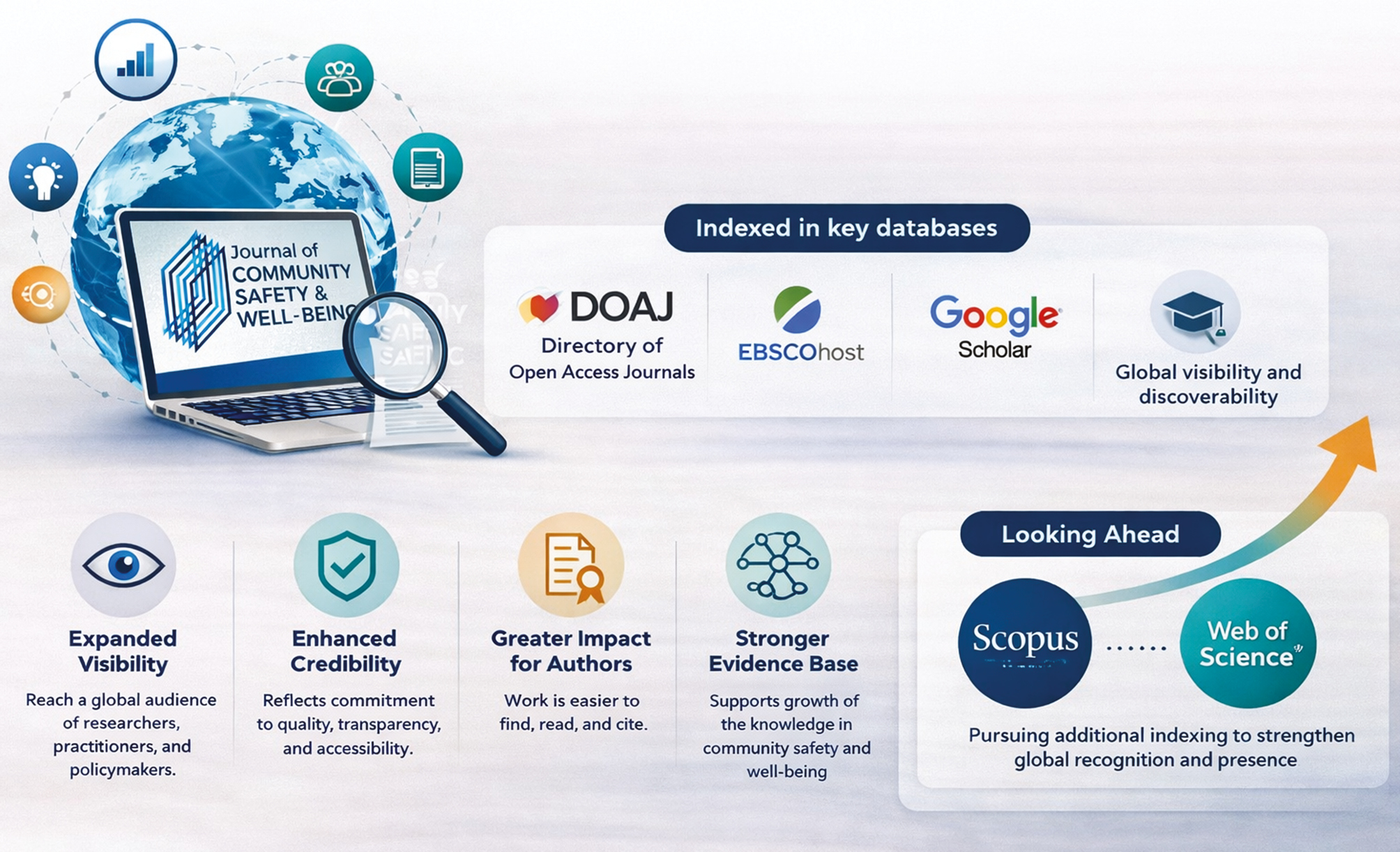
Indexing marks an important milestone in the Journal’s evolution, signalling its transition from an emerging platform to a recognized and accessible source of scholarly and evidence-based knowledge. Over the past decade, the Journal of Community Safety and Well-Being has achieved inclusion in key indexing services and databases, including the Directory of Open Access Journals, EBSCOhost, and Google Scholar. Through these platforms, the Journal’s content is now discoverable by a global audience of researchers, practitioners, and policymakers.
The value of indexing extends beyond visibility. Inclusion in respected databases reinforces the Journal’s credibility and reflects its commitment to editorial quality, transparency, and accessibility. For authors, indexing ensures their work is more easily found, read, and cited, strengthening both individual impact and the broader evidence base within the field.
As the Journal continues to build on this progress, indexing remains a key driver of growth, expanding visibility, strengthening credibility, and extending the reach of the work it publishes. Looking ahead, the Journal is well-positioned to pursue inclusion in additional indexing services such as Scopus and Web of Science, further strengthening its global presence and recognition (Figure 6).
|
|
|
|
FIGURE 6 Indexing as a milestone in the evolution of the Journal of Community Safety and Well-Being.
|
LEVERAGING TECHNOLOGY TO SUPPORT GROWTH AND INNOVATION
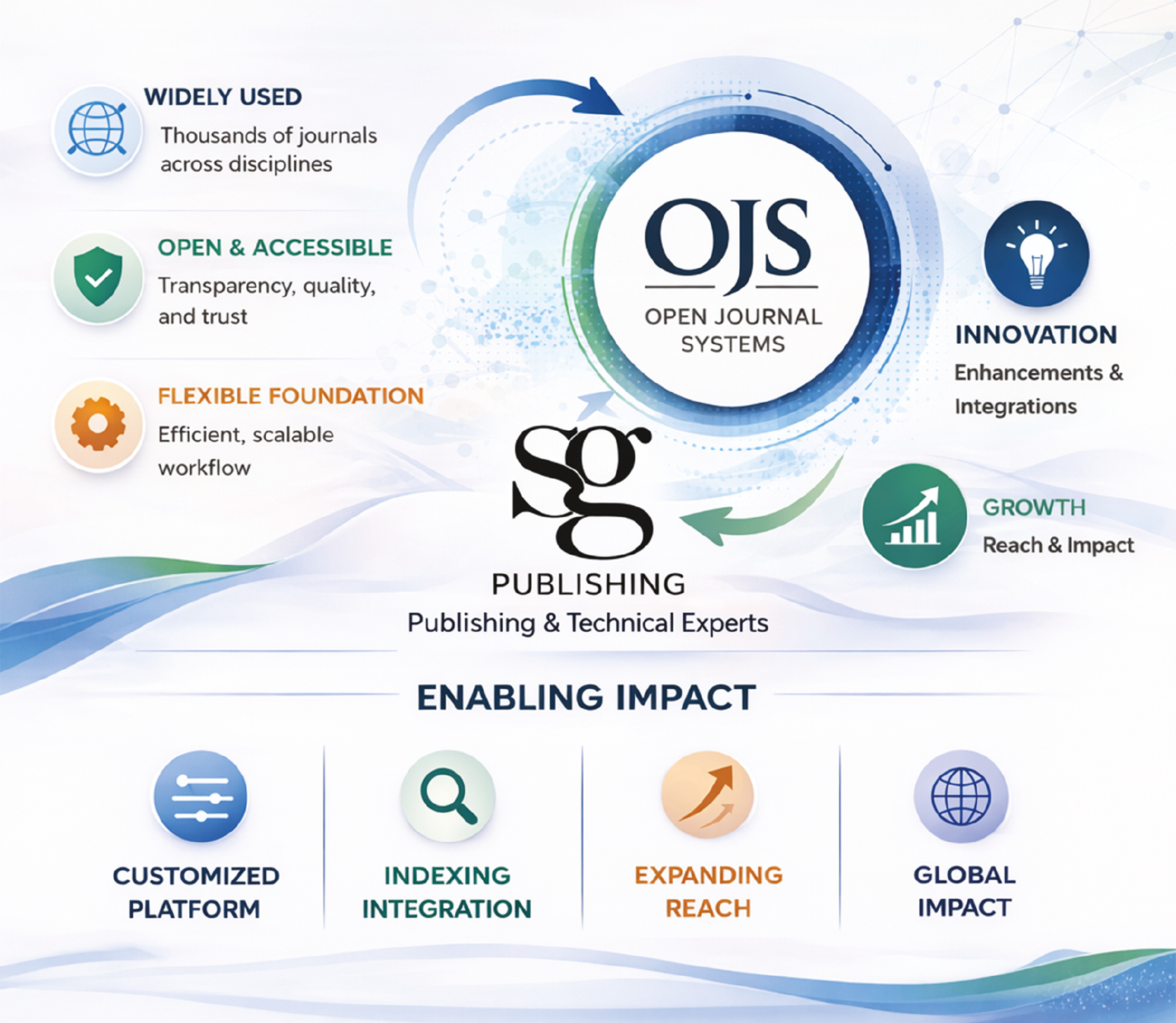
The adoption of Open Journal Systems (OJS) has played a transformative role in the development and success of the Journal of Community Safety and Well-Being. Developed by the Public Knowledge Project, OJS is the world’s most widely used end-to-end scholarly publishing platform for journals, supporting thousands of journals across disciplines. Its widespread adoption reflects a strong commitment to accessibility, transparency, and quality in scholarly communication (Figure 7).
|
|
|
|
FIGURE 7 Role of Open Journal Systems (OJS) in enabling the Journal’s growth and impact.
|
As an open-source, out-of-the-box solution, OJS provided a flexible foundation for establishing an efficient and accessible publishing workflow from the Journal’s earliest stages. As early adopters, SG Publishing has played a key role in this success, bringing technical expertise and publishing experience to customize and enhance the platform in ways that align with the Journal’s needs and priorities. This partnership ensures that the Journal is supported by both a strong platform and a team capable of maximizing its potential.
As the Journal continues to grow, the flexibility of OJS remains an important enabler of innovation, supporting ongoing enhancements, integration with indexing services, and the continued expansion of the Journal’s reach and impact.
CHARTING THE PATH FORWARD
As the Journal of Community Safety and Well-Being enters its second decade, it does so as more than a publication; it stands as a platform that has helped shape and elevate an entire field. Over the past 10 years, the Journal has brought together researchers, practitioners, and system leaders, creating a trusted space where evidence is shared, ideas are tested, and practice is informed.
This progress reflects the power of connection, connecting disciplines, sectors, and communities of expertise in ways that accelerate learning and amplify impact. The Journal has not only captured the evolution of CSWB but has also played an active role in advancing it.
Looking ahead, the opportunity is to build on this foundation by continuing to expand reach, strengthen global engagement, and enhance the accessibility and influence of evidence-based knowledge. The next decade is about deepening the Journal’s role as a convening platform, one that supports innovation, elevates diverse perspectives, and ensures that knowledge moves effectively into practice.
With a strong foundation in place, the path forward is defined by broader reach, greater accessibility, and deeper global impact in advancing CSWB.
CONFLICT OF INTEREST DISCLOSURES
The author has no conflicts of interest to declare.
AUTHOR AFFILIATION
∗SG Publishing Inc., Meaford, ON, Canada.
Correspondence to: SG Publishing Inc., Meaford, ON, Canada. E-mail: JCSWBCommunity@sgpublishing.ca
(Return to Top)
This work is distributed under the Creative Commons BY-NC-ND license. To view a copy of this license, visit http://creativecommons.org/licenses/by-nc-nd/4.0/. For commercial re-use, please contact sales@sgpublishing.ca.
Journal of CSWB, VOLUME 11, NUMBER S1, May 2026