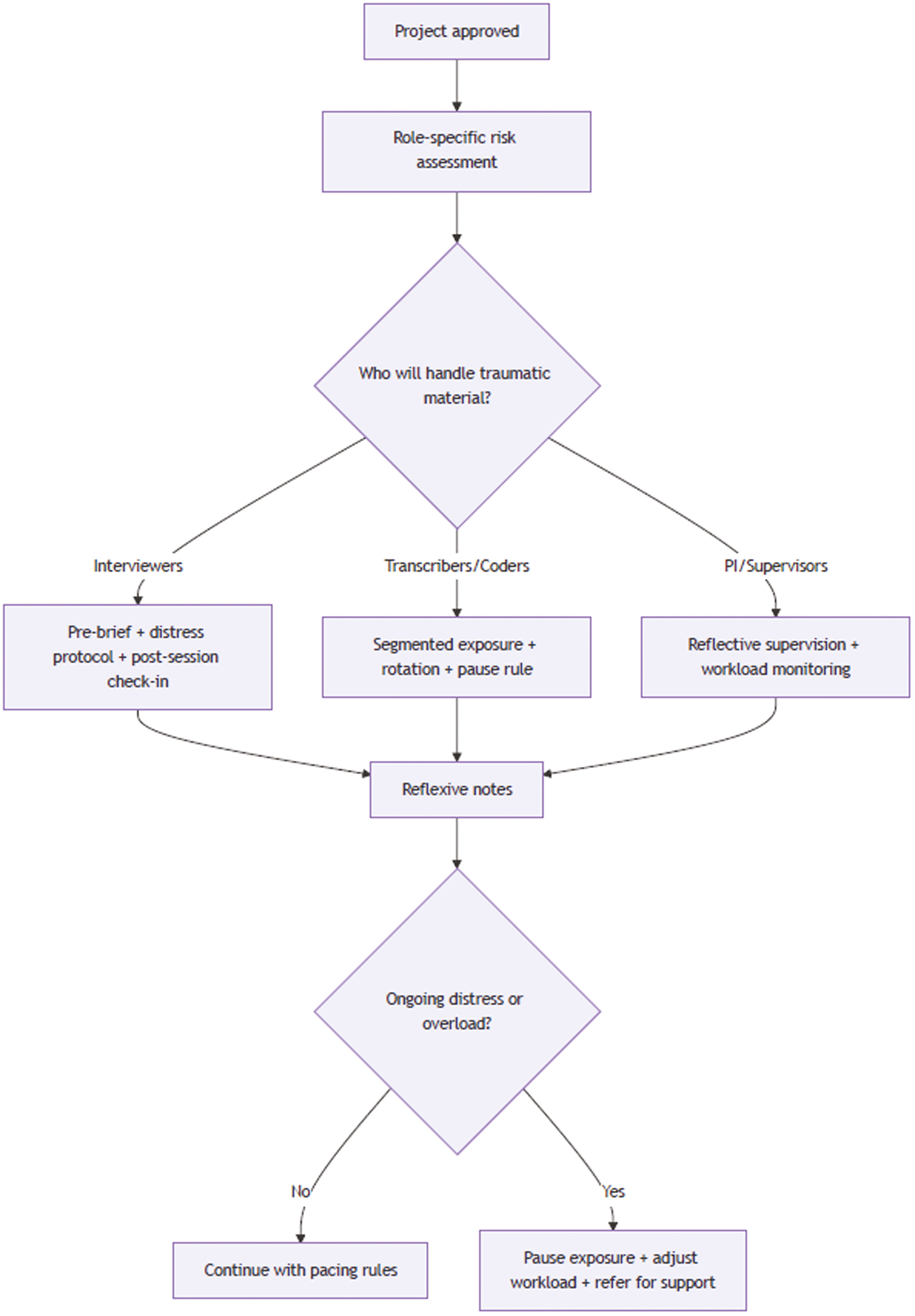
FIGURE 1 Role-sensitive support pathway for trauma-focused research.
| Journal of Community Safety and Well-Being (2026) 11(3), 147–152. | https://doi.org/10.35502/jcswb.551 |
Saskia Eschenbacher∗, Ardavan Eizadirad†
ABSTRACT
Crisis responders, such as paramedics and firefighters, as well as researchers who engage with trauma-focused narratives, face a shared yet often under-recognized challenge: the cumulative psychological and emotional toll of their professional roles. This article examines how reflective practice, specifically structured reflective writing, functions as a critical tool for processing traumatic experiences to foster resilience and supporting professional identity development in high-stress contexts. Drawing on empirical research with crisis responders in European and Canadian contexts, alongside insights from trauma-focused research practice, we explore how repeated exposure to critical incidents and traumatic narratives produces both direct and indirect forms of emotional strain. While crisis responders might encounter trauma through immediate, embodied responses, some researchers similarly experience vicarious trauma through sustained engagement with participants’ accounts of experiencing violence, suffering loss, and navigating systemic inequities. Findings suggest that intentional reflection enables individuals to surface suppressed emotional responses, develop metacognitive awareness, and integrate challenging experiences into their sense of self. At the same time, the article highlights a significant gap in institutional recognition and support for the emotional labour inherent in both frontline crisis responders and researchers doing trauma-triggering research. In response, we propose a set of actionable recommendations and argue that sustainable engagement in trauma-related practice and research requires not only reflective tools but also systemic approaches that acknowledge and support those who carry these stories beyond the moment of encounter.
Key Words Transformative learning, critical incident, researcher well-being, trauma-informed research, vicarious trauma, coping strategies, professional identity, institutional support.
This article examines reflective practice, vicarious trauma, and the often-unrecognized emotional labour carried by crisis responders (e.g., paramedics and firefighters) and researchers who engage with trauma-focused narratives in their professional roles. Drawing on empirical research with crisis responders in European and Canadian contexts, alongside insights from trauma-focused research practice, we explore how repeated exposure to critical incidents and traumatic experiences shapes both professional identity and personal well-being (Eizadirad et al., 2024b). While crisis responders might encounter trauma through immediate, embodied responses, some researchers similarly experience vicarious trauma through sustained engagement with participants’ accounts of experiencing violence, suffering loss, and navigating systemic inequities (Eizadirad et al., 2024a; Woods et al., 2022). Across these contexts, we argue that reflective practice serves as a critical mechanism for processing experience, yet the emotional labour embedded in this work remains insufficiently recognized or supported at institutional levels. By bringing these domains into conversation, this article highlights a shared, though differently mediated, vulnerability to vicarious trauma and calls for more intentional and systemic approaches to supporting crisis responders and researchers who carry these stories beyond the moment of encounter.
Intentional reflection and reflective writing have emerged as powerful pedagogical tools for supporting well-being and facilitating coping and healing from traumatic experiences, particularly for individuals in high-stress professions (Pitzer, 2025). This is what we have found across our research in European and Canadian contexts (Eizadirad & Eschenbacher, 2026). Research with crisis responders such as paramedics and firefighters enrolled in higher education reveals how structured reflection helps professionals process traumatic experiences, cope with stress, develop resilience, and integrate lessons from challenging incidents into their personal and professional identities (Eschenbacher, 2023, 2025, Eschenbacher & Marsick, 2024).
It is important to note that our empirical grounding lies specifically with crisis responders (paramedics and firefighters) and with researchers conducting trauma-focused interviews. While the term “crisis responders” is referred to as a broad orienting category, we do not claim to speak comprehensively to the nurses, social workers, clinical psychologists, or other health and social care professionals facing distinct institutional conditions. These are groups who face severe vicarious trauma exposure and chronically limited resources in their own right and who deserve dedicated scholarly attention. Furthermore, we conceptualize educators specifically as instructors and facilitators engaging with trauma-related content in higher education and professional training contexts. They are routinely exposed to students’ disclosures of trauma through reflective writing, classroom dialogue, and assessment practices (Eizadirad et al., 2022). Emerging scholarship on trauma-informed pedagogy highlights that such engagement constitutes a form of secondary exposure that can produce emotional strain, compassion fatigue, and boundary challenges (Carello & Butler, 2015; Pitzer, 2025).
Research consistently demonstrates that training in recognizing and managing vicarious trauma remains uneven and often absent across professional fields including healthcare, emergency services, and academia (Baird & Kracen, 2006; Newell & MacNeil, 2010). When practitioners, particularly crisis responders, engage in structured reflection on critical incidents (referring to positive or negative experiences that are perceived as having a significant impact and being transformative), they participate in what Schön (1992) called a “conversation with the situation.” Through reflection-on-action, they retrospectively make sense of experiences that may have been too overwhelming to process in the moment. In one study, paramedics and firefighters were encouraged to participate in reflective writing to help them cope with potentially traumatic experiences. Analysis of the data collected, which included 57 reflective writings, averaging 15 pages each, demonstrated that this process can facilitate transformative learning (Mezirow, 1991, 2012) in several crucial ways (Eschenbacher, 2023, 2025): First, reflective writing created space for practitioners to pause, recognize, and name feelings, emotions, and reactions. Crisis responders described how they routinely dissociate from feelings during rescue missions, entering what they call “work mode” to function effectively amid traumatic incidents. As one firefighter expressed, “I simply recognized an emergency and dealt with it. I immediately switched to work mode... Later, I was told how calm but also emotionless I had been.” This emotional numbing, while professionally necessary and often praised as part of the culture normalized within the profession, can become problematic when it extends beyond the workplace and leads to not acknowledging how those emotions impact the individual in the short and long term.
Reflective writing, as a structured form of meaning-making, has been widely recognized as a mechanism for integrating emotional and cognitive dimensions of professional experience, particularly in high-stress fields (Bolton & Delderfield, 2018). As part of debriefing traumatic experiences, reflective writing was used as a tool to open the conversation in constructive ways for paramedics and firefighters to reconnect with suppressed emotions and examine their impact (Eschenbacher, 2025). Crisis responders were asked the same five questions to reflect on (Eschenbacher, 2023). They began by recalling and describing a critical incident from their professional lives. This includes naming the event, outlining who was present, what occurred, and what consequences followed, as well as reflecting on the emotions they experienced during that moment. Building on this recollection, the second prompt encouraged practitioners to consider the present-day significance of the incident. They are asked to reflect on how the event might have been perceived by others involved and to identify both the coping strategies they are aware of and those they actively apply when dealing with traumatic or critical incidents. The third prompt broadens this reflection to the cumulative nature of their professional roles and the daily responsibilities of their work. Given that practitioners are frequently confronted with situations that others might consider traumatic, they are asked to explore, in as much depth as possible, how ongoing exposure to trauma affects them on three levels: personally, professionally, and in their relationships with others. Shifting to a more recent and collective challenge, the fourth prompt addresses the impact of the COVID-19 pandemic, asking practitioners to reflect on ways in which the pandemic altered their day-to-day work practices and professional routines. Finally, crisis responders were invited to look ahead and articulate their wishes. They were asked what changes or forms of support they hope to see from their employer or within their broader work environment to better address the traumatic experiences they are exposed to.
The writing process enabled metacognitive awareness for firefighters and paramedics in the study who became conscious of learning processes that were previously tacit or automatic. As one paramedic noted, “I realized how rarely I think about myself and my mental health. I often reflect on various topics, but I tend to leave my emotions out of it. The reflective writing helped me work on this.” This conscious examination is an example of transforming passive experiences into active knowledge construction. In addition, reflective writing facilitated whole-person learning by integrating cognitive, emotional, and biographical dimensions (Jarvis, 2012). Crisis responders reported that writing helped them understand how their professional experiences were reshaping their identities, relationships, and worldviews which is what Paul (2016) describes as transformative experiences that change “the kind of person you are.” For instance, when responding to the prompt on cumulative exposure, one participant moved from describing repeated exposure to fatal incidents to recognizing its impact on their personal relationships by noting increased emotional withdrawal at home. This shift illustrates how structured reflection can surface connections between professional experiences and private life that might otherwise remain unarticulated.
While celebrating the positive outcomes from intentional reflection about stressful situations and their impact, we must confront the uncomfortable reality that engaging with describing death, injury, failed resuscitations, and moral distress from the perspective of crisis responders takes a psychological toll. This also applies to researchers offering and holding the space for these reflective exercises, who can be on the receiving end of constantly hearing such narratives across different contexts as part of their teaching, data collection, and analysis (Eizadirad et al., 2022). The same mechanisms that create secondary traumatic stress for emergency workers, rooted in empathetic engagement with others’ trauma, operate when researchers immerse themselves in participants’ traumatic narratives (Woods et al., 2022). As researchers, we absorb participants’ descriptions of helplessness, anger, grief, and moral injury which at times can trigger our own past lived traumatic experiences. We carry their stories home with us.
It is important to note that exposure to vicarious trauma within research teams is not evenly distributed. Those conducting interviews, facilitating focus groups, or engaging directly with participants’ narratives are at the highest risk due to sustained empathetic engagement (Woods et al., 2022). However, other roles, including transcriptionists, data analysts, and graduate research assistants, may also experience secondary exposure through repeated engagement with traumatic content during coding and analysis. Principal investigators, while sometimes more removed from direct data collection, may carry cumulative responsibility for ethical decision-making and team well-being. Recognizing these differentiated exposures is essential for designing appropriate support structures that are role-specific and tailored to context rather than one-size-fits-all.
Woods et al. (2022) offer a rare and candid account of how conducting trauma-focused research affected their own mental health as racialized researchers. In their study of the Amadeusz Prosper program, they interviewed 44 participants, including 29 individuals with firearm-related charges, about their experiences associated with violence, incarceration, systemic racism, and reintegration challenges. The research team consisting of three members found themselves absorbing participants’ trauma in ways they had not anticipated. As they explain, researchers engaging with traumatic content experience “emotional vulnerability” that manifests in several ways: difficulty maintaining emotional boundaries, carrying participants’ stories beyond the interview context, experiencing vicarious trauma symptoms, and struggling with the ethical complexity of extracting painful narratives for academic purposes. The Prosper study revealed how participants’ narratives of systemic barriers rooted in discrimination in accessing housing and employment opportunities due to criminal records contributed to suicide attempts and other mental health challenges. Conducting 10 interviews in the span of 3 weeks created cumulative emotional weight for the main researcher, who was conducting the interview alone without institutional support structures. Research ethics boards often seek to know how the research team mitigates emotional harm for research participants, but this is not prioritized to the same extent when it comes to the emotional safety of researchers. This gap is particularly concerning, given that sustained empathetic engagement with traumatic narratives, whether in frontline practice, teaching, or research, has been shown to contribute to secondary traumatic stress and compassion fatigue (Eizadirad & Eschenbacher, 2026; Figley, 1995).
The quality of life is deeply tied to the quality of work. The basic skills and conditions we need to maintain our mental well-being in our personal lives are the same ones we need at our workplaces to thrive in our professional roles. This includes being able to name our emotions, feelings, and reactions rooted in vulnerability rather than seeing it as a weakness and dismissing them (Eizadirad et al., 2022).
Although some professional fields may include elements of supervision or informal support, training in recognizing and managing vicarious trauma remains uneven, inconsistent, and often absent across professions including healthcare, emergency services, and academia (Baird & Kracen, 2006; Newell & MacNeil, 2010). Both frontline workers who experience trauma as part of their daily duties as well as researchers conducting research in areas that involve hearing, collecting, and analyzing traumatic experiences share a common challenge. They must maintain appropriate boundaries while remaining empathetic to support the people they interact with in their professional roles. This dual requirement creates unique stress. They both often require therapeutic-level disclosure, yet not all have a therapeutic background. We are not detached observers but maintain analytical distance to fulfil frontline work or scholarly roles. As one emergency service worker emphasized in relation to having to distance themselves from what they were experiencing: “seeing my own daughter” when looking under a truck at an injured child and then immediately rephrasing and explaining that “Of course, it was the mother’s baby.” From a researcher’s lens, one participant described how “the system failed him” after multiple suicide attempts while incarcerated. Reflecting on being on the receiving end of hearing or experiencing traumatic experiences, we pose the question: how do we respond to such revelations without either minimizing their significance or exceeding our professional scope?
If reflective practice and trauma-informed approaches are to remain central to professional learning and research, then the well-being of those who facilitate, receive, and interpret traumatic narratives must be treated as a structural and not an individual responsibility. The findings presented here, alongside emerging scholarship on vicarious trauma and emotional labour, point to the need for coordinated interventions across multiple levels: research teams, academic departments, and institutional policy frameworks. What follows are three interrelated areas for action as our recommendations.
One of the most immediate and actionable supports involves the intentional integration of debrief practices into research and teaching processes. Drawing from crisis responders’ contexts, where structured debriefs are used to review critical incidents, similar models can be adapted for research and educational settings. At the level of research teams, principal investigators can build debrief sessions into study design, particularly following periods of intensive data collection involving trauma-focused interviews or emotionally charged classroom engagement. Structured debriefs should move beyond informal check-ins and adopt a consistent format that includes (1) a factual recounting of the interaction or research moment, (2) identification of emotional responses, (3) reflection on ethical or relational tensions, and (4) identification of any needed supports or adjustments moving forward. These conversations serve both as a professional and protective function which would allow individuals to express and process experiences without carrying unresolved emotional weight into subsequent work or carry it home.
Alongside structured debriefs, there is also a need for what we describe as transformative conversations. Unlike task-oriented debriefs, these spaces prioritize meaning-making, emotional processing, and narrative integration. They are less concerned with resolution and more focused on understanding how experiences shape one’s professional identity and personal well-being. Emotions and emotional responses are at the heart of these conversations. Current research (Carter, 2022; Eizadirad et al., 2024b) points to the necessity to work through emotions to restore cognitive functioning: sensemaking is blocked, making critical thinking and reframing impossible when emotions are not being processed. As one emergency worker expressed, such opportunities “give me a sense of safety to put my experiences into words, creating a space free from prejudices.”
Departments and faculties can support these practices by establishing peer-based reflection groups or facilitated dialogue spaces, ideally independent of formal evaluation structures to ensure psychological and spiritual safety. Importantly, these practices should be implemented across stages of engagement: prior to data collection to prepare individuals, during fieldwork to provide ongoing support, and after data analysis to facilitate integration and closure. Such an approach recognizes that emotional processing is not a one-time event but an ongoing aspect of engaging with trauma-related work (Abawi et al., 2025; Eizadirad et al., 2022; Pitzer, 2025).
While structured debriefs handle facts, transformative conversations handle feelings. Safety, trust, attentive listening, acceptance, and a shared professional background are conditions that enable transformative conversations which complement rational and structured debriefs. These conversational spaces should be offered, preferably somewhat independent of workplaces, to ensure the above-mentioned conditions are in place. Also, entering these spaces should remain voluntary. The absence of support might ultimately lead to alienation and missed learning opportunities for both the individual and the organization.
While awareness of burnout and stress has increased in recent years, formal training in recognizing and responding to vicarious trauma remains inconsistent across professions (Baird & Kracen, 2006; Eizadirad & Eschenbacher, 2026; Newell & MacNeil, 2010; Woods et al., 2022). This gap is particularly evident in academic research and teaching contexts, where emotional labour is often implicit and unsupported. Institutions should therefore move toward integrating role-specific training on vicarious trauma and emotional labour into professional development structures. For researchers, this may include training embedded within graduate programs, research methods courses, and ethics certification processes. Such training should address how to recognize signs of secondary traumatic stress, establish and maintain emotional boundaries, and implement practical strategies such as pacing data collection, limiting interview durations, and incorporating rest periods between intensive engagements with traumatic material.
At the institutional level, research ethics boards and academic leadership can play a key role by expanding existing frameworks which often focus almost exclusively on participant protection to include researcher and educator well-being (see Figure 1). This may involve requiring well-being plans as part of ethics applications, offering optional debrief sessions linked to funded projects, or providing access to counselling resources specifically tailored to those working with trauma-related content.
|
|
||
|
FIGURE 1 Role-sensitive support pathway for trauma-focused research. | ||
A central barrier to implementing meaningful supports lies in how emotional labour is perceived within institutional cultures. Despite being integral to roles that involve sustained interpersonal engagement, emotional labour has historically been undervalued or rendered invisible, particularly within academic settings that prioritize cognitive and intellectual outputs (Eizadirad & Eschenbacher, 2026). This invisibility contributes to a normalization of self-management, where individuals are expected to absorb and cope with emotional strain independently (Eizadirad et al., 2024a; Figley, 1995; Woods et al., 2022). To address this, institutions are encouraged to explicitly recognize engagement with traumatic narratives as a legitimate form of professional labour with associated risks. This recognition can take several forms. At the organizational level, it includes acknowledging vicarious trauma as an occupational hazard and ensuring access to mental health supports without stigma or administrative barriers. At the departmental level, it may involve workload considerations such as adjusting teaching or research expectations during periods of intensive emotional engagement. This also involves incorporating this dimension of the work into performance evaluations and promotion criteria.
At the level of research teams, principal investigators and project leads can model trauma recognition by normalizing conversations about emotional impact by encouraging participation in debrief processes and designing projects that account for the cumulative effects of exposure to trauma. Such practices align with broader research on burnout which highlights that organizational context (not just individual resilience) is a key determinant of well-being (Maslach & Leiter, 2016). Reframing emotional labour as an expected and supported dimension of professional practice shifts responsibility from the individual to the system. It allows researchers and crisis responders alike to engage with their work in ways that are ethically grounded and personally sustainable.
Reflective practices and trauma-informed approaches to conducting research represent powerful tools for supporting practitioners’ well-being and advancing critical scholarship, particularly for those navigating high-stress professions as crisis responders. Only by building robust support systems that fundamentally reconceptualize how to navigate trauma-triggering work and research can we mitigate burnout. The crisis responders in the study taught us that processing trauma requires “getting it off your soul” through conversation, reflection, and integration (Eschenbacher & Marsick, 2024). Researchers deserve the same opportunities for processing and support. Without them, we risk creating new casualties in our efforts to support those who face trauma as part of their professional lives.
Our recommendations emphasize that addressing vicarious trauma and emotional labour requires more than isolated interventions. It calls for an integrated approach that combines structured practices, targeted training, and cultural change across sectors and professional fields, specifically aligning how researchers and crisis responders can be supported collectively. While the specific implementation of these strategies will vary across institutional contexts and professions, the underlying principle remains consistent: those who hold space for others’ trauma must themselves be supported in meaningful and sustained ways (Eizadirad & Eschenbacher, 2026). Without such supports, the risk is not only individual burnout but also the erosion of the very relational and reflective capacities that make trauma-informed research and education possible and transformative. Future work should extend this inquiry to the broader frontline health and social care workforce including nurses, social workers, and clinical psychologists whose exposure to secondary traumatic stress is well documented and in many cases their access to institutional supports even more limited. The principles developed and discussed throughout this article offer a starting point. The specifics of those professional contexts require their own dedicated investigation.
No potential conflict of interest was reported by the authors.
∗Research Practitioner & Akkon University, Berlin, Germany;
†Wilfrid Laurier University, Waterloo, Canada.
Abawi, Z., Eizadirad, A., Tuters, S., & Campbell, A. B. (Eds.). (2025). Activist leadership for inclusive schools: Canadian insights. Canadian Scholars Press.
Baird, K., & Kracen, A. C. (2006). Vicarious traumatization and secondary traumatic stress: A research synthesis. Counselling Psychology Quarterly, 19(2), 181–188. https://doi.org/10.1080/09515070600811899 [CrossRef]
Bolton, G. E., & Delderfield, R. (2018). Reflective practice: Writing and professional development. Sage Publications Inc.
Carello, J., & Butler, L. D. (2015). Practicing what we teach: Trauma-informed educational practice. Journal of Teaching in Social Work, 35(3), 262–278. https://doi.org/10.1080/08841233.2015.1030059 [CrossRef]
Carter, P. L. (2022). Exploring visceral experiences of physiology: The role of emotional cognition in transformative learning. In P. Faller, K. Del Simone, & D. Holt (Eds.), Proceedings of the 14th international transformative learning conference: Telling, evaluating, and deepening our story (pp. 162–169). Michigan State University & Grand Rapids Community College.
Eizadirad, A., Campbell, A., & Sider, S. (Eds.). (2022). Counternarratives of pain and suffering as critical pedagogy: Disrupting oppression in educational contexts. Routledge.
Eizadirad, A., Chambers, T. N., & Brown, S. B. (2024a). Amadeusz’s Prosper: Effective reintegration of adults facing firearm-related charges in Ontario, Canada. Advances in Social Sciences Research Journal, 11(5), 272–289.
Eizadirad, A., Jones, D., Leslie, G., & Grant, T. (2024b). Remembering lost lives and healing from trauma: Homicides, incarceration, and pain-driven advocacy in the Jane and Finch community. Journal of Culture and Values in Education, 7(3), 1–26. https://doi.org/10.46303/jcve.2024.25 [CrossRef]
Eizadirad, A., & Eschenbacher, S. (2026). Frontline work without frontline supports: Rethinking educator wellbeing in Canada and beyond. EdCan Network, 65(1). https://www.edcan.ca/articles/frontline-work-without-frontline-supports-rethinking-educator-wellbeing-in-canada-and-beyond/
Eschenbacher, S. (2023). Saving lives: An unsustainable profession—A study of transformative learning at work. Studies in Continuing Education, 46(2), 266–281. https://doi.org/10.1080/0158037X.2023.2222068 [CrossRef]
Eschenbacher, S. (2025). Between surviving and thriving—New approaches to understanding learning for transformation. Education Sciences, 15(6), 662. [CrossRef]
Eschenbacher, S., & Marsick, V. J. (2024). Getting it off your soul: Transformative conversations for processing traumatic experiences. Reflective Practice, 25(6), 813–825. https://doi.org/10.1080/14623943.2024.2406967 [CrossRef]
Figley, C. R. (1995). Compassion fatigue: Toward a new understanding of the costs of caring. In B. H. Stamm (Ed.), Secondary traumatic stress: Self-care issues for clinicians, researchers, and educators (pp. 3–28). The Sidran Press.
Jarvis, P. (2012). Towards a comprehensive theory of human learning. Routledge. https://doi.org/10.4324/9780203001677 [CrossRef]
Maslach, C., & Leiter, M. P. (2016). Understanding the burnout experience: Recent research and its implications for psychiatry. World Psychiatry, 15(2), 103–111. https://doi.org/10.1002/wps.20311 [CrossRef] [PubMed]
Mezirow, J. (1991). Transformative dimensions of adult learning. Jossey-Bass. https://doi.org/10.1177/074171369204200309 [CrossRef]
Mezirow, J. (2012). Learning to think like an adult: Core concepts of transformation theory. In E. W. Taylor, & P. Cranton (Eds.), The handbook of transformative learning: Theory, research, and practice (pp. 73–95). Jossey-Bass.
Newell, J. M., & MacNeil, G. A. (2010). Professional burnout, vicarious trauma, secondary traumatic stress, and compassion fatigue. Best Practices in Mental Health, 6(2), 57–68. https://doi.org/10.70256/607490pbruec [CrossRef]
Paul, L. A. (2016). Transformative experience. Oxford University Press.
Pitzer, A. (2025). Classroom strategies for trauma-informed teaching: Restoring trust, connection, and hope. Palgrave MacMillan. https://doi.org/10.1007/978-3-032-10163-1 [CrossRef]
Schön, D. A. (1992). The reflective practitioner: How professionals think in action. Routledge. https://doi.org/10.4324/9781315237473 [CrossRef]
Woods, S., Chambers, T. G., & Eizadirad, A. (2022). Emotional vulnerability in researchers conducting trauma-triggering research. Journal of Higher Education Policy and Leadership Studies, 3(3), 71–88. https://doi.org/10.52547/johepal.3.3.71 [CrossRef]
*Correspondence to: Dr. Saskia Eschenbacher, Akkon University of Applied Sciences, Colditzstrasse 34-36, 12099 Berlin, Germany. Tel: 0049 30 809 2332-0. E-mail: saskia.eschenbacher@posteo.de
This work is distributed under the Creative Commons BY-NC-ND license. To view a copy of this license, visit http://creativecommons.org/licenses/by-nc-nd/4.0/. For commercial re-use, please contact sales@sgpublishing.ca.
Journal of CSWB, VOLUME 11, NUMBER 3, September 2026