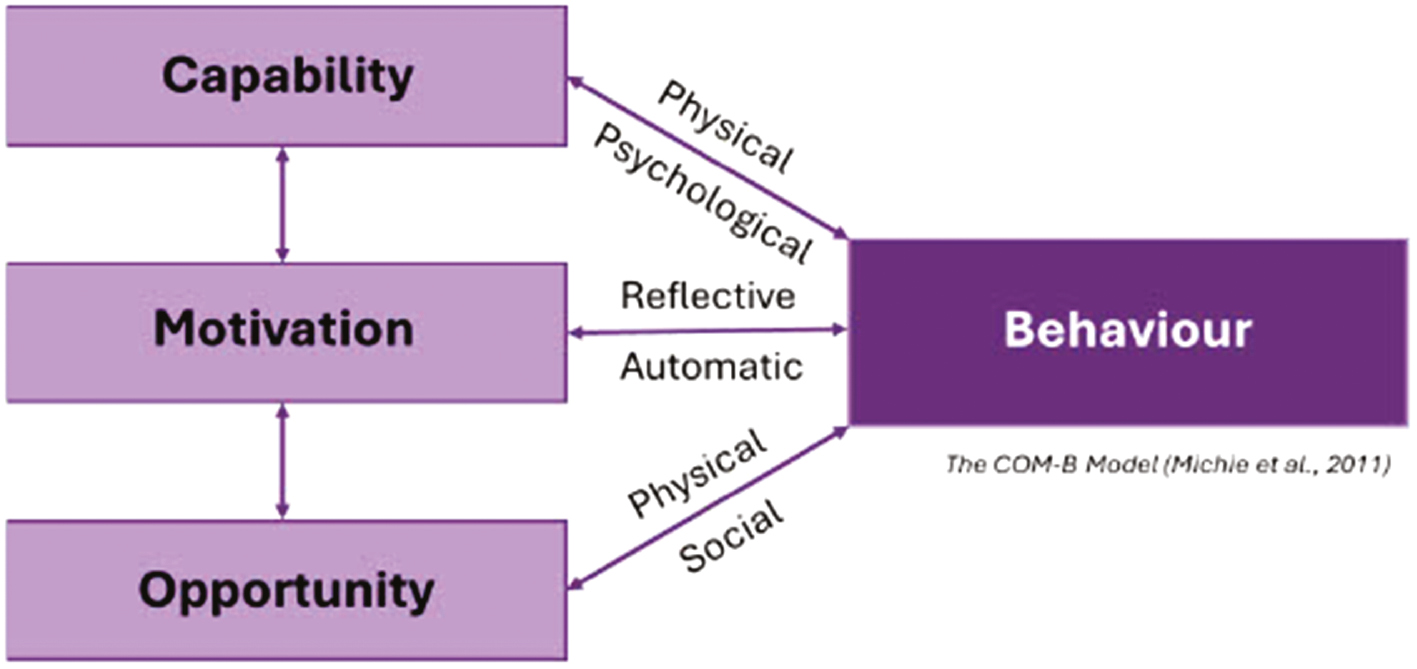
FIGURE 1 The COM-B model. COM-B, Capability, Opportunity, Motivation-Behaviour.
| Journal of Community Safety and Well-Being (2025) 10(4), 179–184. | https://doi.org/10.35502/jcswb.501 |
Emma R. Barton∗, Bryony Parry∗, Lara Snowdon∗,†
This article is related directly to the Seventh International Conference on Law Enforcement & Public Health (LEPH) held in Ottawa, Canada in July 2025.
ABSTRACT
Sexual harassment in nightlife settings remains a serious concern for public health and law enforcement; however, opportunities for primary prevention approaches, including the intervention of prosocial bystanders, show potential. Nevertheless, little is known about the nuanced barriers and facilitators to intervene which groups of nightlife users experience, particularly men. This mixed-methods study examines behavioural determinants of prosocial bystander intervention in sexual harassment situations within South Wales’ nighttime economy. Research combined interviews (n = 30) and focus groups (n = 3) with men aged 18–54 years, to develop five distinct personas representing different psychological profiles of potential male bystanders. The research applies the COM-B (Capability, Opportunity, Motivation-Behaviour) model to understand barriers and facilitators to intervention. Results reveal that while motivational factors vary across personas, psychological capability barriers, particularly lack of knowledge about safe intervention methods and legal implications, are universal. The study highlights the multidimensional nature of motivation, capability, and opportunity influencing intervention, revealing that unwillingness to intervene is not simply one of ignorance or apathy, but of complex trade-offs between personal safety, social cohesion, and ethical responsibility. The persona-based approach reveals significant heterogeneity in the psychological processes underlying intervention decisions. Rather than treating potential bystanders as a homogeneous group, the study demonstrates that different individuals require different types of support and messaging to overcome their specific barriers and provides evidence-based recommendations for tailored communication strategies essential for effective behaviour change in sexual harassment prevention. These findings contribute to the growing literature on bystander intervention theory and offer practical insights for violence prevention practitioners and campaigns.
Key Words Bystander intervention; sexual harassment; COM-B model; behaviour change; violence prevention; nighttime economy; campaigns; public health.
Sexual harassment in nightlife settings remains a serious concern for public health and law enforcement; however, opportunities for primary prevention approaches, including prosocial bystander intervention, show potential (McMahon et al., 2017). Public awareness campaigns have encouraged bystander intervention (Walker et al., 2022), yet real-world uptake of such behaviours remains inconsistent. Equally, despite increased awareness about the role of men in violence prevention initiatives (Burrell & Westermarland, 2025), little is known about the complex barriers and facilitators that nightlife users, particularly men, experience when engaging with prosocial behaviours such as bystanding to prevent sexual harassment.
Having implemented #SafeToSay campaigns across South Wales in 2021 and 2022, which looked to encourage prosocial bystander responses against sexual harassment witnessed on a night out, and in response to findings from the campaign evaluations (Walker et al., 2022, 2023), the Public Health Wales Violence Prevention Team (VPT) wanted to explore why some men struggle to intervene when they witness sexual harassment. The public perception surveys carried out as part of the evaluation showed that only around half of the respondents across the target audience felt the campaign messages resonated with them. The need for this study arises from a recognition that traditional, broad-stroke campaigns often fail to engage diverse audiences meaningfully. In addition, understanding the complex psychological factors that influence whether men will intervene when witnessing sexual harassment requires deeper behavioural insights beyond traditional awareness campaigns.
Behavioural science has become an increasingly prominent field for investigating health-related behaviours, offering valuable insights into the complex interwoven factors that drive individual and population health choices (Davis et al., 2015; Knowles & Gould, 2023). This interdisciplinary approach draws from psychology, sociology, economics, and public health to examine why people do or do not engage in certain health behaviours.
The application of behavioural science extends beyond simply cataloguing health behaviours to understanding the multifaceted influences that shape them. Most theories applied to public health interventions tend to emphasize individual capabilities (Davis et al., 2015), but comprehensive approaches recognize that these factors include personal beliefs and attitudes, social norms and peer influences, environmental constraints, economic considerations, and psychological barriers (Knowles & Gould, 2023). By mapping these interconnected elements, key leverage points where interventions might be most effective can be identified.
This research addresses a critical gap in the literature by examining the specific barriers and facilitators to bystander intervention among men in nightlife settings, using a persona-based approach grounded in behavioural science theory. The study aims to inform more effective, targeted interventions by understanding the diverse psychological profiles and decision-making processes of potential bystanders.
This article presents how the VPT, in collaboration with the Public Health Wales’ Behavioural Science Unit (BSU), mapped behavioural insights persona development with men to understand the barriers and facilitators to bystander intervention against a theoretical framework used in behavioural science for understanding and analyzing behaviour, in order to better inform communication strategies for bystander prevention.
The primary objective was to develop evidence-based personas to support communication interventions aimed at increasing adoption of prosocial bystander behaviours against sexual harassment. Specifically, the research sought to:
Behaviour change models can be beneficial in exploring factors that influence practice, in this case the willingness to act when witnessing sexual harassment. This study applies Michie et al.’s (2011) behavioural change framework, the COM-B model, that proposes three necessary components for any behaviour to occur. It posits that behaviour (B) occurs when individuals have the necessary capability (C), opportunity (O), and motivation (M) (see Figure 1).
|
|
||
FIGURE 1 The COM-B model. COM-B, Capability, Opportunity, Motivation-Behaviour. | ||
Capability encompasses both physical and psychological ability to perform the behaviour (such as knowledge and skills). Opportunity includes both physical and social environmental factors that enable behaviour. Motivation comprises both reflective (conscious decision-making) and automatic (emotional, habitual) processes that direct behaviour.
Bystanders are witnesses to problematic behaviour who due to their proximity to the situation have opportunity to intervene, contribute to or reinforce the negative behaviour, or maintain a passive observational role (Banyard, 2015). Numerous factors will influence an individual’s decision to intervene or not (Fenton et al., 2016). Latan’s (1970) bystander intervention model identifies five sequential steps: noticing the event, interpreting it as requiring help, accepting personal responsibility, knowing how to help, and deciding to implement help. This framework helps explain why individuals may fail to intervene despite witnessing problematic behaviour.
A mixed-methods approach was employed, consisting of three sequential phases designed to build comprehensive behavioural personas.
The study targeted men aged 18–54 years who lived or socialized in South Wales. This demographic was selected based on the #SafeToSay campaign’s target audience and the higher likelihood of nightlife participation among this age group.
Online individual interviews were conducted to explore underlying motivations, values, and beliefs that might impact willingness to intervene. This approach allowed for a deeper investigation of psychological factors beyond surface-level responses.
Online focus group sessions were designed to clarify and deepen understanding of differences between preliminary segments identified from phase 1 interviews. Groups were organized based on emerging behavioural patterns to validate and refine persona development.
Interview and focus group data were coded and analyzed using correlation analysis and clustering processes to identify distinct behavioural groupings within the sample. Each persona encapsulated demographic traits, nightlife behaviours, psychological traits, media habits, and social attitudes.
The behavioural insights data collection was undertaken by Emotional Logic Ltd, a member of the Market Research Society. This research was conducted in line with the MRS Code of Conduct (2023). The Code of Conduct outlines the ethical guidelines for conducting market research, including gaining informed consent, confidentiality, data protection, safeguarding, and participant well-being. At each phase, informed written consent was obtained from participants, and a full brief was given.
The COM-B model provided the analytical framework for mapping barriers and facilitators across the identified personas to identify specific behavioural barriers and facilitators. Each persona was systematically evaluated across capability, opportunity, and motivation dimensions (see Figure 1).
The analysis revealed five personas, each representing a distinct behavioural profile and different potential approaches to possible bystander intervention.
Seventeen percent of participants (n = 5) formed the safety in numbers group. These socially confident, typically young, single men enjoy nightlife in groups and frequent venues regularly, with above-average attendance at bars, nightclubs, and sporting events over 12 months. Individuals within this group have high confidence in confrontational situations due to group support and are likely to intervene when supported by peers. However, their primary concern is maintaining the “fun” atmosphere of the evening and they do not hold any perceived value in addressing inappropriate language and low-level sexually harassing behaviour. Intervention barriers include fear of consequences like being mistaken for the aggressor and ejected from venues, linked to general mistrust of security staff. Despite this, the group would not avoid confrontation, with only a quarter concerned about violence.
An additional barrier was concern in misinterpreting the situation, as one participant noted: “It would be really awkward [if you get it wrong] because you just tried to stop it and all the bloke is doing is talking to his friend…. On TikTok you will always see a post that goes ‘oh there is always that guy who has to go up and check [that] girls [are okay]’, and you feel guilt and shame, and that’s a bad thing. It is advertised as a bad thing [to intervene when there is no need] on that app. Obviously no one wants to be the guy that people make posts out of.” [P1]
Twenty percent of participants (n = 6) were identified as the gut reaction group. Guided by a strong moral compass, often feeling personal responsibility to intervene, they are quick to act but sometimes impulsive. Fifty percent of men in this group are in an established relationship and a third have children and while this group frequent nightlife venues regularly, they are more likely to visit restaurants than other groups. The gut reaction group tends to have a strong emotional response to witnessing harassment and therefore may disregard personal consequences to help others. One interviewee stated, “The fact is that I tend to put other peoples’ safety before my own….” [P2]
The barriers present for this group relate to misreading situations, finding it hard to decide to act when the context is ambiguous and lacking structured intervention skills.
Seventeen percent of interviewees (n = 5) made up the world is a dangerous place persona. Individuals in this group tend to be more affluent, with 80% cohabiting or married with family responsibilities. They are empathetic but highly risk-averse and concerned about potential physical harm and consequences, therefore avoiding nightlife conflict.
Although fear of violence and perceived potential cost to themselves from reacting make this group more reluctant to intervene and act upon witnessing sexual harassment when on a night out, they are the most likely persona to call out lower-level behaviour, such as sexist or homophobic language. This may be due to their overwhelming feelings of empathy for the victim and the identified motivation facilitator that leaving the matter unresolved would create ongoing psychological burden and contribute to a sense of personal culpability.
The protected bubble persona was the largest group (n = 8, 27%). These individuals tend to have higher socioeconomic status and above-average attendance at all nightlife venues including nightclubs, restaurants, and concerts over 12 months. Motivated by duty to act, they occasionally check on harassment victims. However, significant concerns about physical and social consequences lead predominantly to inaction, further compounded by lack of awareness of formal support and limited legal understanding.
“You need someone to tell you, because something may be acceptable to certain women and that’s the problem, but if you know the legality of it you’d be in a better place. Then you can approach the woman, if you’ve seen something illegal, and just say, are you happy with that? Because what he did was wrong, and it’s wrong in black and white.” [P3]
As a result, the protected bubble persona largely copes by choosing safer venues and social circles.
The final persona characterized a fifth of participants (n = 6), too much to lose. Two thirds of this group were single and predominantly under 35 years of age, with a mix of socioeconomic status. These individuals are highly risk-averse, rational, and reserved. They tend to fear confrontation and prefer post-incident reporting of harassment incidents. As social grade and family commitments increase, individuals within this group become less likely to intervene. Barriers for this group include fear of escalation, desire for anonymity, and concern over personal risk. The too much to lose group generally hopes that others will step in when there is a need to intervene, rather than acting themselves, and they believe they cannot add value to interventional situations and fear often overrides empathy in their decision-making.
“yeah I think I would have liked to go up and just like tell them to stop but then we also don’t want to get in a fight and get beaten up for it … I felt really, really bad for the girl as well, because she was literally getting bullied, basically….” [P4]
Each persona varied in demographics, attitudes, and risk tolerance, suggesting that behaviour change strategies must be equally diverse.
Once developed, the personas were mapped against the COM-B model. Understanding behaviour against this model can help to determine if you need to overcome barriers relating to capability, opportunity, and/or motivation to elicit a certain behaviour, in this case intervening when witnessing sexual harassment. Each barrier will require different types of intervention. It can also support decision-making regarding what behaviour change techniques to use to elicit the target behaviour and how to employ these techniques.
In addition, the extended COM-B model specifies the theory that behaviours do not occur in isolation. It is crucial to acknowledge the context in which behaviours are formed and how different behaviours compete with or facilitate each other by changing the capability, opportunity, or motivation to engage in other behaviours. In nightlife settings, for example, this could be to do with substances impeding ability to intervene or increasing the likelihood through decreasing inhibitions.
Psychological capability emerged as the primary barrier to intervening across all personas. Many participants lacked a clear understanding of what constitutes sexual harassment and when intervention is appropriate. The key barriers that hindered action included lack of knowledge about legal implications of intervention, uncertainty about safe intervention methods, and insufficient awareness of victim support schemes.
Notably, no significant physical capability barriers were identified, suggesting that intervention hesitancy is not related to physical inability but rather knowledge and skill deficits.
Social opportunity factors varied significantly across personas. Peer norms and trust in staff played a critical role. Distrust in security staff, particularly among the safety in numbers group, and concerns about social backlash from peers often inhibited action. Additionally, environmental cues, such as the presence of trained security staff or visible support materials, such as posters for reporting schemes, influenced intervention likelihood.
In terms of reflective motivation barriers, considerations about misreading situations, personal risk, legal ramifications, outcome efficacy, and the belief that intervention cannot add value shaped many participants’ conscious decisions not to intervene. A further barrier revolved around participants’ competing priorities of family responsibilities and career development, should action taken result in negative consequences for those intervening.
Automatic motivation factors revealed that emotional responses such as fear, empathy, guilt, or anger influenced snap decisions. Previous experiences with violence or social judgement further entrenched avoidance behaviours.
Several situational factors emerged as influential across personas. Venue type played a significant role, with participants more likely to intervene in settings where harassment is socially unacceptable, such as concerts or quiet pubs, compared to environments where such behaviour has become normalized, like nightclubs. Alcohol consumption demonstrated mixed effects on intervention likelihood, as sobriety improved participants’ ability to assess situations accurately, while alcohol consumption sometimes provided the courage needed to act. Group dynamics also proved critical, with larger friend groups facilitating intervention through the perceived backup support they provided. Aggressor characteristics also influenced decision-making, as intoxicated perpetrators were generally seen as easier to approach but were simultaneously recognized as potentially more volatile and unpredictable, which in turn discouraged intervention.
The findings provide several important theoretical contributions to bystander intervention research and highlight that a blanket approach to encouraging bystander intervention is insufficient. Behaviour is deeply contextual and influenced by diverse emotional, cognitive, and social factors. The personas developed reflect not only differing levels of risk tolerance and moral motivation but also unique informational and environmental needs.
The dominant role of psychological capability barriers across all personas challenges assumptions that motivation is the primary determinant of bystander intervention. While Latané and Darley’s model emphasizes the importance of knowing how to help, this study demonstrates that specific knowledge deficits about legal frameworks, safe intervention methods, and support systems represent critical intervention points. Notably, the fear of being misjudged, injured, or socially ostracized appeared repeatedly across personas. Even those with strong moral convictions hesitated due to ambiguity in cues or lack of clear protocols. The issue is not simply one of ignorance or apathy, but of complex trade-offs between personal safety, social cohesion, and ethical responsibility.
The persona-based approach reveals significant heterogeneity in the psychological processes underlying intervention decisions. Rather than treating potential bystanders as a homogeneous group, the study demonstrates that different individuals require different types of support and messaging to overcome their specific barriers.
The application of the COM-B model to bystander intervention provides a systematic framework for understanding the multifaceted nature of intervention barriers. The finding that capability and opportunity barriers must be addressed before motivation can be effectively influenced aligns with broader behavioural change theory.
The research provides several actionable insights for bystander campaign intervention design. Certain barriers were consistent across personas, suggesting the need for universal intervention components. Education on the legal framework would benefit all personas, as clear information about when intervention is legally appropriate and protected could address widespread uncertainty about potential consequences. Training on safe intervention methods, including de-escalation techniques and proper reporting procedures, could effectively address capability deficits that prevent individuals from acting despite their willingness to help. Additionally, victim support awareness should be prioritized, with information about available support schemes requiring wide dissemination to ensure potential interveners understand the resources they can connect victims with following an incident.
However, evidence also suggests that different personas require tailored approaches to maximize intervention effectiveness. The safety in numbers persona would benefit from strategies focused on maintaining positive atmospheres while addressing inappropriate behaviour, leveraging their group-oriented mindset. For the gut reaction persona, providing structured decision-making frameworks could help channel their strong moral impulses more effectively and safely. The world is a dangerous place persona requires emphasis on anonymous reporting options and safe intervention methods that reduce personal risk. The protected bubble persona needs increased awareness of available support schemes combined with legal clarity about intervention rights and protections. Finally, the too much to lose persona should be targeted with approaches that focus on post-incident reporting options while emphasizing collective responsibility, allowing them to contribute meaningfully without jeopardizing their perceived stakes in maintaining stability.
Based on behavioural insights, several evidence-based recommendations for communication campaigns that address different aspects of bystander intervention behaviour emerge, which could further encourage men to engage as prosocial bystanders in response to sexual harassment witnessed.
Education-based messages should provide practical information to address knowledge gaps and capability barriers. Clear guidance on when intervention is appropriate would help potential interveners understand circumstances that warrant action. Step-by-step safe intervention procedures could equip individuals with concrete response methods while minimizing risk. Information about legal protections for good-faith interventions would address concerns about potential consequences, while details of victim support schemes and reporting routes would ensure interveners can connect victims with appropriate resources following an incident.
Persuasion-based messages should focus on motivation and social influences driving intervention behaviour. Demonstrating positive bystander intervention impacts through real examples could inspire action by showing meaningful differences. Social norm messaging framing intervention as expected rather than heroic behaviour could shift responsibility perceptions and normalize helping responses. Addressing specific fears through realistic scenarios would build confidence and reduce anxiety that often prevents action.
The self-report nature of interviews may introduce social desirability bias, particularly around sensitive topics like intervention behaviour for sexual harassment. The focus on male bystanders, while appropriate for the campaign objectives, limits understanding of female bystander behaviour and mixed-gender intervention dynamics.
Additionally, the study examined reported intentions rather than actual behaviour. Future research should incorporate behavioural observation to validate the relationship between persona characteristics and actual intervention behaviour.
This research demonstrates the value of behavioural science in understanding bystander intervention for sexual harassment prevention. The identification of five distinct personas with different barrier profiles challenges one-size-fits-all approaches to intervention design and highlights the need for targeted, evidence-based communications.
The dominance of psychological capability barriers across personas suggests that education-focused interventions addressing knowledge deficits about safe intervention methods, legal frameworks, and support systems should be prioritized. However, the diversity of motivational profiles indicates that such educational content must be delivered through targeted messaging that addresses specific concerns and leverages appropriate communication channels for each audience type.
The findings also highlight the critical importance of the social environment in facilitating or hindering intervention behaviour. Issues of trust in venue security staff, group dynamics, and social norms within nightlife settings represent important intervention targets that extend beyond individual-level behaviour.
This study contributes to the growing evidence base for behavioural science applications in violence prevention and provides a methodology for developing targeted interventions in other contexts where bystander intervention represents a promising prevention strategy.
The authors acknowledge that the primary data collection used to inform this research was conducted by Emotional Logic Ltd, as a commissioned piece of work for the Wales Violence Prevention Unit. The research team thanks all interview and focus group participants for their valuable contributions in sharing their experiences and perspectives, and Public Health Wales’ Behavioural Science Unit who shared knowledge and expertise in supporting the team through using the behaviour change framework to inform the research.
This research was commissioned by the Wales Violence Prevention Unit and conducted by Emotional Logic, with funding from Public Health Wales and the South Wales Police and Crime Commissioner.
The authors have no conflicts of interest to declare.
∗Policy and International Health, World Health Organization Collaborating Centre for Investment in Health and Wellbeing, Public Health Wales, Cardiff, UK;
†World Health Organization Collaborating Centre for Violence Prevention, Public Health Institute, Liverpool John Moores University, Liverpool, UK.
1 Emotional Logic Ltd, a social marketing agency, was commissioned by the VPT to conduct the behavioural insights research.
Banyard, V. L. (2015). Toward the next generation of bystander prevention of sexual and relationship violence: Action coils to engage communities. Springer. https://doi.org/10.1007/978-3-319-23171-6
Burrell, S. R., & Westermarland, N. (2025). New paths to prevention: Engaging more boys and men in ending violence against women. Firebird Foundation. https://www.endviolenceagainstwomen.org.uk/wp-content/uploads/2025/07/EVAW-Masculinity-report-2025.pdf
Davis, R., Campbell, R., Hildon, Z., Hobbs, L., & Michie, S. (2015). Theories of behaviour and behaviour change across the social and behavioural sciences: A scoping review. Health Psychology Review, 9(3), 323–344. https://doi.org/10.1080/17437199.2014.941722
Fenton, R. A., Mott, H. L., McCartan, K., & Rumney, P. N. S. (2016). A review of evidence for bystander intervention to prevent sexual and domestic violence in universities. Public Health England. https://assets.publishing.service.gov.uk/government/uploads/system/uploads/attachment_data/file/515634/Evidence_review_bystander_intervention_to_prevent_sexual_and_domestic_violence_in_universities_11April2016.pdf
Knowles, N., & Gould, A. (2023). Exploring factors influencing the application of behavioural science within public health practice across Wales. Public Health Wales.
Latané, B., & Darley, J. M. (1970). The unresponsive bystander: Why doesn’t he help? Appleton-Century-Crofts.
McMahon, S., Palmer, J. E., Banyard, V., Murphy, M., & Gidycz, C. A. (2017). Measuring bystander behaviour in the context of sexual violence prevention: Lessons learned and new directions. Journal of Interpersonal Violence, 32(16), 2396–2418. https://doi.org/10.1177/0886260515591979
Michie, S., van Stralen, M. M., & West, R. (2011). The behaviour change wheel: A new method for characterising and designing behaviour change interventions. Implementation Science, 6(1), 42. https://doi.org/10.1186/1748-5908-6-42
Walker, A., Barton, E. R., Parry, B., & Snowdon, L. C. (2022). Preventing sexual violence in the nighttime economy: Encouraging active bystanders against violence [Evaluation report]. Public Health Wales NHS Trust. https://www.violencepreventionwales.co.uk/cms-assets/research/Evaluation-Report-Preventing-Sexual-Violence-in-the-Night-Time-Economy.pdf
Walker, A., Barton, E. R., Parry, B., & Snowdon, L. C. (2023). Preventing sexual violence in the nighttime economy: Encouraging men to be active bystanders [Evaluation report]. Public Health Wales NHS Trust. https://www.violencepreventionwales.co.uk/cms-assets/research/Preventing-Sexual-Harassment-in-the-Night-Time-Economy-SafeToSay-Phase-Two-Evaluation-Report.pdf
Correspondence to: Emma Barton, Public Health Wales, 2 Capital Quarter, Tyndall Street, Cardiff, CF10 4BZ, UK. E-mail: emma.barton@wales.nhs.uk
This work is licensed under the Creative Commons Attribution-NonCommercial-NoDerivatives 4.0 International License. To view a copy of this license, visit http://creativecommons.org/licenses/by-nc-nd/4.0/. For commercial re-use, please contact sales@sgpublishing.ca.
Journal of CSWB, VOLUME 10, NUMBER 4, December 2025