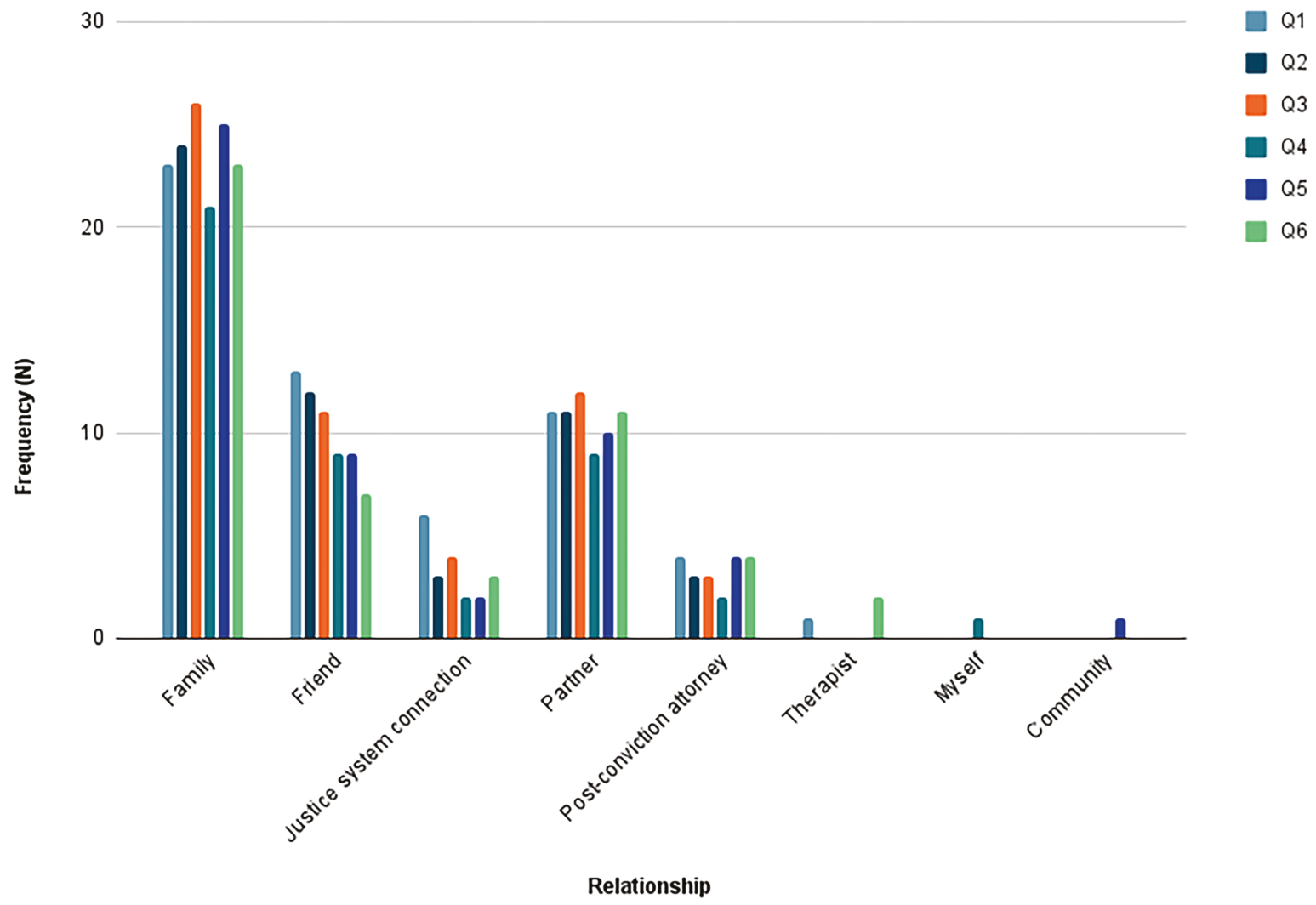
FIGURE 1 Types of relationships and number of people providing support.
| Journal of Community Safety and Well-Being (2026) 11(1), 44–52. | https://doi.org/10.35502/jcswb.485 |
Carly Strouse∗, Reyna Hernandez†, Obie Anthony‡, Nemesia Kelly¶, Gayle B. Cummings¶
ABSTRACT
While re-entry challenges of formerly incarcerated populations are well documented, there is limited understanding of the unique social support needs of individuals who have been wrongfully convicted and later exonerated. Unlike those released on parole, people who are exonerated often experience re-entry without institutional support, making their transition particularly complex and isolating. Addressing these gaps requires tailored, community-informed solutions. This paper presents the development of adapted social support tools specifically designed for exonerees through a community–academic partnership. Working with Exonerated Nation, a community-based organization led by and serving exonerees, we co-designed modifications to existing validated scales to better capture post-release social support experiences. The community-driven adaptation process was essential in creating a tool that could meaningfully assess social support as part of a comprehensive program needs assessment. The assessment was conducted during a 2-day convening of exonerees in California. Findings revealed the importance of fostering strong support networks, with diverse networks being particularly impactful. Families provide significant support and may benefit from greater inclusion in intergenerational healing spaces. These insights informed new programs, including peer support, re-entry mentors, and healing retreats that incorporated families and loved ones. This collaboration demonstrates the potential of community–academic partnerships to foster innovation in re-entry support by integrating diverse knowledge, mutual learning, and shared goals. It established the foundation for expanded program capacity, new funding opportunities, and future research initiatives. This paper further demonstrates how such partnerships can enhance service delivery and address the complex and often overlooked support needs of exonerees and their extended communities.
Key Words Wrongful conviction, exoneree, support, partnerships, health, well-being.
As of January 2026, the National Registry of Exonerations (n.d.) has identified over 3,700 exonerations in the United States, with wrongful convictions translating to over 34,000 years lost in the criminal justice system. Exonerees are individuals who were wrongfully convicted and later found innocent, often after decades of incarceration. Over the last 10 years, the exoneration rate increased dramatically due to advanced DNA technology and heightened attention from innocence organizations (IOs) working to prevent and remedy wrongful convictions. While substantial evidence reveals the challenges of re-entry and reintegration among people formerly incarcerated, less is known about exonerees’ distinct social, psychological, and emotional needs after wrongful imprisonment.
Incarceration and re-entry have enduring social, economic, and health effects on individuals, families, and communities (Dumont et al., 2012; Petersilia, 2003; Visher & Travis, 2003). Formerly incarcerated individuals face significant challenges upon release, including poverty, homelessness, joblessness, and the stigma of incarceration and a criminal record (Denny et al., 2014; Pager, 2003; Petersilia, 2003; Travis et al., 2001; Western et al., 2015). For exonerees, re-entry challenges are compounded by the distinct effects of wrongful conviction and imprisonment (Grounds, 2004, 2005; Shlosberg et al., 2020; Westervelt & Cook, 2010, 2012). Exonerees are at increased risk of adverse physical and mental health outcomes, including premature mortality, post-traumatic stress disorder, anxiety, depression, social estrangement, and isolation (Campbell & Denov, 2004; Grounds, 2004, 2005; Westervelt & Cook, 2012; Wildeman et al., 2011). While research shows that exonerated individuals struggle with practical issues like navigating new technology, finding housing, and employment, coping with readjustment and developing social relationships are equally important (Shlosberg et al., 2020; Smith, 2007; Westervelt & Cook, 2012).
Social support is defined as the perceived availability and assistance provided through social relationships, including emotional, instrumental, and informational support, that help people manage stress and promote well-being (Kao et al., 2014; Kjellstrand et al., 2022). Social support provides resources, knowledge, a sense of attachment, belonging, and purpose (Berkman, 2000; Taylor, 2011). It may be a particularly beneficial coping resource, increasing an individual’s capacity to lessen emotional and psychological distress in response to trauma and stressful life experiences (Jacoby & Kozie-Peak, 1997). Conversely, the absence of social support, or social isolation, is associated with poor mental health and premature mortality (Berkman, 2000; Fahmy, 2021; Holt-Lunstad et al., 2015).
Exonerees face significant barriers to accessing and maintaining social support systems, and they rarely receive post-incarceration support (Chunias & Aufgang, 2008; DeShay, 2016; Umamaheswar, 2023; Westervelt & Cook, 2010, 2012). Individuals wrongfully convicted are often released abruptly and lack post-incarceration transitional services through entities like parole boards since they are no longer considered offenders in the carceral system (Chunias & Aufgang, 2008; Westervelt & Cook, 2010). In the absence of designated personnel to support reintegration, exonerees often depend heavily on family and friends alongside IOs, advocates, and post-conviction attorneys to access essential resources such as financial assistance, housing, and physical and mental health care (Cummings et al., 2021; Chunias & Aufgang, 2008; DeShay, 2016; Westervelt & Cook, 2010, 2012). In addition, many exonerees experience deep mistrust, fear, and a loss of identity after wrongful conviction, making it more difficult to connect with others (Hoyle & Tilt, 2018; Westervelt & Cook, 2010, 2012). While existing research documents these social support challenges, we are unaware of prior studies that have adapted validated social support assessment instruments specifically for exonerees. This manuscript presents a community-driven adaptation of social support scales designed to capture population-specific dynamics.
Exonerated Nation (EN) is an exoneree-led organization that supports individuals who have been wrongfully convicted by providing resources for successful reintegration after release. EN supports exonerees’ long-term well-being by promoting mental, physical, and emotional health alongside successful re-entry. Since 2016, EN has collaborated with exonerees to identify community needs, ensuring ongoing support beyond reintegration. The organization advocates for policy changes that enhance quality of life, address systemic issues within the justice system, and improve resources for individuals affected by wrongful conviction.
While EN had been working with exonerees to address challenges like housing, finances, and employment, the organization increasingly recognized that people were struggling with isolation and, in some cases, lacked basic support systems, such as having someone to take them to the doctor if they were sick. However, the extent of isolation and the specific types of support people received, lacked, or desired were not well understood. To better serve their community, EN sought to understand these social support dynamics, identify gaps in existing resources, and enhance programming. With a small staff and limited capacity, EN partnered with academic collaborators to carry out a needs assessment. A researcher on EN’s board with an established relationship to the organization connected them with external academic partners. Together, in preparation for an upcoming retreat, we designed and implemented a community needs assessment.
This article describes the development of adapted social support assessment tools created specifically for exoneree needs assessment through a community–academic partnership. The needs assessment focused on three key areas: (1) the types of support participants were receiving, including tangible, informational, and emotional support; (2) who provided that support, to help identify potential partners for future retreats and workshops; and (3) open-ended questions regarding support after wrongful conviction to inform EN’s program development. We began looking at various social support tools, including the Multidimensional Scale of Social Support, the Perceived Social Support Scale, and the Duke-UNC Functional Social Support Question. After reviewing the scales together, EN partners decided on the National Institutes of Health (NIH) Toolbox Social Relationship Scales (Cyranowski et al., 2013), particularly because it assessed multiple domains of support, including tangible support, loneliness, and isolation. After discussions, we chose to adapt the tool to ensure it would be brief and manageable, allowing participants to complete the survey without detracting from the retreat (Appendix A). While we discussed that adaptations introduced concerns regarding the instrument’s validity and reliability, our goal was to avoid placing undue burden on participants, as the findings were intended to inform program development, grant opportunities, and future initiatives, not formal research activities. EN partners pilot tested the tool and recommended changes, including limiting the response time to 15–20 minutes; the process was adaptive and driven by their feedback to ensure relevance. By prioritizing user-friendliness and participant engagement, we aimed to create a survey that could effectively capture the nuances of social support experienced by participants while being transparent about the limitations introduced by these modifications.
To assess who provided support, we asked additional questions about perceptions of and satisfaction with support using a tool developed by Sarason et al. (1983). The questionnaire asks about the number of perceived social supports in a person’s life and then the degree to which the supports are personally satisfying. Asking these questions in two parts can identify differences in the number of people and types of support. For instance, one individual may have many support people but feel less satisfied, while another may have few support people but feel very satisfied. Similarly to the NIH Toolbox Social Relationship Scales, we modified the tool by selecting 6 items from the original 27-item scale to reduce respondent burden while still capturing key issues related to social support systems and satisfaction with available support (Appendix B). Responses were reported based on relationship type (e.g., sibling, spouse) and categorized as family (siblings, parents, uncles, children), spouse/partner, friend, post-conviction legal team, criminal justice system connection (other exonerated person, co-defendant, or ex-cellmate), and therapist. We initially categorized partners as family members; however, our community partners noted the importance of distinguishing family (of origin) from spouse/partner (chosen family).
Based on feedback from our pilot survey, we included four questions specific to experiencing wrongful conviction: (1) Do I have someone I can talk to about my wrongful conviction? (2) Since your release, who has been an important source of support? (3) In what ways can your social support system be improved? (4) Do you have an interest in participating in an exoneree peer support network that meets a few times per year?
We recruited respondents from a retreat sponsored by EN in 2019. The retreat included healing circles and discussions regarding employment, job training, economic self-sufficiency, and advocacy after wrongful conviction. The principal investigator (PI) described the study to retreat participants and offered an opportunity to participate during a break. Participation was voluntary and did not impact retreat participation. Eligible participants were at least 18 years old, English-speaking, and experienced wrongful conviction. Twenty-one people fit the inclusion criteria; one attendee pilot tested the survey and did not participate, and another declined, yielding a final sample of 19 participants. Eighteen surveys were self-administered, and one participant dictated survey responses to the PI. On average, participants took 15 minutes to complete the survey.
Participants self-reported age, gender, race/ethnicity, marital status, highest level of education, whether they had children, employment status, years served in prison, and reason for wrongful conviction. We manually entered survey responses into Qualtrics (Qualtrics, Provo, UT, USA). Given our small sample size, we conducted descriptive statistics; we examined minimum, maximum, and percentage responses, as well as mean and standard deviations of social support scales to explore central tendency and variability in item responses. We obtained frequencies and percentages for the types of relationships (e.g., spouse/partner, sibling) that provide support. Two authors independently reviewed responses to the four questions related to social support and wrongful conviction and categorized them based on emerging themes. The coding process was primarily deductive, aimed at informing program development (Braun & Clarke, 2006). Through an iterative process, the authors refined categories in collaboration with EN partners, incorporating their feedback. Although this was a needs assessment, we obtained institutional review board approval at Touro University California. The process provided an opportunity to discuss future collaboration and research directions of our partnership.
We present a high-level synthesis of community-adapted assessment tools that informed EN’s evolving strategy. Among survey respondents, the average time served in prison was 17.9 years, with a minimum of 4 years and a maximum of 32 years (Table I). Sixty-three percent of respondents received a sentence of “Life” or “Life without parole,” and just over 20% received a sentence of 20 years or more. Reasons for wrongful conviction included perjury or false confession; false or misleading forensic evidence; governmental, official, or prosecutorial misconduct; mistaken eyewitness identification; and bad lawyering. Overall, participants reported strong sources of emotional and tangible support, with mean scores above 4 on a 0–5 scale, suggesting many respondents had access to people they could rely on (Table II). Participants reported slightly lower levels of companionship and friendship, pointing to opportunities to strengthen peer networks. Importantly, while participants overall reported low levels of loneliness and social stress, two respondents reported significantly higher levels of both.
TABLE I Demographic and wrongful conviction characteristics of survey respondents (N = 19)
| Demographic Characteristics | N (%) |
|---|---|
| Age, years | |
| 30–39 | 2 (10.5) |
| 40–49 | 11 (57.9) |
| 60 or older | 6 (31.5) |
| Gender | |
| Male | 17 (89.5) |
| Female | 2 (10.5) |
| Education | |
| HS diploma or GED | 6 (31.6) |
| Some college | 8 (42.1) |
| Bachelor’s degree or higher | 3 (15.8) |
| Missing | 2 (10.5) |
| Married/partnered | |
| Married/cohabiting with significant other | 10 (52.6) |
| Divorced | 2 (10.5) |
| Single | 6 (31.6) |
| Missing | 1 (5.9) |
| Children | |
| Yes | 10 (52.6) |
| No | 9 (47.4) |
| If yes, ages of children | |
| Over 18 years | 4 (40.0) |
| Children over and under 18 years old | 6 (60.0) |
| Employment status | |
| Working 40 or more hours per week | 11 (57.9) |
| Working part-time | 1 (5.3) |
| Not employed | 2 (10.5) |
| Retired | 1 (5.3) |
| Other | 2 (10.5) |
| Missing | 2 (10.5) |
| Mean years served in prison | 17.9 |
| Min-max | 4-32 |
| Sentence received for wrongful convictiona | |
| Life | 6 (31.6) |
| Life without parole | 6 (31.6) |
| 20 years or more | 4 (21.1) |
| Less than 20 years | 3 (15.8) |
aIssues cited for wrongful conviction include perjury or false confession, false or misleading forensic evidence, governmental, official, or prosecutorial misconduct, mistaken eyewitness identification, and bad lawyering.
Specific information on time served is excluded for confidentiality. We limited reporting on sociodemographic characteristics due to the small sample size and the need to protect participant confidentiality. GED = General Educational Development; HS = high school.
TABLE II Mean and standard deviation scores for adapted social support and social distress scale items (N = 19)
| Scale Item | Mean | SD |
|---|---|---|
| Emotional support | 4.12 | 0.89 |
| Tangible support | 4.08 | 1.18 |
| Companionship/friendship support | 3.97 | 0.74 |
| Loneliness | 2.17 | 0.95 |
| Social stress | 1.83 | 0.76 |
SD = standard deviation.
Responses varied in the types of relationships and the number of people providing support. While family and spouse/partner were most frequently cited, participants also relied on friends, post-conviction attorneys, and the innocence community as support (Figure 1). Participants reported generally high levels of satisfaction with their social support across support types (Table III). Some named numerous supportive relationships, while others relied on one or two. Those lacking social support reported increased social stress and loneliness compared to those with one or more supportive relationships. We found that social support from a diverse network increased participants’ levels of satisfaction with the support they received, suggesting that multiple individuals serve different support roles in post-incarceration transitions. The pattern of strong emotional and tangible support but lower companionship scores indicated that participants had people to rely on for practical and emotional needs but lacked regular social connections. This directly informed EN’s decision to prioritize peer networking events and group activities over expanding one-on-one services. Similarly, the finding that people with network diversity reported higher satisfaction than those relying on support quantity suggested that effective programming should help exonerees build multiple types of relationships: family for emotional anchoring, peers for shared understanding, and legal teams for advocacy, rather than intensifying single support sources. Only one participant noted post-release support from a mental health provider despite participants experiencing substantial trauma from wrongful conviction and incarceration. This may be due to multiple factors, including stigma associated with mental health services, mistrust of government institutions and resources, and limited numbers of mental health providers experienced in working with this distinct population. The absence of mental health support despite significant trauma represents a critical gap in services.
|
|
||
|
FIGURE 1 Types of relationships and number of people providing support. | ||
TABLE III Mean level of satisfaction with social support relationships, N = 19
| Scale Questions, Each Followed by the Prompt: Overall, How Satisfied Are You with This Support? | Mean Level of Satisfaction | SD |
|---|---|---|
| Q1: Whom can you really count on to listen to you when you need to talk? | 4.4 | 0.84 |
| Q2: Whom could you really count on to help you out in a crisis situation, even though they would have to go out of their way to do so? | 4.3 | 0.87 |
| Q3: Whom can you count on to be dependable when you need help? | 4.4 | 0.84 |
| Q4: With whom can you totally be yourself? | 4.4 | 0.81 |
| Q5: Who do you feel really appreciates you as a person? | 4.25 | 0.90 |
| Q6: Whom can you count on to console you when you are very upset? (N = 18) | 4.4 | 0.90 |
Response scale 1 = very dissatisfied to 5 = very satisfied.
SD = standard deviation.
Adapted from Sarason, et al. (1983).
Post-conviction legal teams and justice system connections, particularly other exonerees and the innocence community, played roles in furnishing support for participants after wrongful conviction. All but one participant stated they had someone with whom they could talk to about their wrongful conviction. When asked how their social support could be improved, participants identified two main themes: increased connection with the innocence community and greater economic opportunity. Half of the respondents wanted more time with the innocence community, specifically naming emotional support, group counselling, and networking opportunities. Five respondents noted more career and educational opportunities, including “guidance on career field” and “increased economic opportunities.” Three participants specified “more funding for services for exonerees” as a need. All participants expressed interest in joining a peer support network.
The community-adapted assessment tool captured support dynamics essential for programming that standard measures would have missed. It successfully highlighted the importance of diverse family networks as critical support, as well as the necessity of peer support, given the profound, unique trauma of wrongful conviction that few others understand. Standard social support measures may not have been tested with populations experiencing such trauma or marginalization and simply do not capture these unique experiences. While modifying the instrument limits its validity and our small, community-recruited sample limits its generalizability, these trade-offs were appropriate, given the tool’s purpose as a needs assessment to inform programming rather than serve research objectives. These findings affirmed the value of EN’s existing work and pointed to areas for growth in fostering peer connections, directly enabling EN to enhance its programming based on the expressed needs of its community. This collaborative approach, where programs prioritize modifying tools to understand their population’s unique experiences, offers an important model for other organizations.
The needs assessment offered essential data that strengthened grant applications and aided EN in expanding its programs. It identified significant support gaps and community-prioritized issues, reinforcing EN’s appeal to funders for investments in programs that promote healing for exonerees as well as their families and loved ones. Specifically, the findings showed the extent to which partners and family members, including children, parents, and siblings, were providing critical support while rarely receiving it themselves. The assessment also reinforced the importance of strong peer networks for healing and reintegration, confirming that mutual aid among exonerees is essential.
While pursuing related research questions and navigating delays caused by the COVID-19 pandemic, EN refined retreat goals and secured funding and, in 2022, held its first annual intergenerational healing retreat with exonerees and their families. Building on this momentum, the retreats were structured as intentional spaces for healing and reconnection to foster the repair needed to strengthen relationships disrupted by wrongful conviction. Sessions focus on communication skills, restorative practices, music, movement, and somatic abolition practices to address trauma across generations. The approach reflects EN’s belief that reintegration must extend beyond individual services to include family healing, peer networks, and community care.
The retreats also opened space for new research led by exonerees about different ways people cope with the trauma of wrongful conviction. Academic partners secured grants to support this work, compensating community partners for their time on tool development, recruitment, and dissemination.
The partnership allowed EN to guide decisions so the work stayed aligned with community priorities, while academic partners provided technical support. Together, the team developed dissemination strategies and programming that advanced EN’s goals. EN has been able to use the data in grant applications, policy advocacy, and community outreach, building its capacity to push for systemic change. Results from this collaboration have also been used by advocacy groups in California to support legislative reforms, particularly around housing and mental health for people who have been wrongfully convicted.
While much has been written elsewhere about academic and community partnerships, we highlight several features of our collaboration that may be useful for others working with populations that have experienced trauma and marginalization (Ahmed et al., 2016; Chicago Beyond, 2018; Nanda et al., 2023). Our work builds on earlier collaborations that established a foundation of trust, humility, and respect. EN set the parameters for the project, deciding when and how the needs assessment would occur and how the findings would be used. With the shared understanding that this unfunded collaboration would lay the groundwork for future opportunities, EN staff contributed as part of their existing roles without additional compensation, and academic partners offered their time as service commitments.
A key lesson was that the partnership moved well beyond technical support. Academic partners worked alongside EN to navigate institutional processes such as review boards while keeping community priorities at the centre. Early on, the team learned the importance of taking time for check-ins before turning to project tasks. Meetings were arranged at mutually convenient times, whether in person, on Zoom, or by phone, and rescheduled whenever someone had urgent peer support needs or was abruptly released. These practices reflected a commitment to relational accountability, built on consistency, respect for one another’s realities, and trust in the work.
Together, these experiences pushed the collaboration beyond traditional models of academic–community research. They allowed us to co-create healing-centred approaches that could not have emerged without the leadership of directly impacted communities.
The community-adapted instrument demonstrated that families, spouses/partners, and friends provide extensive support but may need additional support themselves and that peer-to-peer opportunities are essential to meeting the unique social support needs after wrongful conviction. The findings informed program enhancements, enabling EN to develop intergenerational healing retreats, peer support networks, and advocacy efforts that address the dual needs of exonerees and their support systems. The community–academic partnership facilitated the translation of assessment findings into action, demonstrating how collaborative approaches can advance program goals and increase organizational capacity. This community-driven tool adaptation offers important lessons for other marginalized populations with unique re-entry or trauma experiences, demonstrating how academic–community partnerships can adapt instruments that capture population-specific dynamics missed by standard measures. While this needs assessment cannot be generalized beyond our sample, the collaborative approach enabled responsive programming, secured funding for increased program capacity, and fostered community-driven solutions.
We want to thank Rowena Hann for her work on compiling the data.
This project did not receive funding.
The authors have no conflicts of interest to declare.
This manuscript, others related to it, and content within it have not been published elsewhere and are not currently under consideration by another journal.
∗School of Public Health, University of California, Berkeley, CA, USA;
†Department of Sociology, University of Chicago, Chicago, IL, USA;
‡Exonerated Nation, American Canyon, CA, USA;
¶Public Health Program, College of Health Sciences, Touro University California, Vallejo, CA, USA.
Ahmed, S. M., Maurana, C., Nelson, D., Meister, T., Young, S. N., & Lucey, P. (2016). Opening the black box: Conceptualizing community engagement from 109 community-academic partnership programs. Progress in Community Health Partnerships Research Education and Action, 10(1), 51–61. https://doi.org/10.1353/cpr.2016.0019
Berkman, L. F. (2000). Social support, social networks, social cohesion and health. Social Work in Health Care, 31(2), 3–14. https://doi.org/10.1300/J010v31n02_02
Braun, V., & Clarke, V. (2006). Using thematic analysis in psychology. Qualitative Research in Psychology, 3(2), 77–101. https://doi.org/10.1191/1478088706qp063oa
Campbell, K., & Denov, M. (2004). The burden of innocence: Coping with a wrongful imprisonment. Canadian Journal of Criminology and Criminal Justice, 46(2), 139–164. https://doi.org/10.3138/cjccj.46.2.139
Chunias, J. L., & Aufgang, Y. D. (2008). Beyond monetary compensation: The need for comprehensive services for the wrongfully convicted. Boston College Third World Law Journal, 28(1), 105–128.
Chicago Beyond. (2018). Why am I always being researched? A guidebook for community organizations, researchers, and funders to help us get from insufficient understand to more authentic truth (Equity Series, Volume One, pp. 1–112). https://wp.chicagobeyond.org/wp-content/uploads/2023/09/ChicagoBeyond_Why-Am-I.pdf.
Cummings, G. B., Kelly, N. P., Hernandez, A. L., Lingas, E. O., Strouse, C. E., & Anthony, O. (2021). What promotes healing among the wrongfully convicted? Results from a qualitative study of exonerated persons in California. Social Determinants of Health, 7, 1–13. https://doi.org/10.22037/sdh.v7i1.35582
Cyranowski, J. M., Zill, N., Bode, R., Butt, Z., Kelly, M. A., Pilkonis, P. A., Salsman, J. M., & Cella, D. (2013). Assessing social support, companionship, and distress: National Institute of Health (NIH) Toolbox Adult Social Relationship Scales. Health Psychology, 32(3), 293–301. https://doi.org/10.1037/a0028586
Denny, A. S., Tewksbury, R., & Jones, R. S. (2014). Beyond basic needs: Social support and structure for successful offender reentry. Journal of Qualitative Criminal Justice and Criminology, 2(1), 39–67. https://doi.org/10.21428/88de04a1.d95029f6
DeShay, R. A. (2016). “A lot of people go insane behind that”: Coping with the trauma of being wrongfully convicted. Criminal Justice Studies, 29(3), 199–213.
Dumont, D. M., Brockmann, B., Dickman, S., Alexander, N., & Rich, J. D. (2012). Public health and the epidemic of incarceration. Annual Review of Public Health, 33, 325–339. https://doi.org/10.1146/annurev-publhealth-031811-124614
Fahmy, C. (2021). First weeks out: Social support stability and health among formerly incarcerated men. Social Science & Medicine, 282, 114141. https://doi.org/10.1016/j.socscimed.2021.114141
Grounds, A. (2004). Psychological consequences of wrongful conviction and imprisonment. Canadian Journal of Criminology & Criminal Justice, 46(2), 165–182. https://doi.org/10.3138/cjccj.46.2.165
Grounds, A. T. (2005). Understanding the effects of wrongful imprisonment. Crime and Justice, 32, 1–58.
Holt-Lunstad, J., Smith, T. B., Baker, M., Harris, T., & Stephenson, D. (2015). Loneliness and social isolation as risk factors for mortality: A meta-analytic review. Perspectives on Psychological Science, 10(2), 227–237. https://doi.org/10.1177/1745691614568352
Hoyle, C., & Tilt, L. (2018). The benefits of social capital for the wrongfully convicted: Considering the promise of a resettlement model. The Howard Journal of Crime and Justice, 57(4), 495. https://doi.org/10.1111/hojo.12283
Jacoby, J. E., & Kozie-Peak, B. (1997). The benefits of social support for mentally ill offenders: Prison-to-community transitions. Behavioral Sciences and the Law, 15, 483–501. https://doi.org/10.1002/(sici)1099-0798(199723/09)15:4[[483::aid-bsl280]]3.0.co;2-f
Kao, J. C., Chuong, A., Reddy, M. K., Gobin, R. L., Zlotnick, C., & Johnson, J. E. (2014). Associations between past trauma, current social support, and loneliness in incarcerated populations. Health & Justice, 2, 7. https://doi.org/10.1186/2194-7899-2-7
Kjellstrand, J. M., Clark, M. G., Mannan, I. A., Loan, C. M. et al. (2022). Social support during incarceration: Predictors of external social support for incarcerated individuals. American Journal of Criminal Justice, 48, 1183–1203. https://doi.org/10.1007/s12103-022-09685-6
Nanda, J. P., Clark, R. S., Harrison, J. A., Ouyang, P., Lacanienta, C., Himmelfarb, C., & CRAC Editorial Contributors. (2023). Community-academic partnerships to embrace and ensure diversity, equity, and inclusion in translational science: Evidence of successful community engagement. Journal of Clinical and Translational Science, 7(1), e188. https://doi.org/10.1017/cts.2023.601
National Registry of Exonerations. (n.d.). Glossary. Retrieved January 20, 2025. https://innocencenetwork.org/
Pager, D. (2003). The mark of a criminal record. American Journal of Sociology, 108(5), 937–975. https://doi.org/10.1086/374403
Petersilia, J. (2003). When prisoners come home: Parole and prisoner reentry. Oxford University Press.
Sarason, I. G., Levine, H. M., Basham, R. B., & Sarason, B. R. (1983). Assessing social support: The Social Support Questionnaire. Journal of Personality and Social Psychology, 44(1), 127–139. https://doi.org/10.1037/0022-3514.44.1.127
Shlosberg, A., Nowotny, J., Panuccio, E., & Rajah, V. (2020). “They open the door, kick you out, and say, ‘Go’”: Reentry challenges after wrongful imprisonment. The Wrongful Conviction Law Review, 1(2), 226–252. https://doi.org/10.29173/wclawr20
Smith, M. (2007). Have we abandoned the innocent? Society’s debt to the wrongly convicted. Criminal Law Brief, 2(2), 3–15.
Taylor, S. E. (2011). Social support: A review. In H. S. Friedman (Ed.), The Oxford handbook of health psychology (pp. 189–214). Oxford University Press.
Travis, J., Solomon, A. L., & Waul, M. (2001). From prison to home: The dimensions and consequences of prisoner reentry. https://www.urban.org/research/publication/prison-home-dimensions-and-consequences-prisoner-reentry
Umamaheswar, J. (2023). The relational costs of wrongful convictions. Critical Criminology, 1–17. Advance online publication. https://doi.org/10.1007/s10612-023-09684-x
Visher, C. A., & Travis, J. (2003). Transitions from prison to community: Understanding individual pathways. Annual Review of Sociology, 29(1), 89–113. https://doi.org/10.1146/annurev.soc.29.010202.095931
Western, B., Braga, A. A., Davis, J., & Sirois, C. (2015). Stress and hardship after prison. The American Journal of Sociology, 120(5), 1512. https://doi.org/10.1086/681301
Westervelt, S. D., & Cook, K. J. (2010). Framing innocents: The wrongly convicted as victims of state harm. Crime, Law & Social Change, 53(3), 259–275. https://doi.org/10.1007/s10611-009-9231-z
Westervelt, S. D., & Cook, K. J. (2012). Life after death row: Exonerees’ search for community and identity. Rutgers University Press.
Wildeman, J., Costelloe, M., & Schehr, R. (2011). Experiencing wrongful and unlawful conviction. Journal of Offender Rehabilitation, 50(7), 411–432. https://doi.org/10.1080/10509674.2011.603033
The following items were adapted from the NIH Toolbox Adult Social Relationship Scale for use in a community-based needs assessment. Items were selected and modified for relevance and clarity based on the study population and context.
| Emotional support | For The Set of Questions Below, Please Read Each Statement and Then Decide How Much Each Applies to You in the Past Month. In the past month, please rate how often… 1 (never), 2 (rarely), 3 (sometimes), 4 (usually), 5 (always) |
|---|---|
| I have someone who understands my problems. | |
| I have someone who will listen to me when I need to talk. | |
| I feel there are people I can talk to if I am upset. | |
| I have someone to talk with when I have a bad day. | |
| I have someone I can trust to talk with about my problems. | |
| I have someone I trust to talk with about my feelings. | |
| I can get helpful advice from others when dealing with a problem. | |
| I have someone to turn to for suggestions about how to deal with a problem. | |
| Tangible support | For the Set of Questions Below, Please Read Each Statement and Then Decide How Much Each Applies to You in the Past Month. In the past month, please rate how often… 1 (never), 2 (rarely), 3 (sometimes), 4 (usually), 5 (always) |
| I have someone around to make meals if I am unable to do it. | |
| I have someone to take me shopping if I need it. | |
| I have someone to help me if I am sick in bed. | |
| I have someone to pick up medicine for me if I need it. | |
| There is someone around to help me if I need it. | |
| Companionship/friendship | For the Set of Questions Below, Please Read Each Statement and Then Decide How Much Each Applies to You in the Past Month. In the past month, please rate how often… 1 (never), 2 (rarely), 3 (sometimes), 4 (usually), 5 (always) |
| I get invited to go out and do things with other people. | |
| I have friends I get together with to relax. | |
| There are people around with whom to have fun. | |
| I can find a friend when I need one. | |
| There is someone around to get together with for relaxation. | |
| There is someone around to do something enjoyable with. | |
| I feel like I’m part of a group of friends. | |
| Loneliness | For the Set of Questions Below, Please Read Each Statement and Then Decide How Much Each Applies to you in the Past Month. In the past month, please rate how often… 1 (never), 2 (rarely), 3 (sometimes), 4 (usually), 5 (always) |
| I feel alone and apart from others. | |
| I feel left out. | |
| I feel that I am no longer close to anyone. | |
| I feel alone. | |
| I feel lonely. | |
| Social stress | For the Set of Questions Below, Please Read Each Statement and Then Decide How Much Each Applies to you in the Past Month. In the past month, please rate how often people in your life… 1 (never), 2 (rarely), 3 (sometimes), 4 (usually), 5 (always) |
| Don’t listen when I ask for help. | |
| Act like my problems aren’t that important. | |
| Let me down when I am counting on them. | |
| Act like they don’t have time for me. | |
| Act like they don’t want to hear about my problems. | |
| Act like they don’t care about me. | |
| Act like they can’t be bothered by me or my problems. | |
| Avoid talking to me. |
The following items were adapted from the Social Support Questionnaire for use in a community-based needs assessment. Participants listed relationship types (e.g., family, spouse, justice system connection) or “No one” if no support was available. For each item, participants rated satisfaction with the support on a 5-point Likert scale (1 = very dissatisfied to 5 = very satisfied)
| Item # | Social Support Question |
|---|---|
| 1 | Whom can you really count on to listen to you when you need to talk? |
| 2 | Whom could you really count on to help you out in a crisis situation, even though they would have to go out of their way to do so? |
| 3 | Whom can you count on to be dependable when you need help? |
| 4 | With whom can you totally be yourself? |
| 5 | Who do you feel really appreciates you as a person? |
| 6 | Whom can you count on to console you when you are very upset? |
Correspondence to: Gayle B. Cummings, 1310 Club Drive, Vallejo, CA 94592, USA. Telephone: 707-638-5831. E-mail: gcumming@touro.edu
This work is distributed under the Creative Commons BY-NC-ND license. To view a copy of this license, visit http://creativecommons.org/licenses/by-nc-nd/4.0/. For commercial re-use, please contact sales@sgpublishing.ca.
Journal of CSWB, VOLUME 11, NUMBER 1, March 2026