Candace I. J. Nykiforuk*, Laura Nieuwendyk*, Ana Paula Belon*, Lisa Allen Scott*,†,‡, Gary Teare¶,§, Val Morrison||
ABSTRACT
Municipal community safety and well-being policies or frameworks focus on public safety and well-being by design, but scope, focus, and operationalization vary. While municipal governments set priorities for safety and well-being, many contributing factors fall under the jurisdictions of other regional, provincial, or national actors across sectors. This complex landscape suggests a need for intersectoral networks to overcome silos and structural barriers in practice. This is consistent with population health approaches that value intersectoral action and upstream approaches, yet face implementation, scale, and continuity barriers. Recognizing this, the 2023 Centre for Healthy Communities Innovation Forum brought together over 130 multi-sectoral partners and representatives of organizations working on a municipal community safety and well-being policy or related social innovations. This paper reports on the topics, challenges, and calls for action that emerged from this event. Two calls to action emerged: (1) safety and well-being should be a central concern and investment priority for all levels of government; and (2) collaborative action across sectors and at different decision-making levels are critical for policy positive outcomes from community safety and well-being policies over the near and long terms. Intersectoral action must take a systems approach, connecting various levels to identify tangible actions and achieve transformative, population-level impacts on public safety and well-being, social outcomes, and economic vitality goals within communities. There is a pressing need to foster a funded system (or network of systems) to support the intersectoral coordination and collaboration required for ongoing cultivation and maintenance of an effective municipal community safety and well-being policy.
Key Words Policy; municipalities; public health; government; healthy community.
Community safety and well-being (CSWB) presents a complex and pressing suite of issues for municipalities across Canada. This is evidenced through growing adoption of formal policies or frameworks to guide municipal or regional action (e.g., through program offerings, infrastructure investments, strategic and operational planning, or budget allocations) on the myriad domains comprising “community safety” and “well-being.” Municipalities in Ontario, for example, were required by provincial legislation (Community Safety and Policing Act, 2019) to implement a CSWB plan by July 2021 to proactively identify and act on local, priority risks to CSWB. While all municipal CSWB policies or frameworks focus on public safety and well-being by design (often measured through policing- and health-related indicators, respectively), they are diverse in how they address the factors that determine or shape safety and well-being. They may consider economic and social sustainability over the long term or seek to address near-term community-identified needs such as improving quality of life; meeting basic necessities such as housing security, food security, employment, and transportation in sustainable ways; providing accessible and well-funded social services; enhancing safety in public spaces; increasing social connection, belonging, and citizen engagement; growing community capacity; fostering culture and arts; outlining civic governance; and improving equity or supporting vulnerable populations. Some CSWB frameworks also explicitly align with municipal reconciliation efforts (e.g., City of Edmonton, 2024; Region of Waterloo, 2023).
There is also increasing scholarship on CSWB, including calls for greater conceptual understanding and recognition as an emerging area of social innovation and impact (Atkinson et al., 2020; McCrea et al., 2014; Nilson 2018; Sung & Phillips, 2018). For example, responding to inconsistencies in practice and measurement of CSWB within human services in Canada, Nilson (2018) defined CSWB as the “targeted, aggregate result of our broader human service system that is achieved through collaborative generation of pragmatic solutions, evidence-based innovations, and shared community outcomes. It is the state at which the composite needs of a community’s collective safety and well-being are achieved. Such needs are met when conditions of risk are mitigated, vulnerability is reduced, and the occurrence of harm is nil” (p. 98). This definition, and its accompanying practice typology, reflect movement toward upstream, intersectoral collaborations and the adoption of preventive strategies, rather than prioritizing siloed or reactionary initiatives (Nilson, 2018). Some municipalities are operationalizing this upstream focus as taking action on the social determinants of health (i.e., the social and economic factors in peoples’ living and working conditions that influence their health), extending beyond conventional downstream efforts focused solely on crime prevention. For example, the City of Lethbridge, Alberta (2024) has described mounting and intersecting social, safety, and health issues as evidence that innovative and evidence-informed solutions must be adopted over conventional options that may not be sustainable.
Municipal governments set the tone for safety and well-being for their communities. Yet, many contributing factors to CSWB fall under the mandates and jurisdictions of regional, provincial, or national actors across many different sectors (Allen, 2024; Atkinson et al., 2020; Cloutier et al., 2019). For example, health is a provincial jurisdiction although people’s access to the healthcare system occurs within municipalities. Housing, public transportation, and infrastructure also involve multiple levels of government and actors from many sectors. Further, for some communities, law enforcement is provided by the Royal Canadian Mounted Police (RCMP), which is an agency of the Government of Canada that provides policing services to municipalities and Indigenous communities across Canada (Royal Canadian Mounted Police, 2021). This complex landscape suggests, at minimum, a need for intersectoral CSWB networks – that include different sectors as well as all levels of government – to share information on issues of mutual interest. Ideally, these diverse actors could adopt a collaborative systems approach to CSWB based on, for example, shared goals, effective communication, coordination of activities and resources, and respect for each other’s jurisdictions, mandates, and responsibilities (Bartkowiak-Théron & Asquith, 2022; Krupanski & Crofts, 2022; Powell et al., 2024). Such a system could rest on the principle of context-sensitivity, which includes recognizing and being responsive to municipal priorities, needs, and resources. While such intersectoral action may be the ideal, proponents of CSWB continue to face operational silos and structural barriers in practice – across the continuum of basic information sharing to more sophisticated collaborative system approaches (Allen, 2024; Martin & Graham, 2022). Population health promotion faces much the same concerns: valuing intersectoral action and upstream systems-oriented approaches, yet facing implementation, scale-up, and continuity barriers. For example, the Geneva Charter for Well-being calls on world leaders and policy-makers to adopt a well-being society approach, delineated as five key actions including “creating public policy for the common good” (World Health Organization, 2021).
Population health promotion principles also emphasize the importance of addressing equity and intersectionality in intervention development and generating rigorous, evaluative evidence employing different data sources to inform decision-making (Craig et al., 2018; Gómez et al., 2021; Hawe & Potvin, 2009). Further, in addition to engaging in systems approaches, the next generation of public health leaders must be able to communicate and build trust, forge and maintain strong partnerships with communities, connect public health with other systems, contribute to providing accessible data, and address structural racism and health inequity (Helm-Murtagh & Erwin, 2024).
Similar to CSWB in their orientation toward macro-policy for social and economic good, well-being budgets (c.f., McLaren, 2022) and health in all policy (c.f., Guglielmin et al., 2018) approaches are population health strategies that embody upstream and intersectoral action, and that can be adopted at different levels of government. While these approaches are attractive, they can be difficult to implement: again, requiring attention to the unique needs, resources, and operations of specific governments, coordination across sectors and different levels of government, and sustaining a culture of evidence-informed decision-making.
In this way, CSWB policy is both of municipal concern and a public health issue – creating a timely opportunity for the various sectors working in these spaces to come together. The 2023 Centre for Healthy Communities (CHC) Innovation Forum (Centre for Healthy Communities, 2023) acted on this opportunity to bring together diverse actors from across sectors in Alberta working on CSWB-related issues to inspire and inform critical action. The 2023 CHC Innovation Forum focused on municipal CSWB policy as a deliberate social innovation. This paper reports on the topics, challenges, and calls for action that emerged from this dynamic, participant-centred event.
The CHC is a research centre of the School of Public Health at the University of Alberta (https://uab.ca/chc) that works with community, government, and academic partners to address the complex issues that impact community health, well-being, and sustainability. The CHC works across disciplines and sectors to focus on root causes, prevent illness, and support communities of all types to achieve their healthiest potential. To do this, CHC integrates five distinct, yet interconnected, research thematic areas in a systems approach: healthy environments; health equity; healthy school communities; healthy municipalities and workplaces; and supporting healthy Indigenous communities. CHC members include engaged academics and researchers, people working in practice and policy, decision-makers, and community members.
The 2023 CHC Innovation Forum focus on “Advancing Community Safety and Wellbeing Policies in Alberta’s Communities” spanned CHC’s inter-related research thematic areas and brought together over 130 people working or interested in CSWB-related issues. The annual CHC Innovation Forum is a platform for connection, collaboration, and highlighting different voices and perspectives to help participants take action on a topic timely to practice and research concerning healthy communities. The event is open to academics, practitioners, decision-makers, policy professionals, industry professionals, students, and members of the general public interested in the topic or in healthy communities and social innovation more broadly. Participants come together from across sectors and different levels of government to share insights and experiences, generate ideas, and take action to collectively advance the topic area of interest. Specifically, the goals of the annual CHC Innovation Forum are to help participants create connections to bridge knowledge and resource gaps; develop relationships to support actionable steps; share knowledge and experiences with different stakeholders; be inspired by, learn about, and understand the unique needs and diverse contexts of others working on similar issues; develop novel and synergistic approaches to define, achieve, and sustain a healthy community; and foster new opportunities for ongoing networking and collaboration to address evidence-to-action gaps.
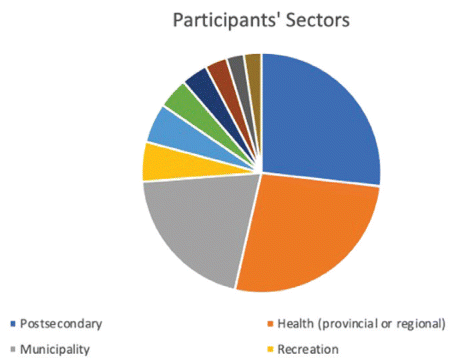
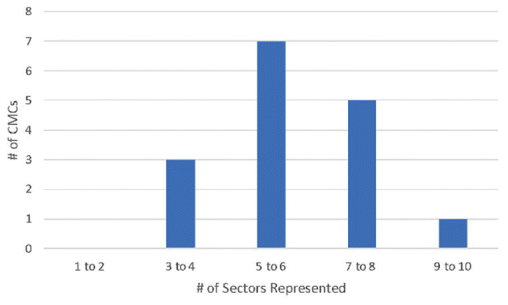
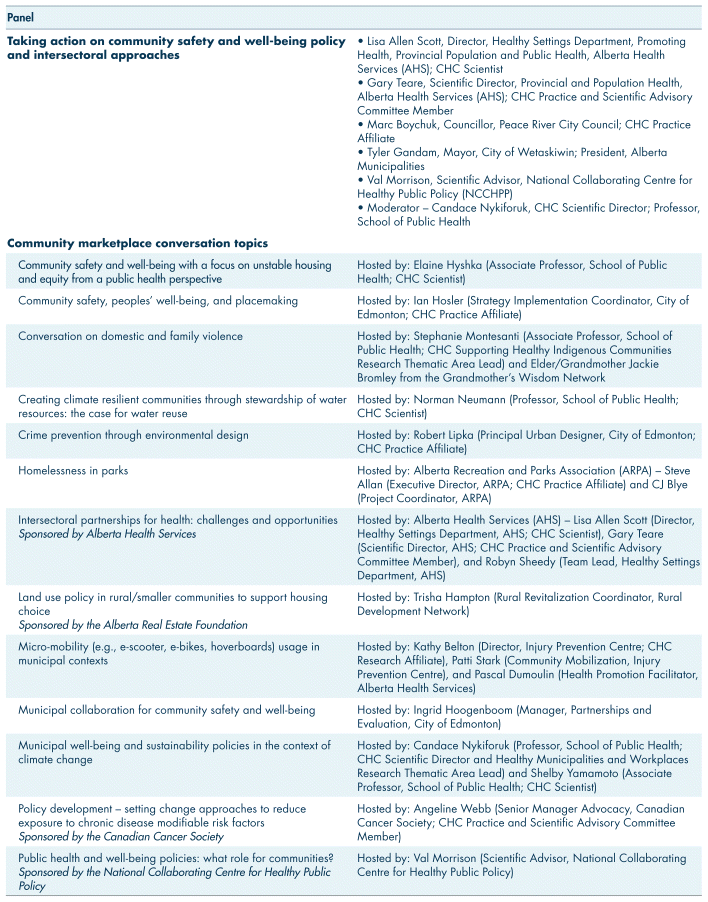
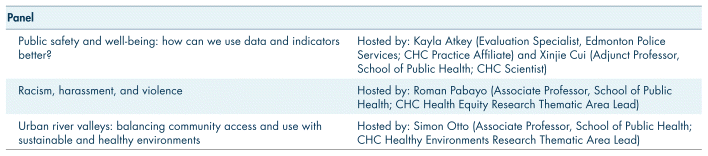
Targeting CSWB policies in Alberta’s communities, the 2023 CHC Innovation Forum involved an opening panel on intersectoral approaches for taking action on CSWB policy followed by concurrent “Community Marketplace Conversation” sessions on a wide range of partner-identified CSWB-related topics (Table I). These sessions allowed participants from a variety of sectors to engage in a minimum of three Community Marketplace Conversations, where they could share their experiences, and meet others interested in and working on common areas. Participation ranged from 9 to 33 people (average = 15) per Community Marketplace Conversation. A wide diversity of knowledge and experiences were shared in the Community Marketplace Conversations (Figure 1), with over 80% of them having at least five sectors represented (Figure 2).
TABLE I 2023 CHC innovation forum panel and community marketplace conversations
|
| ||
|
FIGURE 1 Sector types present at the 2023 CHC innovation forum. CHC, Centre for Healthy Communities | ||
|
| ||
|
FIGURE 2 Number of sectors represented in the community marketplace conversations (CMCs). | ||
Panellists, who represented local, provincial, and federal perspectives from practice and research, drew participants’ attention to the critical need for coordinated, intersectoral action at municipal, provincial, and national levels. CSWB in action was illustrated to participants through specific examples from housing and houselessness, mental health and addictions, rural community health and safety, health promotion and disease prevention, Alberta Health Services’ (AHS) Healthier Together | Building Healthy Alberta Communities Together approach (https://www.healthiertogether.ca), and well-being policy and economy initiatives. Panellists also described how the health of individuals depends on their communities, including the policies that create conditions for health and well-being.
Each of the 16 Community Marketplace Conversations was hosted by a practice, policy, or research leader who introduced the CSWB-related topic and facilitated dialogue. Participants selected three conversations to take part in, but were free to participate in as many conversations as they wished (by moving between virtual rooms). Themes about the role and importance of CSWB policy and related sub-topics that arose from participants’ conversations reflected opportunities and challenges faced in a municipal context when addressing CSWB issues; different stakeholders who need to be engaged to effectively advance CSWB in communities; and critical lessons experienced by people working on the various CSWB-related topics.
CSWB policy was exemplified as a critical lever for municipalities that are tackling complex, enduring issues that negatively impact people’s health and well-being, especially among the most vulnerable groups. Focus at the local level was seen as key to effective CSWB action because of the intense and immediate impacts of the social determinants of health experienced at the community level. Work by municipal governments and organizations at the local level is optimally positioned to be informed by and responsive to the people living in that community. Provincial and national stakeholders can enhance those efforts. For example, AHS’ Healthier Together approach is an innovative and unified way of working with communities, workplaces, schools, and health services at the system and local level to identify and address common priorities for population health and well-being (Chaisson et al., 2022). It involves using an asset-based community development approach; understanding the local context and opportunities; employing diverse types of evidence and knowledge; and collaborating to plan, implement, and evaluate initiatives.
The National Collaborating Centre for Healthy Public Policy’s key learnings from international efforts on well-being budgets and the well-being economy (for example, see https://ccnpps-ncchpp.ca/wellbeing-policies/) emphasized the need to move beyond economic measures of output (such as gross domestic product) as the stand-in for well-being in a municipality, province, or country. This idea was echoed across the Community Marketplace Conversations, particularly in dialogue about how public policy at different levels can directly or indirectly support the health and well-being of all. Well-being-focused policies were described as critical opportunities to advance community safety and people’s overall quality of life.
Further, all of the Community Marketplace Conversations identified opportunities to improve connections between government at different levels, non-governmental and para-governmental organizations (national, provincial, or local), community agencies, the private sector, and the general public. While these opportunities were tailored to the topic under discussion, it revealed a more prescient desire among participants to be more informed – and, in some cases, integrated – with the other actors working on that particular CSWB-related topic. A related theme was how CSWB policies could be leveraged to help build trust, community pride, and perception of safety and offset negative or fear-based messaging that can shadow local decision-making.
Challenges revealed the need for a more integrated CSWB (provincial or national) system to complement local CSWB policies and initiatives. Participants shared many experiences of how both urban and rural municipalities are struggling with escalating housing insecurity and houselessness as well as growing poverty, crime rates, racism and discrimination, and public safety concerns. The discussions across various Community Marketplace Conversations showed that the lack of a collective mandate for coordinated action on housing, supporting people experiencing houselessness, addictions, mental health, and related social determinants, can lead to inefficient, siloed, and reactionary efforts that result in people getting lost in the system. Some conversations revealed frustration over the related acute pressures and costs that are borne by local governments and the social, health, law enforcement, and justice systems. For example, people from different sectors described insufficient funding and resources to effectively meet peoples’ needs – especially in extreme weather or climate-related emergencies like floods or wildfires. Participants who worked in rural communities also spoke to a lack of support and sending people outside of their communities for services as core issues hampering CSWB and primary prevention of poor health and safety locally.
A lack of funding for advocacy and generating evidence was shared as a barrier to advancing CSWB. Responsibility for boundary-spanning advocacy, conducting applied research and evaluation, and moving issues forward were experienced as falling heavily on community groups, not-for-profit agencies, and non-governmental organizations who typically operate on limited resources. A lack of viable, on-the-ground solutions and tools to do intersectoral community-level work was seen as a large gap. Participants noted that supporting research to generate strong evidence on CSWB interventions (including policy) and scalable, applied tools for use in practice does not appear to be a priority for national funders, despite its upstream, intersectoral, and prevention-oriented focus.
Despite the wide range of dialogues within the Community Marketplace Conversations, each revealed a need to figure out coordinated structures to support effective partnerships – connecting community supports to systems supports – that could address community-identified issues in an ongoing, sustainable way.
Two fundamental calls to action for advancing CSWB policy in municipalities emerged from the 2023 CHC Innovation Forum. First, recognizing that safety and well-being are related, multi-faceted issues, and that they should be a central concern and investment priority for all levels of government. Second, understanding that a single municipality or agency cannot address CSWB issues in isolation, partnerships, and collaborative action across sectors and at different decision-making levels are critical for positive outcomes from CSWB policy over the near and long terms.
Principles underpinning these calls to action include the importance of attending to the dynamic factors that create a happy, healthy, and safe community; the value of meeting organizations and residents where they are at and engaging them in CSWB decision-making and action; collecting and using diverse experiences and data to inform local policy; and, striving for collective impact within and across communities. In other words, leveraging a CSWB system to enhance how different CSWB actors from across settings and sectors might come together to take action on locally determined priorities for safety and well-being. There is a parallel need for an open public discourse and accountability around CSWB issues to foster community awareness and support, particularly for upstream and complex issues that are beyond the remit of any single government’s term. Importantly, local people and priorities must remain at the centre of municipal CSWB work.
The 2023 CHC Innovation Forum revealed tremendous interest in how people can leverage the efforts occurring in formal arenas to mobilize informal spaces to better support advocacy and action on CSWB’s various domains. The diverse topics discussed in the Community Marketplace Conversations demonstrated that intersectoral action on municipal CSWB policy can be tailored to the issue being addressed. Participants in those conversations shared that, in their collective experience, CSWB policies should be informed by different forms of high-quality data: quantitative data on needs and outcomes as well as contextual information that reflects a diversity of perspectives and experiential data from people affected by the issues. The 2023 CHC Innovation Forum participants – who came from very different sectors – emphasized the need for coordination and collaboration to make better use of data and indicators, even recognizing potential challenges with data sharing (e.g., coordination, data confidentiality, and privacy concerns).
Communities across Canada are taking action to support community safety while fostering community well-being and social sustainability. The 2023 CHC Innovation Forum explored and transcended a wide range of topics pertaining to CSWB policy in municipalities, challenging stakeholders to think more deeply about what can be done to advance CSWB in all communities, within their own mandates and collectively. Municipalities are at the front lines of addressing CSWB, left to balance the tension between needing solutions at the local level and recognizing causes at the macro, societal level. CSWB municipal policies are a clear example of how upstream interventions do not need to be large-scale interventions. Thus, the call to action emerging from 2023 CHC Innovation Forum emphasizes that intersectoral action (i.e., collaboration and coordination of actions) at different levels in a CSWB systems approach is required to identify tangible solutions and achieve transformative, population-level impacts on public safety and well-being, social innovation, and economic vitality goals within communities. Taken together, all of this points to the pressing need to foster a funded system (or network of systems) to support the intersectoral coordination and collaboration required for ongoing cultivation and maintenance of effective CSWB policy.
The 2023 Centre for Healthy Communities Innovation Forum was hosted by the Centre for Healthy Communities, School of Public Health, University of Alberta in partnership with the following organizations that provided financial sponsorship for the event: Alberta Health Services, the Alberta Real Estate Foundation, the Canadian Cancer Society, and the National Collaborating Centre for Healthy Public Policy. CIJN is a Canada Research Chair in Community Environments and Public Policy for Well-Being: as such, this work was undertaken, in part, thanks to funding from the Canada Research Chairs Program.
The authors have no conflicts of interest to declare.
This manuscript reports, in part, on the outcomes of the 2023 Centre for Healthy Communities Innovation Forum. An infosheet summarizing the event provides a very high-level summary of some of the event outcomes report herein. The infosheet is cited in this manuscript and is publicly available online at: https://www.ualberta.ca/en/public-health/media-library/research/events/innforum_report_2023.pdf
*Centre for Healthy Communities, School of Public Health, University of Alberta, Edmonton, AB, Canada;
†Healthy Settings, Promoting Health, Provincial Population and Public Health (PPPH), Alberta Health Services, Calgary, AB, Canada;
‡Departments of Community Health Sciences and Oncology, Cumming School of Medicine, University of Calgary, Calgary, AB, Canada;
¶Provincial Population and Public Health, Alberta Health Services, Calgary, AB, Canada;
§Department of Community Health Sciences, Cumming School of Medicine, University of Calgary, Calgary, AB, Canada;
||National Collaborating Centre for Healthy Public Policy (NCCHPP), Montréal, QC, Canada.
Allen, S. C. (2024). Collaborations for CSWB: The groups that everyone needs to join. Journal of Community Safety and Well-Being, 9(1), 1–2. https://doi.org/10.35502/jcswb.381
Crossref
Atkinson, S., Bagnall, A. M., Corcoran, R., South, J., Curtis, S. (2020). Being well together: Individual subjective and community wellbeing. Journal of Happiness Studies, 21(5), 1903–1921. https://doi.org/10.1007/s10902-019-00146-2
Crossref PubMed PMC
Bartkowiak-Théron, I., Asquith, N. L. (2022). Law enforcement, public health, and vulnerability. In: I. Bartkowiak-Théron, J. Clover, D. Martin, R. F. Southby, N. Crofts (Eds.), Law enforcement and public health (pp. 53–63). Springer, Cham. https://doi.org/10.1007/978-3-030-83913-0_4
Crossref
Centre for Healthy Communities. (2023). Centre for Healthy Communities Innovation Forum 2023 – Advancing community safety and wellbeing policies in Alberta’s communities: An interactive knowledge sharing, idea generation, and networking event [Fact sheet]. https://www.ualberta.ca/en/public-health/media-library/research/events/innforum_report_2023.pdf
Chaisson, K., Gougeon, L., Patterson, S., Allen Scott, L. (2022). Multisectoral partnerships to tackle complex health issues at the community level: Lessons from a Healthy Communities Approach in rural Alberta, Canada. Canadian Journal of Public Health, 113, 755–763. https://doi.org/10.17269/s41997-022-00653-5
Crossref PubMed PMC
City of Edmonton. (2024). RECOVER: Edmonton’s Urban Wellness Plan. Retrieved July 20, 2024, from https://www.edmonton.ca/city_government/initiatives_innovation/recover-urban-wellness-plan#:~:text=Recover%20is%20an%20urban%20wellness,housing%2C%20food%20and%20basic%20supports
City of Lethbridge. (2024). A path forward: Community wellbeing and safety strategy update. Retrieved November 20, 2024, from https://www.lethbridge.ca/media/ctsfkhhw/community-wellbeing-and-safety-strategy_updated.pdf
Cloutier, S., Ehlenz, M. M., Afinowich, R. (2019). Cultivating community wellbeing: Guiding principles for research and practice. International Journal of Community Well-Being, 2, 277–299. https://doi.org/10.1007/s42413-019-00033-x
Crossref
Craig, P., Di Ruggiero, E., Frolich, K. L., Mykhalovskiy, E., White, M., Campbell, R., Cummins, S., Edwards, N., Hunt, K., Kee, F., Loppie, C., Moore, L., Ogilvie, D., Petticrew, M., Poland, B. (2018). Taking account of context in population health intervention research: Guidance for producers, users and funders of research. National Institute of Health Research. https://doi.org/10.3310/cihr-nihr-01
Gómez, C. A., Kleinman, D. V., Pronk, N., Wrenn Gordon, G. L., Ochiai, E., Blakey, C., Johnson, A., Brewer, K. H. (2021). Addressing health equity and social determinants of health through Healthy People 2030. Journal of Public Health Management and Practice, 27(Supplement 6), S249–S257. https://doi.org/10.1097/PHH.0000000000001297
Crossref PubMed PMC
Government of Ontario. (2024). Community Safety and Policing Act, 2019, S.O. 2019, c. 1, Sched. 1. https://www.ontario.ca/laws/statute/19c01
Guglielmin, M., Muntaner, C., O’Campo, P., Shankardass, K. (2018). A scoping review of the implementation of health in all policies at the local level. Health Policy, 122(3), 284–292. https://doi.org/10.1016/j.healthpol.2017.12.005
Crossref PubMed
Hawe, P., Potvin, L. (2009). What is population health intervention research? Canadian Journal of Public Health, 100, I8–I14. https://doi.org/10.1007/BF03405503
Crossref
Helm-Murtagh, S. C., Erwin, P. C. (2024). Building a new generation of public health leaders forged in a public health crisis. American Journal of Public Health, 114(6), 626–632. https://doi.org/10.2105/AJPH.2024.307633
Crossref PubMed PMC
Krupanski, M., Crofts, N. (2022). Envisaging the future of policing and public health: A commentary on the findings. Journal of Community Safety and Well-Being, 7(Suppl 1), S2–S5. https://doi.org/10.35502/jcswb.273
Crossref
Martin, D., Graham, W. (2022). The challenges of sustaining partnerships and the diversification of cultures. In I. Bartkowiak-Théron, J. Clover, D. Martin, R. F. Southby, N. Crofts (Eds.), Law enforcement and public health (pp. 125–140). Springer, Cham. https://doi.org/10.1007/978-3-030-83913-0_9
Crossref
McCrea, R., Walton, A., Leonard, R. (2014). A conceptual framework for investigating community wellbeing and resilience. Rural Society, 23(3), 270–282. https://doi.org/10.1080/10371656.2014.11082070
Crossref
McLaren, L. (2022). Wellbeing budgeting: A critical public health perspective. [Invited Commentary]. National Collaborating Centre for Healthy Public Policy. https://ccnpps-ncchpp.ca/docs/2022-Wellbeing-Budgeting-A-Critical-Public-Health-Perspective.pdf
Nilson, C. (2018). Community safety and well-being: Concept, practice, and alignment (LEPH2018). Journal of Community Safety and Well-Being, 3(3), 96–104. https://doi.org/10.35502/jcswb.81
Crossref
Powell, N., Dalton, H., Lawrence-Bourne, J., Perkins, D. (2024). Co-creating community wellbeing initiatives: What is the evidence and how do they work? International Journal of Mental Health Systems, 18(1), 28. https://doi.org/10.1186/s13033-024-00645-7
Crossref PubMed PMC
Region of Waterloo. (2023). Region of Waterloo Community Safety Wellbeing Plan. Retrieved July 20, 2024, from https://www.regionofwaterloo.ca/en/health-and-wellness/community-safety-and-wellbeing-plan.aspx
Royal Canadian Mounted Police. (2021). Royal Canadian Mounted Police. Retrieved July 20, 2024, from https://www.rcmp-grc.gc.ca/en/about-rcmp
Sung, H., Phillips, R. G. (2018). Indicators and community well-being: Exploring a relational framework. International Journal of Community Well-Being, 1, 63–79. https://doi.org/10.1007/s42413-018-0006-0
Crossref
World Health Organization. (2021). The Geneva Charter for Well-Being (Unedited). Geneva. https://www.who.int/publications/m/item/the-geneva-charter-for-well-being
Correspondence to: Candace Nykiforuk, Scientific Director and Professor, Centre for Healthy Communities, School of Public Health, University of Alberta, 11405-87 Ave, Edmonton, AB T6G 1C9, Canada. Telephone: +780-492-4109; Fax: +780-492-0364. E-mail: candace.nykiforuk@ualberta.ca
This work is licensed under the Creative Commons Attribution-NonCommercial-NoDerivatives 4.0 International License. To view a copy of this license, visit http://creativecommons.org/licenses/by-nc-nd/4.0/. For commercial re-use, please contact sales@sgpublishing.ca.
Journal of CSWB, VOLUME 10, NUMBER 3, September 2025