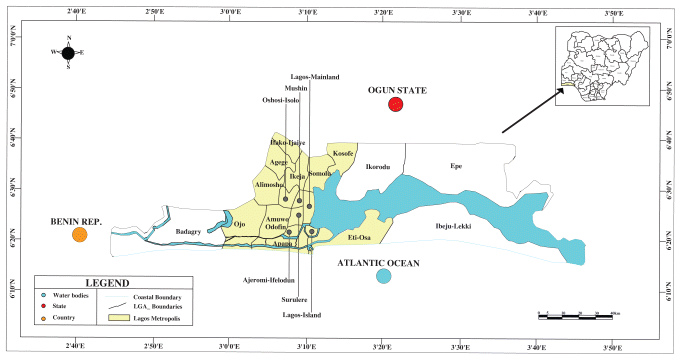
FIGURE 1 Map indicating the Lagos metropolitan and peri-urban areas.
Adewumi I. Badiora*
ABSTRACT
Developing partnerships between the state, the police, and local communities to prevent crime is increasingly recognized as valuable by security researchers and actors. Yet their effectiveness is undermined by a range of factors, particularly socio-political and institutional. Utilizing qualitative investigation, this study evaluates the specific forms of politics and strategies being used to confront insecurity in Lagos with the involvement of various actors. The study explores why co-production in Lagos exists and what can be done, and by whom, for co-creation to thrive in the city. What the Lagos experience teaches is that crime reduction through co-creation is more likely to emerge and endure. This is the case even in a political landscape, where police power is centralized around the presidency and an executive bureaucracy, especially if there is a viable socio-economic case, such as when crime rates are high and the police lack capacity and numerical strength to fight crime or, worse, when the state provides security to some groups but not to others. Despite the many challenges, findings show that co-creation of crime prevention exemplifies many successes. The limitations on co-creation opportunities are noteworthy and will require significant political and institutional support moving forward.
Key Words Violent crime; security governance; state and non-state actors; multi-sector partnerships.
States in Africa are considered to have failed to deliver on public utilities and services – their citizens remain poor and are commonly disregarded by their leaders, corruption reigns, security services are miserably unreliable and ineffectual, and deficits remain extreme (Carbone & Pellegata, 2017), particularly in the informal neighbourhoods that provide homes to more than half of city dwellers. For security, improvement initiatives are many, but they seem unsustainable in the face of systemic state performance deficits. Co-creation has been acknowledged as one way to tackle this complexity (Baud et al., 2021; Collard et al., 2021; Ward et al., 2011). Thus, co-creation is a way in which complexity in public service delivery is tackled by a group of stakeholders, instead of any singular actor (Mazerolle et al., 2017). This approach has been used in countries like Finland (Jalonen et al., 2021; Raisio et al., 2021), the United States (Brewer & Grabosky, 2014), and Zimbabwe (Zhou & Njanji, 2021) among others. Co-creation is also evident in Lagos and is particularly apparent in the Lagos concept for Neighborhood Watch.
Co-creation is conspicuous in the community safety domains. There are quite a few studies on different policing interventions that use co-creation approaches. Modern instances are evident in problem-oriented policing (Exum et al., 2014; Reisig, 2010; Scott & Kirby, 2012), reassurance policing (Raisio et al., 2021; Tuffin et al., 2006), pulling levers (Berry et al., 2011; Braga & Weisburd, 2012; Messing et al., 2015), third-party policing – TPP (Mazerolle & Ransley, 2005; Mazerolle et al., 2017), networked policing (Crawford, 2006; Rosenbaum & Schuck, 2012), plural policing (Crawford et al., 2005; Ericson, 2007), intelligence-led policing (Ratcliffe, 2008; Weisburd & Eck, 2004), and community policing (Jones & van Steden, 2013; Mangai et al., 2023). Yet, only few of these studies are able to identify the processes shaping the partnerships that produced successful results in community safety. Even so, the effectiveness of the processes must be understood in relation to wider political settlement contexts so as to understand the challenges and offer precise solutions.
Understanding the political environment is critical because it determines the technical process of co-creation by making security provision, management, and oversight more effective and accountable, within a framework of democratic control and the rule of law. This is lacking in previous studies and particularly in Lagos, where little is known about the nature of state and non-state co-creation of crime prevention in the context of the existing wider political settlement – understood as the formal views of (security) governance and the underlying forms of power and politics that shape which (security) institutions emerge and how they actually function in practice (Kelsall et al., 2021). A recent political settlement analysis classifies the settlement in Lagos as “narrow concentrated” (Kelsall et al., 2021) which implies that the state has the power to act decisively on security development issues but it is likely oriented to the benefit of few. As such, co-creation practices which try to respond to the needs of the citizenry might run into potential challenges and oppositions. Besides, there are numerous discussions about crime trajectories in Lagos. But very little has been written about the practices and practitioners involved in maintaining public order in the city, particularly multi-stakeholder collaborations.
To date, political settlements have primarily been applied at the level of national politics and security governance in Nigeria. While there are different dimensions and typologies of political settlements (Kelsall et al., 2021; Schulz & Kelsall, 2021), this study explores the power configuration dimension of political settlements – that is, the extent of concentration of power (which directly shapes security services by (non)-state) in the country’s top leadership. This article thus brings together an appreciation of the wider political system and explores the co-productive practices operating in Lagos’ security landscape and critically examines their effectiveness. Its key contribution is to examine the extent to which state and resident partnerships for crime control constitute cooperation and the scale and significance of the solution that this collaboration has delivered. This article identifies the politics that shape decisions to invest in co-creation initiatives and offer them the support to deliver on their mandates. It explores the ways in which co-creation of crime prevention has been shaped and how it continues to be shaped by the politics, state commitment, and local capacity for security and the outcomes achieved so far, as well as in terms of creating a more enabling environment for crime prevention in Lagos at present and in the future.
The research questions guiding this study include the following: How is security governed in Lagos, and how has this impacted co-production of crime prevention? What is the nature of co-creation approach? How do non-state security providers relate to the state in terms of influence and/or neglect? What institutional support do they receive and require to effectively fulfill their mandates? In what ways has the co-creation contributed to crime reduction, and what obstacles are they facing? How can those outcomes be improved and the challenges addressed? How can they be harnessed by the state for the prevention of crime? Assessing these issues is highly significant to adding the experiences of Lagos to the growing body of literature, drawing important implications for handling crime and advancing understanding about how co-creation forms and how it might function more effectively. This article contributes to an understanding of how co-production of crime control can contribute to inclusive and equitable security provisions in African cities.
To develop the ideas of this study further, the next section discusses the methodology of this research. This is followed by research findings and discussions on the governance, politics, activities, and complications of co-creation in Lagos. Moving forward, the article provides some policy recommendations about future directions for the co-production of security before the conclusion.
The study adopted a geographical case using Lagos, Nigeria (see Figure 1). Lagos is currently the largest city in Nigeria and also in Africa in terms of population. While it is hard to come up with the exact number (since most residents live in slums), Lagos has an estimated population of over 26 million (26,435,408) people (United Nations, 2024). Lagos covers 20 municipal areas (16 metropolitan and 4 peri-urban areas; see Figure 1). While crime is and has always been a fundamentally critical issue in Nigeria, the crime rate is high in Lagos for the fact that the vast majority of people in Nigeria live in Lagos as combined with other issues such as climate change, limited public finance, extreme poverty, and radicalism (Badiora, 2023). The combination of rapid urbanization and crime reflects clearly both the vulnerability of Lagos and the value of resilience through plurality of players, instead of any singular actor.
|
| ||
|
FIGURE 1 Map indicating the Lagos metropolitan and peri-urban areas. | ||
For the field research, the study adopted a qualitative approach, allowing for a nuanced and complex understanding of the co-production apparatus and its functioning and relationship to the politics. Data were collected from various groups of people. The study took a bottom-up approach, beginning with a rapid interview at the street level, speaking with residents/people on the streets, and then to a conversation with the key informants/actors. Overall, two sets of respondents were interviewed. The first group was the citizenry living in Lagos. To engage these people, four pivotal areas were purposively selected from both the Lagos metropolitan area and peri-urban areas. In the metropolitan areas, Mushin, Oshodi-Isolo, and Lagos Island were selected, while Ikorodu was selected in the peri-urban area (see Figure 1). In all, 50 respondents were surveyed through purposive sampling; that is, approaching individuals on the streets, asking and requesting their participation in the research. The second group of respondents were key informants. This includes members of the state and non-state groups who played important roles in the security process and governance of Lagos. A total of 15 key informant interviews were prepared for, but only 12 were completed. The key informant interviews were more informal dialogues, speaking with the representatives of communities, police department, non-governmental organizations, house guards, and vigilante operatives. The study then moved upward, bringing the community representatives and key stakeholders together in a forum of research validation workshop and engagement meeting.
For qualitative research, there is no strict number that is agreed on to reach data saturation. Nevertheless, this study took advice from Vasileiou et al. (2018) who claimed that a minimum sample size of 12 can produce data saturation for a qualitative study. Hence, 62 interviews were considered satisfactory for the qualitative analysis and evaluation criteria for this study. The interviews were distributed proportionally based on the geographical coverage of each focal area: the Mainland, the Island, and the hinterland. To be included in this study, participants needed to be aged 18 years and above and must have spent at least 5 years living in Lagos. By including individuals aged 18 and above, this study was able to capture a wider range of perspectives and experiences about co-creation and gather data on various socio-economic and demographic factors such as age and gender. The study ensured priority to gender fairness – 46% of the respondents were women, most from the working class, while few of them were full-time housewives whose husbands worked in Lagos. A significant percentage (23%) were youth who engaged in various crime prevention co-creation activities. More information on the participants’ distribution and characteristics is summarized in Tables I and II.
TABLE I Characteristics of the respondents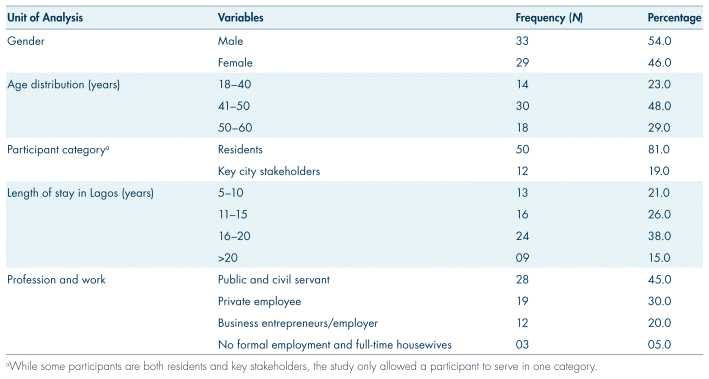
TABLE II Key informants/stakeholders’ organizational background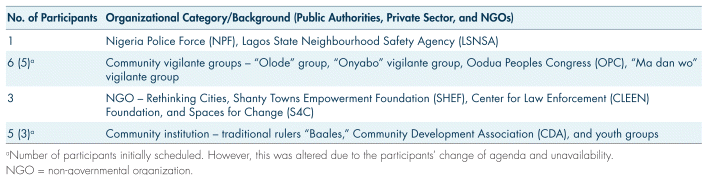
Data collection involved semi-structured interviews with open-ended questions. Respondents were asked, among other questions, about their participation in co-creation of crime prevention and what lessons could be learned from these collaborations. Depending on the choice of participants, discussions were held in either Yoruba,1 Pidging,2 or English. A combination of voice recording transcription and note-taking was used during the interview. For those conducted in Yoruba and Pidgin, they were later transcribed into English. This process risked altering and/or losing details of the discussion. This was minimized by clarifying all questions emerging and referring back to the original records when required. For data analysis, the study conducted a thematic analysis using the six-phase method (Cichoń, 2020). As part of this procedure, descriptive codes demonstrating features of the discussions were generated and then collated to form overall discussion subjects. Following this, excerpts were extracted from each theme from the discussion transcripts. The final stage involved telling the story in writing from the research problem.
Prior to data collection, ethical clearance was obtained from the Health Research Ethics Committee of the University of Lagos, Nigeria. Informed written and verbal consent were obtained from the respondents. This study sustains avoidance of injury and privacy of respondents’ personalities. Besides, the study exercised informed consent during data collection by ensuring that respondents were conversant with the intention of the study and why they were invited to participate as well as how their information will be used. They were also given equal chance to participate and withdraw their participation at any time.
This section discusses findings relating to the politics and governance of security and the nature of co-creation movements and various outcomes and challenges of these co-creation partnerships. Unless where otherwise stated, the narratives are the summary of the outcomes of the literature review and residents’ and key informants’ interviews carried out from September 2022 to January 2023.
Results show that security performance in Lagos is due in part to the nature of politics at both federal and state levels. Under the Nigeria’s constitution, responsibility for law enforcement (e.g., police and prisons) resides with the federal government. Thus, the legal and executive framework for combatting crime is overtly concentrated at the centre and cedes no power to subnational (state and local) governments. The Nigeria Police Force (NPF) is in charge of internal security and has a centralized management command and control structure in which the federal government single-handedly determines all policy and operational matters. Therefore, the law of the Federal Republic of Nigeria limits the Lagos State from hiring police officers and/or imposing a new security tax and policies. This complexity of Nigeria’s federal structure compounds decision-making surrounding security.
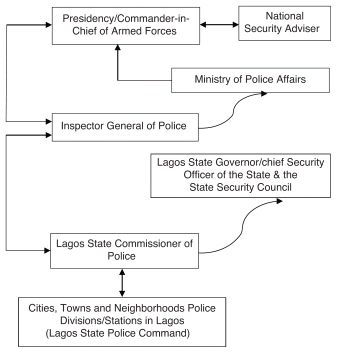
There are issues of a lack of coherence which hinder the effective functioning of the police. In practice, while the federal government has exclusive power over the NPF regardless of the devolution of police command, state governments have power over the state justice system excluding the NPF. Basically, there are multiple structures for the management of police and justice institutions at both federal and state levels. The Federal Ministries of Interior, Justice, and Police Affairs have major responsibility for policy-making and coordination. But there is poor coordination between these federal ministries, as each seems to function discretely without an inclusive policy framework. The Ministry of Police Affairs particularly is reduced in its power (see Figure 2), because the inspector general of police (IGP) reports directly to the president. There is also the Police Service Commission (PSC) – a civilian oversight body established under the Nigerian constitution for the NPF.3 It has the power to appoint, promote, discipline, and dismiss all NPF officers except the IGP. At the state level, each state government has its own security council headed by the state governor, which is parallel to and complements the state police command structure. However, where decisions made by the Lagos State governor and/or his council challenge those of the federal police command, they are thrown out by the Lagos State commissioner of police who takes orders directly from the IGP, who in turn reports to the president (see Figure 2).
|
| ||
|
FIGURE 2 Internal security governance arrangement in Nigeria. | ||
This structure has created several tensions between the central and state authorities or even within both. The following illustrates examples of the many face-off tensions. On June 15, 2024, the IGP accused the PSC of enlisting unqualified individuals into the newly recruited constables and therefore distanced the NPF from the new constables. On the other hand, PSC disclaimed the contentions and lobbied the presidency for the immediate removal of the IGP.4 On January 5, 2022, a chief superintendent of police refused to obey the Lagos State Governor, Babajide Sanwo-Olu’s order to evacuate police officers who had laid siege on the Magodo Estate on the Lagos Mainland.5 On this day, residents of the estate protested the continuous presence of armed policemen. The protest and the closure of the estate gate were already brewing violence as this grounded vehicular movement, and some residents and business owners were prevented from going to their various destinations. The intervention of the governor (who, by law, is the chief security officer of Lagos) was refuted by the police officer who told the governor that he only answers to the instructions of his superiors who were yet to get an order to leave the estate from the IGP.
The appointment of the IGP is the prerogative of the president.6 This at times disturbs the quality of security services provided as officers are loyal to the president and his allies at the expense of the communities they are meant to serve. Police personnel are posted to Lagos by the inspector general of police seated in Abuja. They are frequently rotated in an effort to keep them from becoming too comfortable with and/or being co-opted by local political elites. But, in many cases, the postings are done in a partisan political setting that produces a large turnover of senior police officers whenever regimes change. Although this approach seeks to reduce corruption and impunity, it hinders the development of grassroots security knowledge and undermines professionalism, continuity, long-term security planning, learning, and innovation in the Lagos police command. Besides, centralized governance arrangement is characterized by a bizarre concentration of power in the “ruling party.” As a result, each ruling party tends to govern mainly on the basis of its election campaign promises, rather than on the basis of a wide-ranging national security agenda. The result has been a perpetual discontinuity in policy direction following party and/or individual president turnovers in government. A respondent said, “... any time a new government comes to power, security plans set by predecessors are abandoned and replaced with new ones, sometimes without regard for the wider national security implications...”7
This system has also created extreme inequality as the limited security resources available are shared by political elites and members of the ruling political parties for their personal, business, and household protection. In cases of emergencies or responses to distress calls, preferential treatments for elite communities by the state security agencies operations are evident, particularly compared to the informal settlements within the city core and the peripheral areas, despite that these areas provide homes to more than half of Lagos dwellers. Consequently, the question remains as to whether this system of security governance can be deemed pro-poor and inclusive. A respondent said, “... in this Lagos, it is not uncommon to see politicians, notable figures and those VIPs, and the worst of it, are social media celebrities with police force convoy while many people and places are without police protection. Of a truth, the common man is only in the hand of God in this city. That is why everyone has devised ways to protect themselves and family ...”8
It is therefore evident that Lagos, Nigeria, possesses a concentrated political settlement, with police authority centralized around the presidency, including the state governments that do the president’s biddings. The net effect, however, is the tendency to over-rely on the executive presidency for action, and, when this is not sanctioned by the executive, there is a resultant lack of attention by the very departments that are supposed to exercise law enforcement. Besides, security resources are oriented to the benefit of the elite, neglecting the less privileged. Generally, respondents branded this approach to security administration as a system which does not work and which severely dwindles the state government’s ability to implement security reforms and programs.9 In a reflection of the generally weak state of bureaucratic capacity, a majority of respondents reported that NPF has not been able to deliver its mandated functions effectively.10
In situations such as this, co-creation has been found to be a key mechanism through which the uneven waters of political settlements can be navigated (Baud et al., 2021; Jones & van Steden, 2013; Mitlin & Satterthwaite, 2013), particularly in Lagos, where the political settlement fails to generate incentives for elites to come together and deliver equitable security improvements to the people.
In Lagos, co-creation of crime prevention has emerged in different forms such as vigilantes, house guard (known as “Mai-guard” or “Olode”), and the community court (CC). These are briefly discussed as follows.
One indicator of the Nigerian security governance failure is the rise of vigilantes. These are self-appointed residents who undertake law enforcement in their local communities or who take it upon themselves to confront criminals and their activities in their neighbourhood. This type of non-state action is common in low-income neighbourhoods and informal settlements of Lagos. This is because informal settlements have to deal with crime and insecurity but do not always have the political capital to demand proactive patrolling from the “presidency-” controlled state police unlike the elite’s neighbourhoods. Vigilantes do, however, collaborate with the NPF in different ways. They engage with NPF on night patrols. They also compile information on crimes, suspicious activity, and criminal suspects in their area and provide that relevant intelligence to the police as needed.
In some cases, they join the NPF intelligence response team to raid hideouts of criminal in their local areas. With the clearance of the NPF, they also assist Lagos State agencies in the protection of their premises, plants, and equipment. Thus, at least, this model allows NPF to increase efficiency by concentrating on their core functions while transferring surplus responsibilities to vigilantes. A respondent said, “... we realise that the police are increasingly unable to respond swiftly to distress calls, so landlords devise alternative arrangements for protecting themselves by supporting members of vigilante group in securing our community...11 Having collaborated more closely with the NPF through vigilante services, a respondent said, “... we always blame the NPF for every issue on this street. But as I began to work with them (NPF) through our community vigilante group, I began to understand their plight. The politics is not in their favour. They lack equipment, capacity, and personnel. If we must secure our streets and communities, we must do it together with them. So, this vigilante group has come to stay ...”12
Findings show that Lagos vigilantes cannot prosecute criminals and they are not expected to carry arms nor use brute force. They are only expected to hold suspects until they are handed over to the NPF. Nevertheless, when a respondent did speak of the use of force, his instances were cases in which vigilante officials acted in self-defence and/or in situations where suspects attempted to escape.13 But then, further critical evaluation of abuses by vigilantes is discussed later in this article. The commander/leader of vigilantes is called the vigilante chairperson. Unlike the state’s centralized and narrow security governance, the vigilante chairperson is selected through voting by members of the community vigilante groups and then ratified by the concerned community leaders. The vigilante chairperson gives direction for the execution of all vigilante activities within the community. Vigilante’s personnel are paid through financial contributions by residents. They sometimes receive support from the local government, politicians, and donors. The employment of vigilante members is part of local government and community strategies to co-opt unemployed youths into community development roles. Indeed, some of these youths were sometimes reformed “area boys” who could use their own local criminal knowledge to help curb crime, typifying the Yoruba adage, “Ole lo mo ese ole to lori apata” (meaning – it is the thief who can trace the footsteps of another thief on the rock).
In Lagos, vigilantes differ from one another in terms of membership, structure, means of recruitment, training, and oversight, as well as in their relations to NPF. They exist under different names – for instance, the vigilante effort in “Oworonshoki” community is called “Ma dan wo,” while it is called “Ma Sun” and “Onyabo” in Oshodi and Ikorodu communities, respectively. Vigilante officers are indigenous locals where they operate, which is a deliberate strategy to make use of their local knowledge to achieve maximum collaborations in grassroots security intelligence gathering and community policing. For most parts, members of the vigilantes have no other formal employment. They take odd jobs during the day (e.g., working as a casual labourer on construction sites or as a commercial motorcyclist) to supplement their incomes from the vigilante engagement. Although women traditionally play a significant role in Lagos vigilante, with cultural factors shaping their contributions, vigilante members in practice are mostly men. Nevertheless, women remain prominent in this collaboration, particularly as primary informants, presenting ample opportunities for their continued participation. Vigilante personnel ages vary, but typically they are either in their mid-20s or, if much older, in their 50s or 60s.
Beyond community safety through vigilante–police collaborations, the security of individual properties is prioritized in Lagos. While some have been able to engage the state police through political and economic power, others are left to cater for themselves. Hence, the idea of “Mai-guard” or “Olode.” A respondent said, “... I have to engage a house guard. I cannot leave my house unguarded. I already suffered break-in twice in this year (2023). It could have been worse if not for the community vigilante. Yet, you see a local government councilor on this street with 2–3 policemen at his gate. Other politicians and big men of Lagos will take their share of our police too. These are the people who should protect us but, it is unfortunate that they have left the people to guard a few elites...”14
As the name implies, house guards watch individual houses, managing and controlling access in and out. In some exceptional cases, however, some streets/communities in Lagos use “Olode” to patrol their streets at night instead of vigilante groups. The personnel are commonly private, traditional in their outlook (use voodoo or black magic to capture criminals), and uneducated. They also lack in formal organization unlike vigilantes who are associated with the community resident groups. But in recent times, retired gentlemen of the state security agencies are now joining this initiative. The use of house guard services is common with the residents of high and medium neighbourhoods of Lagos. House guard reward varies and it is usually negotiated with the property owner. A generous occupier can pay a guard comfortably more than an entry-grade NPF constable receives.
Co-creation is evident as they often work hand in hand with the relevant community vigilantes and sometimes with the NPF. At times, a house guard could be a member of a vigilante group who has also been specifically assigned to a property on request of the property owner. Unlike other initiatives, house guards are exclusively male. They play a significant role in security alertness and information sharing in Lagos. House security guards demonstrate a remarkable level of knowledge about their socio-physical surroundings. They engage in doorstep and kiosk shops where they do petty trading and sell basic household commodities in addition to house guard services. Their activities are at times more collaborative. They also engage in chats with colleague guards of adjoining properties. In this manner, news and warnings, especially relating to crime and insecurity, spread quickly in the community and to appropriate security agencies.
Away from policing, CCs in Lagos are informal structures that co-create judicial roles with law courts by acting as jury with the aim of providing order in the community by meting out penalties to suspects who are found guilty. This kind of dispute settlement had been in existence before the advent of the British law court and has continued to exist even after the adoption of the British law court system by the country. These jury systems exist in the traditional settlements of Lagos like Ikorodu, Oworonshoki, Somolu, Isale-Eko, and Lafiaji among others. They are rooted in historical institutions and have precedents. The first CC is the head of the family (usually male) with the duty of restraining his family members regarding deviant behaviours in the community. He is also expected to handle complaints of petty crimes or misbehaviour within his family and resolve these. However, some cases are transferred to the “Olori-Ebi,” who is usually the oldest man in an extended family. He would listen to the complainants and then the accused would be allowed to present their defence. At this stage, witnesses, if any, will be called upon.
Some more extended issues are transferred to the “Olori Adugbo” (neighbourhood head). The Olori Adugbo is the “Baale” appointed by the Oba as the administrative head of a neighbourhood. He enjoys the approval and recognition of the Oba and reserves the right to conduct preliminary investigations in immoral and lawless cases in his neighbourhood. He could pass judgment on subtle cases such as theft which must be in conjunction with some other chiefs whose members are not parties to the case. Any appeal from the Olori Adugbo’s court would be addressed by the Oba’s court. The “Baale” is a member of the Oba’s court, but he would have to allow other “Baales” to adjudicate on cases that come from his area. The Oba will then give judgment after listening to both sides of the case and to the contributions of his “Baales” and witnesses, if any. Whatever judgment is given would be final, at least in the CC process.
This community effort is commonly associated with civil cases and minor infractions as well as land disputes. Penalties involve fines, and the judgment may vary from warnings to communal service or outright ban from the community. In many cases, this process is co-produced with members of the NPF and vigilantes, particularly in situations where cases become too heated for the CC process to handle without the security officers’ presence. In most instances, CC has a team of lawyers who help facilitate the settlement processes. Cases of grievous crimes are handed over to the NPF for state prosecution – a process where the CC actors also play an important witness role.
These multi-sectoral collaborations have helped to reduce violent crime to some extent in Lagos and mainly in informal communities where the NPF is lacking. Particularly in the last 5 years, co-creation of crime prevention has contributed in no small measure in bringing down the crime level. A respondent said, “... things are a little better. Before now, it was dreadful as criminals and hoodlums operate openly. Although this is not the desired Lagos we want, there has been a commendable level of improvements in safety and security in the last five years ...”15 The vigilantes and house guards have been using their local knowledge to assist community policing. They have been of immense assistance to the NPF, often due to their knowledge of Lagos terrain. Their presence on Lagos streets, serving as the “eyes on the street” has been a deterrence to criminals. They undoubtedly offer important services – supporting and helping the NPF fight crime generally.
A respondent narrated “... we are local people. We know our community very well. We can easily spot strangers and suspicious movements. This local knowledge is what we have, that the NPF do not have. So, we complement their efforts by providing dependable intelligence for their work. Beyond that, we also escort NPF patrol, and our presence has helped them to penetrate streets they would not have been able to navigate by themselves ...”16 Likewise, another respondent also said, “... before we started “Ma dan wo” vigilante, crime was a serious problem here in Oworonshoki. People were being robbed in broad-day-light. Some were even killed. Walking in dark hours of evening and early morning was a big risk. But, “Ma dan wo” has really help to curb this. Although pockets of crimes still exist, the community is far better now ...”17 In Ikorodu community, residents hailed the local vigilante (“Onyabo”) for their help in curbing the atrocities of deadly cult gangs called “One Million Boys and Bados.”18 While the presence of “Mai-guard” is neither an essential force nor effective enough for preventing street crimes, these persons, nevertheless, play a vital role as security witnesses and informants. A system of “Olode” has the capacity to turn some sets of properties into a more organic social unit that communicates internally, increasing resistance to criminal activities in the neighbourhood.
Findings further show that because the vigilantes are usually local residents, people view them more favourably and are more ready to work with them compared to the NPF. However, they can be very chauvinist, and problematic in cases which relate to women in particular.19 The CC system has been tremendously helpful in reducing crime and strengthening the capacity of traditional rulers in Lagos.20 This initiative has contributed to the less congested court in some parts of Lagos and public confidence in the criminal justice system of Lagos. A respondent said, “... going to court is waste of time and resources. In this community, it doesn’t take time for our royal father to weigh into issues and resolve the dispute amicably at no cost to parties involved ...”21 The positive result of the CC is also evidenced by the increasing number of cases that the community rulers referred to the NPF for further prosecution and scrutiny. Besides, issues and conflicts related to fighting and land issues, which could have escalated into a serious breach of public peace, have been settled through this CC system.
Despite the many benefits, the proliferation of vigilantes has raised several concerns. Vigilante in Lagos is a patchwork of isolated actors and groups, with much fragmentation and weak organization. At present, the number and membership of community vigilantes is unknown. With unstandardized recruitment processes, poor training, and supervision, their members are prone to arbitrary use of violence and violation of human rights. Extortion of locals, particularly those accused of crimes, is also widespread. They are also susceptible to political bias and allegiance. Since the police in Lagos are federal, the public acceptance and funding of vigilantes allows local politicians to use them as their own private soldiers to intimidate political opponents and secure their positions as sources of patronage. Being a cosmopolitan city with significant ethnic and religious diversities, vigilantes are also affiliated to a variety of ethnoreligious-protective groups, with clash of interest at times. Presently, vigilantes are being coordinated by a voluntary “trade union association” called the Vigilante Group of Nigeria. Therefore, vigilantes are not directly accountable to a public bureau or the legislative body, but rather to often weak and voluntary regulators.
Another challenge is the constitutional legitimacy of community-organized vigilantes in terms of the provisions of the Nigerian constitution, the Police Act, and the Public Order Act. Many bureaucrats, including the attorney general and justice minister, have said they are unofficial.22 Moreover, because of the obvious weakness in performance and corruption issues facing the NPF, the debate on the legitimacy of vigilantes continues among media houses and politicians with no clarity. Undeniably, the significant and legitimate role of non-state security structures was in part recognized by the Department for International Development-supported community policing initiative. The initiative (in which individual community policing developers were identified from within the police force and trained to operate alongside community vigilante groups) was piloted in Lagos and other five states of Nigeria. However, there was no buy-in by major actors, like the Minister of Justice and IGP (and by inference, the president). Hence, the initiative was unable to generate the desired multiplier effect.
Even when the federal political cards are clearly stacked against it, the vigilante initiatives have been found to be legitimate in the judgment of common people and have been found to even produce better outcomes.23 As such, non-state arrangements have been accorded different degrees of legitimacy by residents who exercise their demand for security through these sources. Consequently, the state has lost a substantial share of its monopoly on the use of force and as a sole security provider. There is also the challenge of firearm possession and use. Other than the NPF, no personnel are expected to possess a firearm except with a licence from the presidency or the IGP. Vigilante members, however, carry, at best, a single-shot game-hunting rifle traditionally called “Sakabula” in the local Lagos parlance. Yet, these are less effective against armed robbers who go about with modern weaponry. Thus, some stakeholders have argued that vigilantes need more firepower to fight criminals armed with military-grade weapons, while others worry that granting gun permits to every vigilante officer would lead to misuse and anarchy as seen in countries suffering from gun violence.24
The affairs between vigilantes and the NPF range from amiable and collaborative to distrustful and hostile. In some areas, vigilantes work closely with the NPF and the police solicit partnerships with vigilantes. Elsewhere, the relationship may be uneasy, as detailed by a respondent: “... the activities of vigilantes are usually unlawful in the way and manner they deal with suspected criminals when they are apprehended. Most times, they violated the constitution of the country. The lawful thing for them is to report suspected criminals to the police, but many times, they take law into their own hands, and we cannot overlook this...”25 In another view, respondents felt it was risky to work the NPF as their identities might be exposed, leading to further harm. Members of vigilantes have been attacked by criminals as being responsible for disclosing facts leading their arrests. A respondent said, “... we cannot totally entrust suspects and our community to the police. We have situations where suspected criminals were released without any investigation and prosecution. Not only that, corrupt police personnel give hints to these convicts about key vigilante members behind their arrests, and these criminals go all-out for them after their unlawful freedom from the police custody ...”26
These show that police–vigilante relationship could be tense sometimes, and this is due to the fact that they have both had suspiciously negative encounters (e.g., human right abuse or extrajudicial killings, among others). Hence, the police sometimes view vigilantes as competitors, inhibiting their official work. They particularly object when vigilantes assume the full role of policing, using firearms and/or other lethal force. For their part, vigilantes sometimes distrust the police because they perceive them as corrupt. The mutual suspicion undermines prospects for the multi-sectoral collaborations necessary to fight crime. Furthermore, while traditional justice systems provide a valuable supplement to the criminal justice system in the Lagos context, some residents argued that their activities sometimes do not comply with human rights and equity standards. Whereas “Mai-guards” showed a remarkable level of knowledge about their socio-physical environments, findings show that this local knowledge can be two edged, and petty stealing, aiding, and abating thefts by some “Olode and Mai-guards” are some of the more common problems of this approach.
Given a wide and reasonable perception that co-creation contributes to filling security gaps across Lagos, the practices in their varying forms are clearly a continuing necessity for internal stability as the NPF is overwhelmed, infiltrated, and corrupt. Nevertheless, there is a compelling need for policy responses to address the challenges highlighted in this paper, moving forward. A general lack of trust in co-creation of crime prevention, especially in relation to vigilante–police collaboration implies that building trust will require addressing perceptions of corruption, partiality, abuse of power, and human rights violation. Besides, both the NPF and vigilante members must see the need to maintain the truth and secrecy of the whistleblowers as a way to foster smooth cooperation and protect each other from reprisal attacks from criminals. Since vigilantes often have more legitimacy with the citizenry, the state should leverage this acceptance and collaborate more with vigilantes to help communities devise measures to deal with some of the underlying reasons for crime, such as political negligence, poverty, and inequality that often sparks frustration and response through crime.
There is a convincing need for policy responses to curb the proliferation of vigilantes in the short run and for plans to improve NPF services in the long run. Importantly, whether NPF, vigilantes, or CCs are able to deliver effectively on their obligations is a function of the political support that they receive. In the short run, politicians should work to better institutionalize, regulate, support, and shape vigilantes. The framework should address issues relating to operations, firearms, oversight functions, basic training standards, recruitment, and code of conduct, protocols of engagement, and the modalities for finance. In the long run, the government must focus on improving the police service through comprehensive reform of concentrated security governance and devolution of police power to the state under dispersed power configurations. The goal should be to reverse the proliferation of vigilantes and reach a point where their members who have the required qualifications can be absorbed into official decentralized NPF roles while others are released from the policing service and, where suitable, helped to secure other jobs.
The state in partnership with communities should periodically organize community accountability town hall meeting which will serve as a forum where vigilantes and other actors meet with the residents to address complaints and discuss security issues. Also, it is strongly recommended that the state considers including performing vigilante groups among the beneficiaries of the state security funds. Moreover, there is the need to closely monitor the CC systems and incorporate them officially into the state legal framework. The state should progress carefully to ensure that the CC systems do not lose their positive aspects, the authority of the CC actors is not undermined, and human rights and equality are respected in proceedings before such proceedings. A legal framework providing for state recognition should provide the option for the accused to oppose their participation and have the matter tried in the formal courts, particularly in cases where a fundamental right protected by the constitution is concerned. There is also a need to domesticate the CC across the Lagos traditional level by deploying judicial officers for the resolution of their civil case. To protect against petty stealing, “Olode and Mai-guard” should only be able to obtain their positions after a comprehensive background check and personal connections, which makes them easy to trace to their places of origin.
In the specific context of Lagos, this article presents a critical analysis of the specific forms of politics being used to tackle crime with the involvement of multi-sector collaborations. It has examined why this collaboration thrives, and how it has created a more enabling environment for crime prevention, and what may need to change for multi-sector collaboration to be able to generate more inclusive forms of security service delivery. It is evident that the NPF no longer have, nor can they claim, a monopoly on policing in Lagos. Regardless of state police, the prevention of crime is achieved locally through police-community collaborations. Policing has become pluralized, particularly, outside the elite spaces, crime prevention is co-produced and sought after by informal communities who do not always have the political investment to demand for NPF proactive protection.
What the Lagos experience teaches us is that crime reduction through co-creation is more likely to emerge and endure. This is the case even in a political settlement, where police power is narrowly concentrated, and particularly, if there is a viable socio-economic case, such as when crime rates are high; the state police not having the capacity to fight crime or, worse, when the state provides security to some groups but not to others. However, co-production arrangements may also struggle to realize their various mandates. It is obvious that context matters; precisely, the strength of local politics is significant. The constraints on co-creation opportunities being exploited to their fullest advantage have been noted, with the required political commitment, regulatory and institutional change, besides substantial funding and investment as well as scaling them up.
From the foregoing analysis, it seems clear that the future of police consolidation depends on both reforming the institutional (state and non-state) and constitutional basis of governance in the security sector. The fact remains that the NPF cannot be trusted within neighbourhoods if it retains a structure that is only accountable to a centralized command in a “corrupt” culture, instead of a crime prevention approach. If the latter is chosen as the primary purpose, then what gets emphasized is grassroots policing, community participation and co-creation as well as police intelligence.
The author very much appreciates Paula Meth at the University of Glasgow for providing mentorship support while working on this article and other African Cities Research Consortium (ACRC) projects in Lagos, Nigeria.
This research was made possible by funding from the African Cities Research Consortium, with support from UK’s Department for International Development.
The author has no conflicts of interest to declare.
*Department of Urban and Regional Planning, Olabisi Onabanjo University, Ago-Iwoye, Ogun State, Nigeria.
Badiora, A. (2023). Safety and security in Lagos [Unpublished report produced for ACRC]. African Cities Research Consortium, the University of Manchester.
Baud, I., Jameson, S., Peyroux, E., Scott, D. (2021). The urban governance configuration: A conceptual framework for understanding complexity and enhancing transitions to greater sustainability in cities. Geography Compass, 15(5), e12562. https://doi.org/10.1111/gec3.12562
Crossref
Berry, G., Briggs, P., Erol, R., van Staden. L. (2011). The effectiveness of partnership working in a crime and disorder context: A rapid evidence assessment (Research Report No. 52). Home Office.
Braga, A., Weisburd, D. (2012). The effects of ‘pulling levers’ focused deterrence strategies on crime. Campbell Systematic Reviews, 6, 1–90. https://doi.org/10.4073/csr.2012.6
Crossref
Brewer, R., Grabosky, P. (2014). The unraveling of public security in the United States: The dark side of police-community co-production. American Journal of Criminal Justice, 39(1), 139–154. https://doi.org/10.1007/s12103-012-9194-y
Crossref
Carbone, G., Pellegata, A. (2017). To elect or not to elect: Leaders, alternation in power and social welfare in sub-Saharan Africa. The Journal of Development Studies, 53(12), 1965–1987. https://doi.org/10.1080/00220388.2017.1279733
Crossref
Cichoń, M. (2020). Reporting statistical methods and outcome of statistical analyses in research articles, Pharmacological Report, 72, 481–485.
Crossref
Collard, M., Goodfellow, T., Adebi L. (2021). Uneven development, politics and governance in urban Africa: An analytical literature review (ACRC Working Paper 2021-02). African Cities Research Consortium, the University of Manchester.
Crawford, A. (2006). Networked governance and the post-regulatory state? Steering, rowing and anchoring the provision of policing and security. Theoretical Criminology, 10, 449–479. https://doi.org/10.1177/1362480606068874
Crossref
Crawford, A., Lister, S., Blackburn, S., Burnett, J., Jones, T. (2005). Plural policing: The mixed economy of visible security patrols. Polity Press.
Ericson, R. V. (2007). Rules in policing: Five perspectives. Theoretical Criminology, 11, 367–401. https://doi.org/10.1177/1362480607079583
Crossref
Exum, M., Hartman, J., Friday, P., Lord, V. (2014). Policing domestic violence in the post-SARP era: The impact of a domestic violence police unit. Crime Delinquency, 60, 999–1032. https://doi.org/10.1177/0011128710382345
Crossref
Jalonen, H., Kokkola, J., Laihonen, H., Kirjavainen, H., Kaartemo, V., Vähämaa, M. (2021). Reaching hard-to-reach people through digital means – Citizens as initiators of co-creation in public services. International Journal of Public Sector Management, 34(7), 799–816. https://doi.org/10.1108/IJPSM-01-2021-0008
Crossref
Jones, T., van Steden, R. (2013). Democratic police governance in comparative perspective: Reflections from England Wales and the Netherlands. Policing: An International Journal of Police Strategies Management, 36(3), 561–576. https://doi.org/10.1108/PIJPSM-07-2012-0059
Crossref
Kelsall, T., Mitlin, D., Schindler, S., Hickey, S. (2021). Politics, systems and domains: A conceptual framework for the African Cities Research Consortium (ACRC Working Paper 2021-01). The University of Manchester.
Mangai, M., Pillay, A., Masiya, T., Lubinga, S. (2023). The police and citizens as co-producers of crime prevention in Johannesburg. Administrative Sciences, 13(6), 138. https://doi.org/10.3390/admsci13060138
Crossref
Mazerolle, L., Ransley. J. (2005). Third party policing. Cambridge University Press.
Mazerolle, L., Bennett, S., Antrobus, E., Eggins, E. (2017). The coproduction of truancy control: Results from a randomized trial of a police–schools partnership program. Journal of Research in Crime and Delinquency, 54(6), 791–823. https://doi.org/10.1177/0022427817705167
Crossref
Messing, J., Campbell, J., Webster, D., Brown, S., Patchell, B., Wilson, J. (2015). The Oklahoma Lethality Assessment Study: A quasi-experimental evaluation of the Lethality Assessment Program. Social Service Review, 89, 499–530. https://doi.org/10.1086/683194
Crossref
Mitlin, D., Satterthwaite, D. (2013). Urban poverty in the global south: Scale and nature. Routledge.
Raisio, H., Puustinen, A., Valtonen, V. (2021). Co-creating safety and security? Analyzing the multifaceted field of co-creation in Finland. International Journal of Mass Emergencies Disasters, 39(2), 263–291. https://doi.org/10.1177/028072702103900203
Crossref
Ratcliffe, J. (2008). Intelligence-led policing. Willan Publishing.
Reisig, M. (2010). Community and problem-oriented policing. Crime and Justice, 39, 1–53. https://doi.org/10.1086/652384
Crossref
Rosenbaum, D., Schuck, A. (2012). Comprehensive community partnerships for preventing crime. In D. P. Farrington B. C. Welsh (Eds.), The Oxford handbook of crime prevention (pp. 226–246). Oxford University Press.
Schulz, N., Kelsall, T. (2021). The political settlements dataset: An introduction with illustrative applications (ESID Working Paper No. 165). Effective States and Inclusive Development Research Centre, Manchester; the University of Manchester.
Scott, M., Kirby, S. (2012). Implementing pop: Leading, structuring, and managing a problem-oriented police agency. Center for Problem-Oriented Policing.
Tuffin, R., Morris, J., Poole, A. (2006). An evaluation of the impact of the National Reassurance Policing Programme (Home Office Research Study 296). Home Office, Research, Development and Statistics Directorate.
United Nations. (2024). World population prospects 2024. Department of Economic and Social Affairs, Population Division. https://population.un.org/wpp/
Vasileiou, K., Barnett, J., Thorpe, S., Young, T. (2018). Characterizing and justifying sample size sufficiency in interview-based studies: Systematic analysis of qualitative health research over a 15-year period. BMC Medical Research Methodology, 18(148), 1–18.
Crossref
Ward, K., Imbroscio, D., Martin, D., Stone, C., Whelan, R., Miraftab, F., Cochrane, A. (2011). Urban politics: An interdisciplinary dialogue. International Journal of Urban and Regional Research, 35(4), 853–871. https://doi.org/10.1111/j.1468-2427.2011.01055.x
Crossref
Weisburd, D., Eck, J. (2004). What can police do to reduce crime, disorder, and fear? Annals of the American Academy of Political and Social Science, 593, 42–65. https://doi.org/10.1177/0002716203262548
Crossref
Zhou, G., Njanji, P. (2021). Emerging sustainability and co-creation perspectives in public sector governance: The case of Zimbabwe. Journal of Management and Development Dynamics, 31(2), 117–132.
Correspondence to: Adewumi I. Badiora, PMB, 2002, Ago-Iwoye, Ogun State, Nigeria. E-mail: adewumi.badiora@oouagoiwoye.edu.ng
1 A local Nigerian language for Lagos indigenous people.
2 A simplified form of English language, some elements of which are taken from local language, especially as used by a non-Lagos indigene speaker.
3 Police Service Commission (PSC) – http://www.psc.gov.ng/.
4 PSC – https://punchng.com/provide-evidence-of-corruption-in-recruitment-exercise-psc-tells-ig/#google_vignette.
5 Police superintendent defies governor’s order – https://saharareporters.com/2022/01/04/police-superintendent-defies-governorsanwo-olus-order-claims-nigerias-attorney-general.
6 Nigerian constitution, Chapter 6, Part 3, Section 215.
7 Key stakeholder/informant interview, Lagos – November 2022.
8 Interview with residents of Mushin – September 2022.
9 Interview with residents of Ikorodu – September 2022.
10 Engagement with key stakeholders and residents – November 2022.
11 Interview with the residents of Ikorodu – September 2022.
12 Interview with a key informant – November 2022.
13 Interview with a key Informant (vigilante officer) – November 2022.
14 Interview with residents of Lagos Island – September 2022.
15 Interview with residents of Lagos Mainland – September 2022.
17 Interview with residents of Oworonshoki – September 2022.
18 Interview with residents of Ikorodu – September 2022.
19 Interview with residents of Oworonshoki – September 2022.
21 Interview with residents of Lagos Island – September 2022.
22 Amotekun’ is an illegal outfit, says FG – https://www.thecable.ng/breaking-amotekun-is-an-illegal-group-says-fg/.
23 Engagement meeting with residents and stakeholders in Lagos – November 2022.
25 Interview with a key informant: police personnel – November 2022.
26 Interview with a key informant: vigilant person – November 2022.
This work is licensed under the Creative Commons Attribution-NonCommercial-NoDerivatives 4.0 International License. To view a copy of this license, visit http://creativecommons.org/licenses/by-nc-nd/4.0/. For commercial re-use, please contact sales@sgpublishing.ca.
Journal of CSWB, VOLUME 10, NUMBER 2, June 2025