FIGURE 1 Domains of coercive control in the context of IPV. IPV, intimate partner violence.
Madison Wesenberg*, Sandy Jung*, John Tedeschini†
ABSTRACT
Coercively controlling behaviours are highly prevalent in the context of intimate partner violence. However, coercive control often goes undetected because, unlike physical violence, it has not always been recognized as a criminal offence, is often perceived as less severe, and does not produce visible signs of physical violence. This paper outlines the importance of understanding what coercive control is, what coercive control looks like, why it is difficult to identify, and how investigative interviewing approaches can be employed to capture behaviours associated with coercive control when working with individuals who have engaged in partner abuse. Investigative interviewing approaches and motivational interviewing can help uncover coercively controlling behaviours that would otherwise be undetected by police and other justice-involved practitioners. Use of these approaches are illustrated to emphasize the importance of planning and preparation prior to the interview process, establishing rapport, and creating collaborative, non-adversarial relationships between the interviewer and the interviewee. These factors are likely to increase the quantity and quality of information gathered during the interview process, capture the nuances of coercive control, and reduce the likelihood that the interviewee will engage in controlling behaviours that could negatively impact the interview process.
Key Words Coercive control; partner violence; interviewing; psychological abuse; motivational interviewing; cognitive interviewing.
Intimate partner violence (IPV) is a pervasive issue. IPV represents 30% of all police-reported violence in Canada (Cotter, 2021), and a staggering 44% of women will experience some form of psychological, physical, or sexual IPV during their lifetime (Cotter, 2021). When IPV is defined, there is often a focus on the physical forms of IPV, rather than the non-physical forms of IPV like psychological or emotional abuse which are often seen as less severe (Koshan, 2023). However, there is substantial evidence that non-physical IPV is harmful on its own (Lohmann et al., 2024; Myhill, 2015) and is associated with increased IPV frequency and severity (Hardesty et al., 2015). This is particularly true in the case of coercive control.
Coercive control is a distinct form of IPV. Unlike situational couple violence, which is generally the result of specific conflicts that lead to violence by one or both partners (Johnson, 2008), coercive control involves a pattern of behaviours aimed at exerting control over a target (i.e., victim or potential victim). Specifically, it involves a coercive demand (e.g., that the victim cease communication with friends and family) where the victim perceives the demand as negative and the demand is typically followed by a credible threat for non-compliance (e.g., victim will be harmed if they continue to talk to family members; Dutton & Goodman, 2005; Hamberger et al., 2017). As coercively controlling behaviours may not involve physical violence and reflect an overall pattern of behaviour rather than a single incident, it can be difficult to detect by friends, family, and authorities (Gill & Aspinall, 2020). Despite being difficult to spot, identifying the presence of coercively controlling behaviours in partner abuse situations has important implications. This paper outlines how existing evidence-based interview approaches can offer strategies and processes that can effectively draw out disclosures of coercive control from those who perpetrate IPV.
Only recently has greater attention been given to coercive control and this is in part due to consistent findings that coercively controlling behaviours are prevalent in intimate partner relationships, have significant psychological consequences, and are risk factors for further violence.
Within the context of IPV, coercive control has consistently been reported to be prevalent in such relationships. For instance, a study conducted by Breiding et al. (2014b) found that, while 31% of women reported having experienced physical violence by an intimate partner in their lifetime, nearly 40% experienced at least one act of coercive control. Of relationships that involved physical or sexual violence, an overwhelming majority (95%) of partner-victims experienced some form of coercive control (Myhill, 2017). One study conducted in India (Kanougiya et al., 2022) reported that 48% of ever-married women had experienced coercive control in the last 12 months. These studies reveal that non-physical forms of abuse like coercive control is prevalent in the majority of IPV cases and in many partner relationships where IPV is not reported. Hence, there is a need to both identify and assess the nature of the coercive control within an abusive relationship.
Further adding to this need is the association between coercive control and negative psychological outcomes, as well as severe physical abuse – both have been well documented. A recent meta-analysis found that experiencing coercive control was positively correlated with post-traumatic stress disorder as well as depression (Lohmann et al., 2024). Myhill’s research (2015) indicates that victims are 2.5-times more likely to experience mental or emotional problems compared to those who had experienced situational violence, even when controlling for physical violence severity, and they are more likely to experience more severe forms of IPV. The presence of coercive control has been found to be associated with an increased risk for victims to experience other forms of IPV, including emotional, physical, and sexual abuse (Kanougiya et al., 2022). A later study published by Myhill (2017) found that victims who experience coercive control in conjunction with physical violence sustained more serious and frequent bodily injuries, such as internal damage and broken bones or teeth. Coercively controlling behaviours have also been found to be associated with severe, sub-lethal forms of IPV including strangulation and use of weapons (Myhill & Hohl, 2019), with nearly 74% of IPV cases including non-fatal strangulation involving coercive control as well (Bendlin & Sheridan, 2019).
Increased risk of harm is particularly concerning for women leaving coercively controlling relationships, as they are at an increased risk for violent acts and harassment, experience a greater frequency of violent acts, report higher levels of fear during and after their relationship ends, and perceive a higher level of future threat (Hardesty et al., 2015). Some studies have even found that those who experience coercive control alone, rather than in conjunction with physical violence, may experience more fear after separation (Crossman et al., 2016). In fact, coercively controlling behaviours are more likely to persist following separation (Myhill, 2015), and such behaviours have been found to be associated with an increased risk for IPV recidivism (Hilton et al., 2023). Others have suggested that the presence of controlling behaviours may be a better predictor of intimate partner murder than merely the presence of past physical violence (Johnson et al., 2019; Regan et al., 2007), and consequently identifying coercive control has important implications for interventions and safety planning.
In sum, the presence of coercive control presents as a strong indicator of a pattern of persistent and severe IPV and is associated with an increased risk of physical and psychological harm for the victim. More recently, it has become even more crucial to identify the presence of coercively controlling behaviours in Canada where coercive control will likely become a chargeable offence in the criminal code (Hilton & Jung, 2023), similar to other countries, such as the United Kingdom, Ireland, and New South Wales where coercive control has been criminalized (see Giesbrecht, 2024). Canada’s House of Commons has passed Bill C-332 in its third reading, which will make coercive control a criminal offence, and at the time of writing, Bill C-332 is under review by the Canadian Senate. Hence, processes to specifically assess and identify the presence of coercive control, beyond IPV behaviours that involve physical and sexual assault, are imperative.
Stark and his colleagues (Stark, 2009; Stark & Hester, 2019) have written much about what coercive control in abusive intimate relationships may look like, and there is a plethora of questionnaire-type tools published (Hamberger et al., 2017). More generally, coercive control can comprise a variety of behaviours with the intention of trying to gain control of the victim by exploiting their resources, depriving them of their autonomy and well-being, and interfering with social supports, thus making the victim dependent upon their abuser for their practical and emotional needs and remain in the abusive relationship (Stark, 2009). These behaviours increase or capitalize on vulnerabilities present in the victim. There are too many features, exemplars, and measures of coercive control to review. So, to provide a more parsimonious description, the following deconstructs coercive control into four essential categories of behaviour: controlling the victim’s resources, manipulating their well-being, controlling the victim’s social network, and using power and threats to control the victim’s autonomy (see Figure 1).
|
| ||
|
FIGURE 1 Domains of coercive control in the context of IPV. IPV, intimate partner violence. | ||
Controlling the partner’s finances or resources to maintain independence may be one objective of the abusive partner. Breiding et al. (2014a) reported that 75% of female IPV victims reported that their partner kept them from having their own money. This could involve limiting their access to bank accounts, paychecks, or employment. The use of the term “economic control” provides a broader definition of this objective and refers to monitoring and restricting a partner’s use of and ability to acquire economic resources (Postmus et al., 2020; McKay White & Fjellner, 2022), which may include making victims dependent on their abuser for resources to meet their practical needs (e.g., food, hygiene products), or sabotaging employment (i.e., interfere with victims’ ability to keep a job or obtain one).
Coercive control may involve limiting the victims’ autonomy or worsening their well-being (Stark, 2009). This can be executed in a variety of ways, such as reproductive coercion (e.g., prevent victim from using contraception, force abortions or hide pregnancies, or prevent from terminating unwanted pregnancies; Buchanan & Humphreys, 2020) or religious coercive control (e.g., prevent from participating in religious ceremonies, use religious doctrine to regulate their clothing, modesty, or sexual relations; Mulvihill et al., 2022). In addition to limiting autonomy, abusive partners may also engage in emotional manipulation tactics that aim to reduce the victim’s well-being. Gaslighting (American Psychological Association, n.d.) is a form of abuse where the abusive partner challenges the victims’ perceptions of themselves and the world around them through insults, accusations, and manipulation (e.g., accused of being crazy, overly emotional, stupid, selfish, or unattractive), which leads them to doubt their own abilities, perceptions, and mental stability (Klein et al., 2023). It is commonly experienced by IPV victims as shown in a study conducted by Kim et al. (2023) where 54% reported experiencing gaslighting tactics.
Coercively controlling the victim’s social life and support by interfering with their social connections leads to victims becoming overly reliant on their abusers for social and emotional support, to making it difficult for them to leave the relationship, to it being unlikely that the abuse in the relationship will be detected, and to reducing the victim’s resilience (Stark, 2009). Coercively controlling partners may keep victims from family and friends, limit access to a cell phone or the Internet, or physically isolate them by moving away. Using technology to surveil victims has become a commonly reported tactic (e.g., cameras installed around the house, tracking apps on victims’ phones, breaching victims’ password security to monitor e-mails and text messages; Douglas et al., 2019).
An abusive partner may use direct and indirect threats to ensure their victim complies with their demands. Direct threats could involve explicit threats to physically harm the victim or those close to them like friends, family, children, and pets (Breiding et al., 2014a) or reliance on the victim being fearful that the abusive partner will repeat violence toward them or to others (Dutton & Goodman, 2005). Non-physical direct threats could include behaviours that have other consequences for the victim, such as threatening to share intimate photos or videos to friends and family (Henry et al., 2022), to have children taken away (Hay et al., 2023), or to have them deported (Alsinai et al., 2023). Non-direct threats can target victims’ specific vulnerabilities, such as their attachment to their family, friends, or neighbours (e.g., threats to harm them) or their mental state (e.g., pushing them to abuse substances, admitting them to a mental health facility; Dutton & Goodman, 2005).
These four domains highlight that coercive control is a form of abuse that cuts across nearly all domains within a victim’s life. It includes both covert and overt behaviours, both inside and outside the household, and the individual perpetrating coercive control with their partner has many objectives in their pursuit of control over them. Coercive control reflects a pervasive pattern of abuse, and unfortunately, there are still myriad barriers preventing its detection.
Despite coercive control being highly prevalent and reflecting a distinct pattern of abusive behaviour, it often remains undetected and undocumented. This is problematic given that coercive control will soon become a criminal offence in Canada (Bill C-332, 2024; Giesbrecht, 2024). At the current time, coercively controlling behaviours are not recognized by some countries, including Canada (Gill & Aspinall, 2020). In Canada, the passing of Bill C-233, known as Keira’s Law, which led to standardized training for judges on partner violence and coercive control, has begun a strengthening of laws around coercive control in partner-abusive relationships (Bill C-233, 2022). Until coercive control is officially recognized in the criminal codes of all westernized countries, individuals who engage in these behaviours could be charged for other criminal code offences, such as criminal harassment, uttering threats, or mischief. However, these offences do not fully capture the nature and consequences of coercive control (Gill & Aspinall, 2020). As police and other justice professionals are likely to focus on specific chargeable incidents, they may fail to recognize the repeated controlling behaviours causing the victim psychological distress (Gill & Aspinall, 2020). Beyond the criminal justice system, there are also misconceptions about non-physical IPV and coercive control that can make it difficult to identify.
Although coercive control is associated with negative psychological outcomes and is associated with more frequent and severe IPV, it is still often perceived as less severe than physical violence (Koshan, 2023). Past research has shown that coercive control behaviours are unlikely to be detected by police unless there is physical violence present (Robinson et al., 2017), and that police were unlikely to arrest abusers who only engaged in threats or harassment (Myhill, 2015). It has also been found that as much as 86% of U.S. police officers agree that too many IPV calls are for verbal family arguments (McPhedran et al., 2017). This downplay of the severity of non-physical violence can lead police officers to see victims as childish for reporting coercive controlling behaviours (DeJong et al., 2008) and influence how they respond to disclosures, thus inhibiting victim reporting. Given this information, it should be unsurprising that 63.4% of women chose not to report their abuse because they did not think it was serious enough (Fanslow & Robinson, 2010).
Another barrier to identifying coercively controlling behaviours is that outside observers often only see simple solutions, such as leaving their abuser or reporting their abuse to police. Past research has found that 71% of U.S. police officers agreed that victims could easily leave their abusers if they wanted to (McPhedran et al., 2017), and that 50% of university students believed that women decide on their own to stay in abusive relationships (Policastro & Payne, 2013). However, the reality is that leaving an abusive relationship is the most dangerous time for women, with 36% of intimate partner murder cases occurring after separation (Dobash & Dobash, 2015). There are also numerous other barriers preventing individuals from leaving abusive relationships, such as lack of social support or money, that are further exacerbated within coercive controlling relationships (Fanslow & Robinson, 2010). Reporting abuse also may not be an effective option for dealing with coercive control. Reports of coercive control in the absence of physical violence may never be properly recorded as IPV by police or other authorities (Robinson et al., 2017).
Unlike physical violence which can produce visible bruising or welts, coercively controlling behaviours are intangible. It is necessary for victims or perpetrators to disclose their experiences for it to be properly detected. Many self-report measures of coercive control are also available (see Hamberger et al., 2017), but these are not commonly used outside of research. Many Canadian police offenders report using a risk tool when addressing IPV at the time of investigation (Saxton et al., 2020), but items included in many risk assessment tools, such as the Ontario Domestic Assault Risk Assessment (ODARA; Hilton et al., 2004) or the Spousal Assault Risk Assessment Guide (SARA; Kropp et al., 1995), do not adequately capture coercively controlling behaviours. Furthermore, these tools cannot be used in the absence of physical violence. The invisible nature of coercively controlling behaviours and need to identify this as a pattern of behaviours, and not merely an instance in an index offence, are caveats to properly document or address coercive control.
As coercive controlling behaviours are difficult to detect and associated with increased risk of physical and psychological harm to the victim, it is pertinent that interview techniques that increase the likelihood of truthful, accurate disclosures are used. This is exceptionally important given individuals who engage in IPV are motivated to suppress incriminating details to avoid or minimize punishment (Watson et al., 2022). Early research has shown that how an interview is conducted can greatly influence the quality and quantity of information gathered (Fisher et al., 1989). For example, interview techniques that were commonly used by Western law-enforcement agencies, before evidence-based approaches were introduced over the past couple of decades, have been found to entice witnesses to withhold information, only provide information when directly asked, provide short, abbreviated responses, as well as provide information they are unsure of (Geiselman & Fisher, 2014). Studies have shown that these ineffective and dated methods typically involved inadequate rapport building, many closed-ended or leading questions, and limited efforts to assist witnesses in recalling events (Fisher & Geiselman, 1992; Gudjonsson & Pearse, 2011; Milne & Bull, 1999; Vallano & Compo, 2011). Calls for reforming police investigative interviewing practices over the past few decades (Snook et al., 2010) have led to a movement toward evidence-based approaches world-wide, resulting in expert-led protocol outlining principles on effective interviewing, also known as the Méndez Principles (Bull, 2023; Méndez et al., 2021). Fortunately, a number of interviewing approaches have been introduced over the past few decades that can effectively address the shortcomings of older and dated investigative techniques, and a few are described here (note this list is not exhaustive but briefly described to provide context for the core elements in the next section).
One such approach is motivational interviewing (MI; Miller & Rollnick, 2023), which is seen as a collaborative approach and in some ways a more humane interviewing method than other dated investigative techniques used by the police (e.g., REID model; Inbau et al., 2011). Originally developed for treating those with addictions, MI aims to reduce ambivalence for change by drawing out clients’ own motivations and ideas for change (Miller & Rollnick, 2023) and can be used in the context of police and other investigative interviewing contexts (Surmon-Böhr et al., 2020). MI is a directive approach, so its constructive and palpable approach can be useful to engage suspects, victims, and witnesses and offers a structure to training police officers on developing rapport with suspects in criminal investigations (Tedeschini & Jung, 2018). MI has clear components that are defined and guide this process (Miller & Rollnick, 2002, 2023) and has received empirical support in offender research on reducing recidivism (e.g., Anstiss et al., 2011). MI can facilitate working through denial, minimization, and victim blaming that is commonly seen among partner violent men (Scott & Straus, 2007; Smyth et al., 2024) and therefore can help to establish a working relationship with suspects.
An approach that was developed to counter the shortfalls present in many commonly used police interview techniques is the Cognitive Interview for Suspects (CIS; Geiselman, 2012), which focuses on the psychological processes of memory and cognition, social dynamics, and communication, and recognizes that suspects may intentionally deceive interviewers and leave out information that is pertinent to the investigation. The CIS is based on the Cognitive Interview (CI), an interviewing protocol originally designed to facilitate more accurate and detailed memory recall from cooperative witnesses to crimes (Fisher & Geiselman, 1992). For this reason, CI and CIS were developed with an increased focus on gathering a larger volume of information, as this is more likely to uncover inconsistencies in the suspect’s account (Satin & Fisher, 2019). Given that in the context of IPV, much of what is experienced may only be reported by the partner who is the victim, CI and CIS offer a way to bring to light these “invisible” behaviours of coercive control without diminishing the seriousness of the perpetrator’s behaviour – much of which happens behind closed doors.
Another approach is the Strategic Use of Evidence (SUE) technique (Granhag & Hartwig, 2015), which is a science-based approach that has been shown to be highly effective when used in the context of investigative interviews with suspects (Hartwig et al., 2014). The underlying theory behind the SUE technique is that innocent individuals are generally forthcoming during interviews whereas guilty ones are inclined to be avoidant or use denials. Therefore, when investigators ask questions around key pieces of evidence without making the suspect aware they possess it, an innocent individual’s account will be more consistent with the evidence. Conversely, the account provided by a guilty suspect, who obviously does not wish to expose themselves, will be more inconsistent with the evidence. Using the SUE technique can also cause guilty suspects to change their earlier statement(s) and/or attempt to give an innocent explanation for their inconsistencies because they realize the interviewer may be holding some incriminating evidence against them. For example, coercive control evidence may entail substantiation that the suspect downloaded a tracking application on the victim’s phone, constantly sends texts while the victim is at work, or signed documents limiting the victim access to their bank account. SUE allows the investigator to raise discrepancies between what the individual says and evidence of coercively controlling behaviours and strategically use the evidence to challenge the suspect in an interview.
Utilizing one or more approaches would be a solid start. But given the challenges in identifying coercive control and gathering evidence or acknowledgement from the suspect, an integrated approach borrowing from these sound evidence-based interviewing approaches may increase the information gathered. MI, the CIS, and SUE techniques can be employed when interviewing individuals who have been violent toward intimate partners, in order to facilitate an assessment of coercive controlling behaviours in that relationship. The first half of this paper emphasizes that it is essential for investigators to know what coercive control looks like and why we should assess for such behaviours. When one’s role is to interview suspects who have been accused of IPV, questioning them about their behaviour is not as simple as merely asking whether they have engaged in coercively controlling behaviours, in addition to asking about the accusation of physical abuse against their partner. Capturing these behaviours through an interview can be especially challenging. Learning from existing research on effective investigative interviewing and psychological assessments, we can identify many things to avoid. For instance, poor interviews often include the following elements: They are rushed, the interviewer engages in a disciplinary or confrontational approach, or there is no allowance for the interviewee to expand on anything that they have stated in their interview (see Kassin et al., 2010; Snook & Keating, 2011). On the other hand, effective interviewers put the interviewee at ease (e.g., MI uses a collaborative approach; Miller & Rollnick, 2023) and aim to gain as much information as they can from the interviewee without coercion or suggestion (e.g., CIS can lead to greater information; Geiselman, 2012). For victims and witnesses, it can be a struggle to identify coercive controlling behaviours or categorize them as offences (as opposed to merely the suspect’s problematic manners leading up to the physical incident; Fanslow & Robinson, 2010).
This section outlines core elements needed to be effective at information gathering. Although applicable to investigations of any reported crime, specific attention to coercive control will be the focus, especially in light of the challenges in capturing coercive control, as previously noted. These elements may be applicable to interviewing victims and witnesses, but given the challenge of interviewing IPV suspects, examples will mostly reflect working with those accused of partner violent behaviours.
Prior to the active information gathering needed to identify coercive controlling behaviours, the interviewer should establish rapport with the interviewee. Research has shown that confrontational or accusatory approaches, such as being judgmental, argumentative, or sarcastic, limit the ability to gather information and leads to a greater resolve by a suspect not to talk (Alison & Alison, 2020; Surmon-Böhr et al., 2020). Establishing and maintaining rapport is key to eliciting comprehensive accounts from both cooperative and resistant interviewees (Abbe & Brandon, 2014; St-Yves, 2006; Vallano & Compo, 2011). A rapport-based interviewing approach also helps to create a collaborative environment between the interviewer and the interviewee. Such an environment can help mitigate the asymmetry that is typically present in an interview dynamic (i.e., the power imbalance where the interviewer is in control and thus presents as an authority figure) and reduce the likelihood that the suspect will engage in behaviours that could prevent the interview from being conducted effectively, such as refusing to cooperate or becoming aggressive (Geiselman, 2012; Watson et al., 2022). Rapport-building techniques are wide-ranging and can include asking low-stakes neutral questions, expressing concern for the interviewee’s well-being, inviting them to ask questions, and ensuring that any special needs of the suspect are attended to (e.g., such as using the washroom or grabbing a bottle of water).
For the most part, establishing rapport with the interviewee is recommended. Of particular note, a recent meta-analysis showed that there is a significant relationship between narcissism and IPV perpetration, and interestingly, vulnerable narcissism was associated with psychological IPV perpetration (Oliver et al., 2023). Unlike what is more commonly known as grandiose narcissism (i.e., high self-esteem), those with vulnerable narcissism have discrepant self-esteem between what they show and what they feel, and consequently, their self-esteem is fragile, they are hypersensitive to rejection and respond with anger and shame, and they tend to be highly self-conscious. Since there is a greater likelihood that coercively controlling individuals may exhibit vulnerable narcissism, purposely building rapport can be beneficial given their lower internal self-esteem and increase receptiveness when a more compassionate approach is used by the interviewer.
Not surprising, another core element is to allow the interviewee to provide an uninterrupted account of the event or response to an open-ended question. It has widely been shown that interrupting suspects in an interview are likely to inhibit information gained from the interview, increase resistance, and are less likely to lead to confessions (e.g., Kelly et al., 2024). Although early studies examining interviews by police detectives showed that a mere 7.5-second elapsed before they interrupted an eyewitness responding to an openended question (Fisher et al., 1987), recent studies show that interruptions are less common in witness interviews (Snook & Keating, 2011) and suspect interviews (Leahy-Harland & Bull, 2017). However, despite fewer interruptions, some research has shown police may spend more time talking in an interview than the interviewee. Researchers found that the 80–20 talking rule was violated in 89% of the interviews (Snook & Keating, 2011). It has been recommended that effective interviews follow an “80–20” talking rule where the interviewer should only talk for 20% of the interview; hence, the proportion of listening should be longer than talking by police officers. A significant benefit of this approach is that the interviewee feels a sense of freedom in the interview and is thus less likely to engage in resistant behaviour, and furthermore, there is a greater likelihood that the interviewee will offer conflicting (or possibly incriminating) information (Geiselman, 2012).
With partner violent suspects, there is a tendency to deny, minimize, blame their partners, and appear socially desirable (Scott & Straus, 2007; Smyth et al., 2024), often with the goal to hold back details that might incriminate themselves (Watson et al., 2022). In these instances, the interviewer should make brief notes of any questions or topics that they wish to probe and develop later in the interview. By using extenders, such as “tell me more about that,” the interviewee is encouraged to provide more information and elaborate on specific topics or points (Geiselman, 2012).
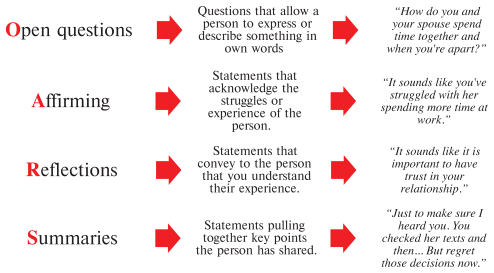
Another core element is to engage in communication that is collaborative. Revisiting MI, a number of interpersonal communication skills are proposed to ensure a collaborative environment, which supports the interviewee’s freedom to speak, elaborate, or be silent. One of these core skills is OARS, which stands for open questions, affirming, reflections, and summaries (Miller & Rollnick, 2023).
Open questions are questions that cannot be responded to with short, abbreviated answers. Using open questions allows the interviewer to get a better understanding of the interviewee’s thoughts, feelings, and interpretations, while also facilitating a collaborative environment by allowing the interviewee to respond in their own words and guide the discussion. Table I provides several examples of open questions that can be used in the context of questioning the interviewee about the presence of coercively controlling behaviours by domain.
TABLE I Examples of open questions to start the collaborative conversation about each domain of coercive control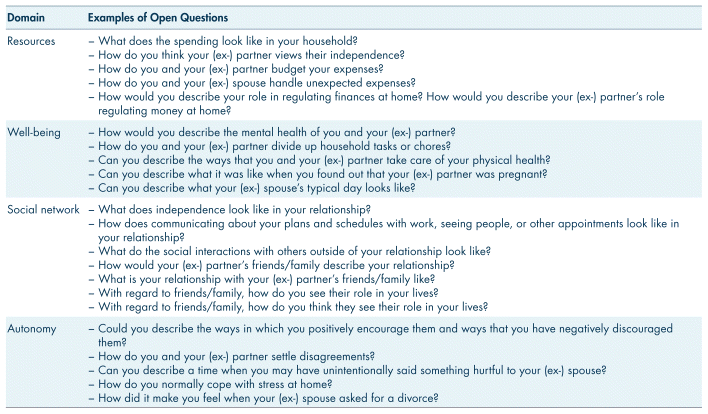
Affirming involves focusing on the interviewee’s strengths, abilities, and positive efforts, rather than any deficits or failures they may present with. It also involves seeing the interviewee as a person of worth who is capable of growth and change, especially given the likelihood that a suspect may not wish to cooperate so easily when being questioned about abusing their partner. Conversely, many IPV victims may be fearful of participating in a police interview that may lead to further escalation of violence by their abusive partner; hence, reinforcing the victim’s positive attributes may help maintain rapport and continuation of the interview.
Reflections are statements made by the interviewer that show that they understand the meaning and experience of the interviewee. Of course, this must be balanced with not endorsing their behaviour. Reflecting the interviewee’s circumstance and experience provides the interviewee the opportunity to hear their experiences in different words, which can provoke deeper understanding and exploration, as well as demonstrate an expression of empathy toward the interviewee.
Summaries pull together the key points of the interview and can be used to end a section of an interview or the interview, transition to another task, promote understanding, as well as show the interviewee that the interviewer has been listening carefully. Perpetrators of violence and coercive control against a partner are more likely to present themselves in a positive light (Watson et al., 2022). Therefore, hearing the interviewer harnessing their words, listening to them with curiosity and not judgment, and trying to get them to open up about their experiences may make them feel like they have been heard.
OARS can be used strategically to prompt an individual to give longer responses and hence more information. Figure 2 provides an example of how it can be applied in the context of identifying coercively controlling behaviours.
|
| ||
|
FIGURE 2 Foundational communication skills (“OARS”) as applied to coercive control of the victim’s social networks. | ||
A common part of investigative interviews is to ask follow-up questions to a suspect, witness, or victim about their statements or account of the alleged event. When discrepancies are noted, non-confrontational challenges to the interviewee about their account of the events are needed to clarify details. Once rapport is established and OARS is employed early in the interview, the interviewer can begin to ask follow-up questions based on the narrative that the interviewee described. Focusing on one event or topic at a time, the interviewer should start with broad, open questions, followed by more pointed close questions when necessary (Geiselman, 2012). It is important to note that an interviewee may be inclined to jump to different topics in an effort to gain control of the interview or avoid topics that do not paint them favourably (Watson et al., 2022). In these cases, it is important for the interviewer not to cut the interviewee off, but rather, refocus the interview in a non-confrontational way. A way to carry this out is to start with the least incriminating evidence. This prevents the interviewee from becoming overwhelmed and allows them to elaborate on each inconsistency separately rather than providing a comprehensive explanation.
Recall that the SUE technique (Granhag & Hartwig, 2015) can be used to address information that may cause guilty suspects to change their earlier statement(s) and/or attempt to give an innocent explanation for their inconsistencies. However, this is not consistent with adhering to the Canadian Charter of Rights and Freedoms (Canadian Charter of Rights and Freedoms, 1982, s 6(2)(b)). Ethically, a more sound approach would be to take on the stance of being curious, rather than aim for a “gotcha” moment (i.e., tricking the interviewee by catching them in the act of being wrong), which would be more effective in addressing such discrepancies. For example, in a situation where a suspect reports never keeping track of their partner’s whereabouts during their relationship, yet the interviewer knows the victim found an AirTag (i.e., Bluetooth-enabled tracking device that is the size of a quarter) in their gym bag and there is a receipt showing AirTags were purchased by the suspect, it would be easy to immediately confront the suspect. However, this would be an ineffective and counterproductive interview strategy that would likely lead to resistance or possibly shutting down in responding any further during the interview. Because it is important to raise this inconsistency, the interviewer can show curiosity about the discrepancy and using an open-ended question reduces any judgmental tone that may interfere with the effectiveness of the interviewer (e.g., asking “I’ve read here that you had purchased AirTags in March and one of these AirTags was found in Jamie’s bag, can you tell me more about this?”). Although many coercive controlling behaviours are not easily corroborated with evidence, the investigator would need to be more aware of these discrepancies and use their skills in a non-confrontational way to effectively obtain a narrative from the suspect.
A final core element to note is the importance of maintaining a firm handle of the interview. It is important to convey experience, confidence, and an atmosphere of authority. In contexts where an individual is suspected of engaging in coercive control with their intimate partner, one could surmise that they would also engage in this coercively controlling behaviour with an investigative officer or with their supervisor or therapist. Watson et al. (2022) examined 29 interview transcripts with suspects accused of controlling or coercive behaviour within intimate relationships to determine if their familiarity at deliberately influencing others through these behaviours extended to a police interview setting. Their results showed that suspects employed a wide range of influence behaviours, including those intended to establish dominance over the interviewer.
Another challenge is if the interviewer exhibits psychopathic features. Studies have shown that psychopathy is an important predictor of criminal behaviour in general and intimate partner violent perpetrators (Cunha et al., 2021), and that psychopathic individuals are more likely to engage in coercively controlling behaviours such as stalking (Cunha et al., 2023), emotional abuse (Spencer et al., 2024), and sexual coercion (Hoffman & Verona, 2021). In light of evidence indicating that rapport building may be ineffective or counterproductive when trying to elicit information from a psychopathic suspect (Marques & St. Yves, 2022; Quayle, 2008), it should not be surprising that interviewees with these features may exhibit greater tendencies to control or manipulate the interviewer. To maintain a firm handle on the interview, it is critical to prepare ahead of time (i.e., review any victim/witness statements, draft open-ended questions); it is not only important but compulsory when working with someone with psychopathic features, as the interviewee may attempt to exploit perceived inexperience, inadequate credentials, or lack of confidence.
Although not an exhaustive list of evidence-based interview approaches, MI, CIS, and the SUE technique provide a practical set of processes and techniques for interviewing individuals suspected of committing coercively controlling behaviours in intimate relationships. Both approaches highlight the importance of planning and preparing prior to the interview as well as rapport building and creating a non-adversarial environment. Employing evidence-based approaches when dealing with coercively controlling behaviours not only increases the volume and quality of information gathered (Geiselman, 2012), but also increases the likelihood of cooperation (Watson et al., 2022), which is an important consideration, as interviewing coercively controlling partners can have its own unique set of challenges to overcome.
It goes without saying that interviews must be conducted ethically and adhere to the Canadian Charter of Rights and Freedoms (Canadian Charter of Rights and Freedoms, 1982, s 6(2)(b)). As seen with these core elements outlined that it would be a challenge for investigative interviewers to build rapport with the interviewee, patiently listen without interruption, collaboratively communicate, use a non-confrontational approach to addressing discrepancies, and maintain a firm but fair stance throughout the interview – while also engaging in manipulative, accusatory, or confrontational tactics. The latter tactics are not condoned nor do they align with the Canadian Charter. If the suspect, witness, or victim makes exculpatory or inculpatory statements, the interviewer must protect the rights of the individual and ensure warnings pertaining to their right to silence, and interview approaches should comply with the Charter by ensuring the protection of individuals from being indirectly compelled to incriminate themselves. What is suggested here is not intended to overshadow existing police practices but to ensure that in the context of IPV investigations, coercive control is not neglected and that incorporating open-ended questions to assess the presence of coercive controlling behaviours is infused in an investigation. Some more proactive ways to ensure coercive control is examined in IPV investigations is to adopt questions at the time of interviewing the victim, witness, and/or suspect, especially within the first 24 hours. For instance, many police services in Canada (Saxton et al., 2020) use the ODARA (Hilton, 2021) tool to assess partner violence risk, and additional questions to capture these coercive control domains (control of resources, manipulating well-being, control social network, control of autonomy) could be part of the protocol of information gathering.
It is unmistakable that identifying and assessing the domains of coercively controlling behaviours is a necessary component of interviewing individuals who engage in abuse against their partners. It would be remiss to say that police investigators would find it easy to merely ask questions to assess these intangible behaviours, since it is unlikely to be so simple and easily disclosed. We can certainly borrow from knowledge and research on investigative interviewing and other evidence-based approaches. Foundational components of interviewing for coercive control should include rapport building, allowing for uninterrupted narratives, using broad open-ended questions, engaging in follow-up on things said by an interviewee, and maintaining a firm but fair handle over the interview. In contrast, taking the view that such individuals will only talk, disclose, or confess after being “broken” through confrontational methods is less helpful. Increased recognition of the negative impacts of coercively controlling behaviours is reflected not only in the research literature (Lohmann et al., 2024; Myhill, 2017; Myhill & Hohl, 2019), but also in the increased likelihood that criminal law will soon capture coercively controlling behaviours in Canada (Giesbrecht, 2024). Due to the nature of coercively controlling behaviours and the challenging task of consistently acquiring concrete corroboratory evidence, detection relies largely on voluntary disclosures from suspects, victims, or other witnesses. For this reason, using core techniques drawn from MI, CIS, and the SUE approaches can help better assess the presence of coercive control in the context of partner violent relationships.
None.
The authors have no conflicts of interest to declare.
None.
*MacEwan University, Edmonton, AB, Canada;
†Tedeschini Training and Consulting, Edmonton, AB, Canada
Abbe, A., Brandon, S. E. (2014). Building and maintaining rapport in investigative interviews. Police Practice and Research, 15, 207–220. https://doi.org/10.1080/15614263.2013.827835
Crossref
Alison, E., Alison, L. (2020). Rapport: The four ways to read people. Random House.
Alsinai, A., Reygers, M., DiMascolo, L., Kafka, J., Rowhani-Rahbar, A., Adhia, A., Bowen, D., Shanahan, S., Dalve, K., Ellyson, A. M. (2023). Use of immigration status for coercive control in domestic violence protection orders. Frontiers in Sociology, 8(1), 1146102. https://doi.org/10.3389/fsoc.2023.1146102
Crossref PubMed PMC
American Psychological Association. (n.d.). APA dictionary of psychology. Retrieved July 28, 2023, from https://dictionary.apa.org/gaslight
Anstiss, B., Polaschek, D. L. L., Wilson, M. (2011). Motivational interviewing: Helping people change and grow. Psychology, Crime Law, 17(8), 689–710. https://doi.org/10.1080/10683160903524325
Crossref
Bendlin, M., Sheridan, L. (2019). Nonfatal strangulation in a sample of domestically violent stalkers. Criminal Justice and Behaviour, 46(11), 1528–1541. https://doi.org/10.1177/0093854819843973
Crossref
Bill C-233. (2022). An act to amend the criminal code and the judges act (violence against an intimate partner), passed 3rd reading and adoption on June 1, 2022, and receive Royal Assent. Canada.
Bill C-332. (2024). An act to amend the criminal code (coercive control of intimate partner), adopted by the house of commons on June 12, 2024 in 3rd reading. Canada.
Breiding, M. J., Chen, J., Black, M. C. (2014a). Intimate partner violence in the United States – 2010. National Center for Injury Prevention and Control, Centers for Disease Control and Prevention. from https://www.cdc.gov/violenceprevention/pdf/cdc_nisvs_ipv_report_2013_v17_single_a.pdf
Breiding, M. J., Smith, S. G., Basile, K. C., Walters, M. L., Chen, J., Merrick M. T. (2014b). Prevalence and characteristics of sexual violence, stalking, and intimate partner violence victimization – national intimate partner and sexual violence survey, United States, 2011. Morbidity and Mortality Weekly Report. Surveillance Summaries (Washington, D.C. 2002), 63(8), 1–18.
Buchanan, F., Humphreys, C. (2020). Coercive control during pregnancy, birthing and postpartum: Women’s experiences and perspectives on health practitioners’ responses. Journal of Family Violence, 36(1), 325–335. https://doi.org/10.1007/s10896-020-00161-5
Crossref
Bull, R. (2023). Improving the interviewing of suspects using the PEACE model: A comprehensive overview. Canadian Journal of Criminology and Criminal Justice, 65(1), 80–91. https://doi.org/10.3138/cjccj.2023-0003
Crossref
Canadian Charter of Rights and Freedoms. (1982). s 7, Part I of the Constitution Act, 1982, being Schedule B to the Canada Act 1982 (UK), c 11.
Cotter, A. (2021). Intimate partner violence in Canada, 2018: An overview. Juristat, 85(2), 3–23.
Crossman, K. A., Hardesty, J. L., Raffaelli, M. (2016). “He could scare me without laying a hand on me”: Mothers’ experiences of nonviolent coercive control during marriage and after separation. Violence Against Women, 22(4), 454–473. https://doi.org/10.1177/1077801215604744
Crossref
Cunha, O., Braga, T., Gonçalves, R. A. (2021). Psychopathy and intimate partner violence. Journal of Interpersonal Violence, 36(3–4), 1720–1738. https://doi.org/10.1177/0886260518754870
Crossref
Cunha, O., Caridade, S., Almeida, T. C., Gonçalves, R. A. (2023). Stalking behaviours among perpetrators of intimate partner violence in Portugal: Correlates and mediating variables. European Journal on Criminal Policy and Research, 29(1), 147–165. https://doi.org/10.1007/s10610-022-09511-z
Crossref
DeJong, C., Burgess-Proctor, A., Elis, L. (2008). Police officer perceptions of intimate partner violence: An analysis of observational data. Violence and Victims, 23(6), 683–696. https://doi.org/10.1891/0886-6708.23.6.683
Crossref PubMed
Dobash, R. E., Dobash, R. P. (2015). When men murder women. Policing: A Journal of Police and Practice, 10(4), 456–457. https://doi.org/10.1093/police/paw018
Douglas, H., Harris, B. A., Dragiewicz, M. (2019). Technology-facilitated domestic and family violence: Women’s experiences. British Journal of Criminology, 59(3), 551–570. https://doi.org/10.1093/bjc/azy068
Crossref
Dutton, M., Goodman, L. A. (2005). Coercion in intimate partner violence: Toward a new conceptualization. Sex Roles, 34(11/12), 743–756. https://doi.org/10.1007/s11199-005-4196-6
Crossref
Fanslow, J. L., Robinson, E. M. (2010). Help-seeking behaviours and reasons for help seeking reported by a representative sample of women victims of intimate partner violence in New Zealand. Journal of Interpersonal Violence, 25(5), 925–951. https://doi.org/10.1177/0886260509336963
Crossref
Fisher, R. P., Geiselman, R. E. (1992). Memory-enhancing techniques for investigative interviewing: The cognitive interview. Springfield, IL: Charles C. Thomas.
Fisher, R. P., Geiselman, R. E., Raymond, D. S. (1987). Critical analysis of police interview techniques. Journal of Police Science and Administration, 15(3), 177–185.
Fisher, R. P., Geiselman, R. E., Amador, M. (1989). Field test of the cognitive interview: Enhancing the recollection of actual victims and witnesses of crime. Journal of Applied Psychology, 75(5), 722–727. https://doi.org/10.1037/0021-9010.74.5.722
Crossref
Geiselman, R. E. (2012). The cognitive interview for suspects (CIS). American Journal of Forensic Psychology, 30(3), 5–20.
Geiselman, R. E., Fisher, R. P. (2014). Interviewing witnesses and victims. In M. St. Yves (Ed.), Investigative interviewing: Handbook of best practices. Thomson Reuters.
Giesbrecht, C. J. (2024). The need for a Canadian Criminal Code offence of coercive control. Journal of Community Safety and Well-Being, 9(1), 33–39. https://doi.org/10.35502/jcswb.362
Crossref
Gill, C., Aspinall, M. (2020). Understanding coercive control in the context of intimate partner violence in Canada: How to address the issue through the criminal justice system? Office of the Federal Ombudsman for Victims of Crime. https://www.victimsfirst.gc.ca/res/cor/UCC-CCC/index.html
Granhag, P. A., Hartwig, M. (2015). The strategic use of evidence technique: A conceptual overview. In P. A. Granhag, A. Vrij, B. Verschuere (Eds.), Detecting deception: Current challenge and cognitive approaches (pp. 231–251). John Wiley.
Gudjonsson, G. H., Pearse J. (2011). Suspect interviews and false confessions. Current Directions in Psychological Sciences, 20(1), 33–37. https://doi.org/10.1177/0963721410396824
Crossref
Hamberger, L. K., Larsen, S. E., Lehrner, A. (2017). Coercive control in intimate partner violence. Aggression and Violent Behaviour, 37(1), 1–11. https://doi.org/10.1016/j.avb.2017.08.003
Crossref
Hartwig, M., Granhag, P. A., Luke, T. (2014). Strategic use of evidence during investigative interviews: The state of the science. In D. C. Raskin, C. R. Honts, J. C. Kircher (Eds.), Credibility assessment: Scientific research and applications (pp. 1–36). Elsevier Academic Press. https://doi.org/10.1016/B978-0-12-394433-7.00001-4
Hardesty, J. L., Crossman, K. A., Haselschwerdt, M. L, Raffaelli, M., Ogolsky, B. G., Johnson, M. P. (2015). Toward a standard approach to operationalizing coercive control and classifying violence types. Journal of Marriage and Family, 77(4), 833–843. https://doi.org/10.1111/jomf.12201
Crossref PubMed PMC
Hay, C., Grobbelaar, M., Guggisberg, M. (2023) Mothers’ post-separation experiences of male partner abuse: An exploratory study. Journal of Family Issues, 44(5), 1151–1418. https://doi.org/10.1177/0192513X211057541
Crossref
Henry, N., Gavey, N., Johnson, K. (2022). Image-based sexual abuse as a means of coercive control: Victim-survivor experiences. Violence Against Women, 29(6–7), 1206–1226. https://doi.org/10.1177/10778012221114918
Crossref PubMed
Hilton, N. Z. (2021). Domestic violence risk assessment: Tools for effective risk assessment and management (2nd ed.). American Psychological Association. https://doi.org/10.1037/0000223-000
Hilton, N. Z., Jung, S. (2023, September 4). Police-academic partnerships could help tackle the crime of coercive control. The Conversation. https://theconversation.com/police-academic-partnerships-could-help-tackle-the-crime-of-coercive-control-211965
Hilton, N. Z., Harris, G. T., Rice, M. E., Lang, C., Cormier, C. A., Lines, K. J. (2004). A brief actuarial assessment for the prediction of wife assault recidivism: The Ontario Domestic Assault Risk Assessment. Psychological Assessment, 16(3), 267–275. https://doi.org/10.1037/1040-3590.16.3.267
Crossref PubMed
Hilton, N. Z., Eke, A. W., Kim, S., Ham, E. (2023). Coercive control in police reports of intimate partner violence: Conceptual definition and association with recidivism. Psychology of Violence, 13(4), 277–285. https://doi.org/10.1037/vio0000457
Crossref
Hoffman, A. M., Verona, E. (2021). Psychopathic traits and sexual coercion against relationship partners in men and women. Journal of Interpersonal Violence, 36(3–4), NP1788–1809NP. https://doi.org/10.1177/0886260518754873
Crossref
Inbau, F. E., Reid, J. E., Buckley, J. P., Jayne, B. C. (2011). Criminal interrogation and confessions. Jones Bartlett Learning.
Johnson, M. P. (2008). A typology of domestic violence: Intimate partner terrorism, violent resistance, and situational couple violence. Northeastern University Press.
Johnson, H., Eriksson, L., Mazerolle, P., Wortley, R. (2019). Intimate femicide: The role of coercive control. Feminist Criminology, 14(1), 3–23. https://doi.org/10.1177/1557085117701574
Crossref
Kanougiya, S., Daruwalla, N., Gram, L., Sivakami, M., Osrin, D. (2022). Domestic coercive control and common mental disorders among women in informal settlements in Mumbai, India: A cross-sectional survey. Journal of Interpersonal Violence, 37(19–20), NP17934–NP17959. https://doi.org/10.1177/08862605211030293
Crossref PMC
Kassin, S. M., Appleby, S. C., Perillo, J. T. (2010). Interviewing suspects: Practice, science, and future directions. Legal and Criminological Psychology, 15, 39–55. https://doi.org/10.1348/135532509X449361
Crossref
Kelly, C. E., Jenaway, E. M., Kyong-McClain, A., McClary, M., Meehan, N. (2024). The resister, the talker and the confessor: A closer look at suspect responses in investigative interviews. Journal of Investigative Psychology and Offender Profiling, 21(3), Article e1640. https://doi.org/10.1002/jip.1640
Crossref
Kim, S., Warren, E., Jahangir, T., Al-Garadi, M., Yang, Y., Lakamana, S., Sarker, A. (2023). Characteristics of intimate partner violence and survivor’s needs during the COVID-19 pandemic: Insights from Subreddits related to intimate partner violence. Journal of Interpersonal Violence, 38(17–18), 9613–10477. https://doi.org/10.1177/08862605231168816
Crossref
Klein, W., Li, S., Wood, S. (2023). A qualitative analysis of gaslighting in romantic relationships. Personal Relationships, 30(4), 1316–1340. https://doi.org/10.1111/pere.12510
Crossref
Koshan, J. (2023). Challenging myths and stereotypes in domestic violence cases. Canadian Journal of Family Law, 35(1), 33–81.
Kropp, P. R., Hart, S. D., Webster, C. W., Eaves, D. (1995). Manual for the spousal assault risk assessment guide (2nd ed.). British Columbia Institute on Family Violence.
Leahy-Harland, S., Bull, R. (2017). Police strategies and suspect responses in real-life serious crime interviews. Journal of Police and Criminal Psychology, 32(2), 138–151. https://doi.org/10.1007/s11896-016-9207-8
Crossref
Lohmann, S., Cowlinshaw, S., Ney, L., O’Donnell, M., Felmingham, K. (2024). The trauma and mental health impacts of coercive control: A systematic review and meta-analysis. Trauma, Violence, Abuse, 25(1), 630–647. https://doi.org/10.1177/15248380231162972
Crossref
Marques, P. B., St-Yves, M. (2022). Interviewing psychopaths: Toward a science of investigative interviewing of psychopathic suspects. In P. B. Marques, M. Paulino L. Alho (Eds.), Psychopathy and Criminal Behaviour: Current Trends and Challenges. (pp. 219–239). Elsevier Academic Press. https://doi.org/10.1016/B978-0-12-811419-3.00045-5
Crossref
McKay White, R., Fjellner, D. (2022). The prevalence of economic abuse among intimate partners in Alberta. SAGE Open, 12(1). https://doi.org/10.1177/21582440221084999
Crossref
McPhedran, S., Gover, A. R., Mazerolle, P. (2017). A cross-national comparison of police attitudes about domestic violence: A focus on gender. Policing: An International Journal, 40(2), 214–227. https://doi.org/10.1108/PIJPSM-06-2016-0083
Crossref
Méndez, J. E., Thomson, M., Bull, R., Fallon, M., Hinestroza Arenas, V., Namoradze, Z., Oxburgh, G., Perez Sales, P., Rachlew, A., Rytter, T., Schollum, M., Shaeffer, R., Ssekindi, R., Stein, L. M., Tait, S. (2021, May). Principles on effective interviewing for investigations and information gathering. Center for Human Rights and Humanitarian Law. Retrieved March 15, 2025, from https://www.wcl.american.edu/impact/initiatives-programs/center/publications/documents/upload/mendez-principles.pdf
Miller, W. R., Rollnick, S. (2002). Motivational interviewing: Helping people change and grow (2nd ed.). Guilford.
Miller, W. R., Rollnick, S. (2023). Motivational interviewing: Helping people change and grow (4th ed.). Guilford.
Milne, R., Bull, R. (1999). Investigative interviewing: Psychology and practice. Chichester: Wiley.
Mulvihill, N., Aghtaie, N., Matolcsi, A., Hester, M. (2022). UK victim-survivor experiences of intimate partner spiritual abuse and religious coercive control and implications for practice. Criminology Criminal Justice, 23(5), 773–790. https://doi.org/10.1177/17488958221112057
Crossref
Myhill, A. (2015). Measuring coercive control: What can we learn from national population surveys? Violence Against Women, 21(3), 355–375. https://doi.org/10.1177/1077801214568032
Crossref PubMed
Myhill, A. (2017). Measuring domestic violence: Context is everything. Journal of Gender-Based Violence, 1(1), 33–34. https://doi.org/10.1332/239868017X14896674831496
Crossref
Myhill, A., Hohl, K. (2019). The “golden thread”: Coercive control and risk assessment for domestic violence. Journal of Interpersonal Violence, 34(21–22), 4477–4497. https://doi.org/10.1177/0886260516675464
Crossref
Oliver, E., Coates, A., Bennett, J. M., Willis, M. L. (2023). Narcissism and intimate partner violence: A systematic review and meta-analysis. Trauma, Violence, Abuse, 25(3), 1871–1884. https://doi.org/10.1177/15248380231196115
Crossref PubMed PMC
Policastro, C., Payne, B. K. (2013). The blameworthy victim: Domestic violence myths and the criminalization of victimhood. Journal of Aggression, Maltreatment Trauma, 22(4), 329–347. https://doi.org/10.1080/10926771.2013.775985
Crossref
Postmus, J. L., Hoge, G. L., Breckenridge, J., Sharp-Jeffs, N. S., Chung, D. (2020). Economic abuse as an invisible form of domestic violence: A multicountry review. Trauma, Violence, Abuse, 21(2), 261–283. https://doi.org/10.1177/1524838018764160
Crossref
Quayle, J. (2008). Interviewing a psychopathic suspect. Journal of Investigative Psychology and Offender Profiling, 5(1–2), 79–91. https://doi.org/10.1002/jip.83
Crossref
Regan, L., Kelly, L., Morris, A., Dibb, R. (2007). ‘If only we’d known’: An exploratory study of seven intimate partner homicides in Engleshire. Final Report to the Engleshire Domestic Violence Homicide Review Group. Child and Woman Abuse Studies Unit, London Metropolitan University. Retrieved April 28, 2025, from https://cwasu.org/wp-content/uploads/2016/07/if.pdf
Robinson, A. L., Myhill, A., Wire, J. (2017). Practitioner (mis)understandings of coercive control in England and Wales. Criminology Criminal Justice, 18(1), 29–49. https://doi.org/10.1177/1748895817728381
Crossref
Satin, G. E., Fisher, R. P. (2019). Investigative utility of the Cognitive Interview: Describing and finding perpetrators. Law and Human Behavior, 43(5), 491–506. https://doi.org/10.1037/lhb0000326
Crossref PubMed
Saxton, M. D., Jaffe, P. G., Straatman, A.-L., Olszowy, L., Dawson M. (2020). Measuring intimate partner violence risk: A national survey of Canadian police officers. Journal of Community Safety and Well-Being, 5(3), 103–109. https://doi.org/10.35502/jcswb.144
Crossref
Scott, K., Straus, M. (2007). Denial, minimization, partner blaming, and intimate aggression in dating partners. Journal of Interpersonal Violence, 22(7), 851–871. https://doi.org/10.1177/0886260507301227
Crossref PubMed
Smyth, M. R., Teicher, S., Wilde, D. J. (2024). How does denial, minimization, justifying, and blaming operate in intimate partner abuse committed by men: A systematic review of the literature. Trauma, Violence, Abuse, 25(3), 1853–1870. https://doi.org/10.1177/15248380231196108
Crossref
Snook, B., Eastwood, J., Stinson, M., Tedeschini, J., House, J. C. (2010). Reforming investigative interviewing in Canada. Canadian Journal of Criminology and Criminal Justice, 52(2), 215–229.
Crossref
Snook, B., Keating, K. (2011). A field study of adult witness interviewing practices in a Canadian police organization. Legal and Criminological Psychology, 16, 160–172.
Crossref
Spencer, C. M., Keilholtz, B. M., Palmer, M., Vail, S. L. (2024). Mental and physical health correlates for emotional intimate partner violence perpetration and victimization: A meta-analysis. Trauma, Violence, Abuse, 25(1), 41–53. https://doi.org/10.1177/15248380221137686
Crossref
St-Yves, M. (2006). The psychology of rapport: Five basic rules. In T. Williamson (Ed.), Investigative interviewing: Rights, research, regulation (pp. 87–106). Devon, UK: Willan Publishing.
Stark, E. (2009). Coercive control: How men entrap women in personal life. Oxford University Press.
Stark, E., Hester M. (2019). Coercive control: Update and Review. Violence Against Women, 25(1), 81–104. https://doi.org/10.1177/1077801218816191
Crossref PubMed
Surmon-Böhr, F., Alison, L., Christiansen, P., Alison, E. (2020). The right to silence and the permission to talk: Motivational interviewing and high-value detainees. American Psychologist, 75(7), 1011–1021. https://doi.org/10.1037/amp0000588
Crossref PubMed
Tedeschini, J., Jung, S. (2018). Motivational interviewing in the context of police investigative interviews with suspects. Investigative Interviewing: Research and Practice, 9, 1–13.
Vallano, J. P., Compo, N. S. (2011). A comfortable witness is a good witness: Rapport-building and susceptibility to misinformation in an investigative mock-crime interview. Applied Cognitive Psychology, 25, 960–970.
Crossref
Watson, S. J., Luther, K., Taylor, P. J., Bracksieker, A.-L., Jackson, J. (2022). The influence strategies of interviewees suspected of controlling or coercive behavior. Psychology, Crime Law, 30(9), 1060–1086. https://doi.org/10.1080/1068316X.2022.2144853
Crossref
Correspondence to: Sandy Jung, MacEwan University, P.O. Box 1796, Edmonton, AB, T5J 2P2, Canada. Telephone: 780-497-4597. E-mail: sandy.jung@macewan.ca
This work is licensed under the Creative Commons Attribution-NonCommercial-NoDerivatives 4.0 International License. To view a copy of this license, visit http://creativecommons.org/licenses/by-nc-nd/4.0/. For commercial re-use, please contact sales@sgpublishing.ca.
Journal of CSWB, VOLUME 10, NUMBER 2, June 2025