Jess Bonnan-White*, Christine Tartaro*, William McKnight*, Richard Mulvihill*, Elizabeth B. Erbaugh†, Alysia M. Mastrangelo‡
ABSTRACT
In the current environment of tension surrounding police reform, police–community relationships remain strained. Studies indicate interactions with the public play a role in officer wellness, experiences of safety, and career sustainability. Here, we adapted measures of trust and sense of community (SOC) to explore police–community trust dynamics. Surveys were deployed among officers (N = 169) in nine police departments and residents of five counties of southern New Jersey (N = 285). Results indicate community members hold higher levels of both SOC and trust in police than do officers toward the community. SOC levels were significant predictors of trust in both samples. However, the models provided only a weak to moderate explanation for variation in trust. We discuss the implications of these results for police–community interactions.
Key Words Police attitudes; community interaction; sense of community; trust.
Policing practice occurs within contexts informed by reciprocal assessments of social conditions and individual behaviours between officers and members of the public. In this paper, we argue trust-building is a process with the potential to reverberate throughout aspects of police–community dynamics, including building and maintaining the legitimacy of policing (e.g., Hawdon, 2008; Kochel, 2019; Mourtgos & Adams, 2019; Nix et al., 2018; Stoutland, 2001). Bottoms and Tankebe (2012) argue legitimacy is conditional and dependent on the interplay between public and police assessments of one another’s bases of power-holding and obedience. We argue dynamics of trust between police officers and members of the public are similarly dialogic and responsive. Here, we compare levels of reciprocal trust between police officers and members of the communities they serve, to (1) identify areas of difference and (2) examine whether trust is associated with another community-based assessment – sense of community (SOC).
Previous examinations of trust related to policing reference different models and interrelated concepts including organizational justice, legitimacy, confidence, compliance, fear of crime, cynicism, and social cohesiveness and order (e.g., Cao, 2015; Carr & Maxwell, 2018; Goldsmith, 2005; Hamm et al., 2017; Jackson & Sunshine, 2007; Kääriäinen & Sirén, 2012; Mourtgos et al., 2020; Stoutland, 2001). Cao (2015) describes trust as reciprocal, relational risk-taking between individuals or individuals and institutions. Hawdon (2008) elaborates by stressing trust also reflects assessment of an individual’s behaviour within a specific role (e.g., police officer) and is essential to developing bonding capital. While policing literature uses no uniformly accepted measure of trust, we, like others, explore trust by examining measures of officers’ and residents’ reciprocal care or benevolence, capability or competence, respect, fairness, dependability, and influence or voice (e.g., Carr & Maxwell, 2018; Hamm et al., 2017; Jackson & Sunshine, 2007; Stoutland, 2001).
In the United States, police–community dynamics are complicated by the decentralized nature of policing across overlapping federal, state, county, and municipal agencies. Thus, officers in one jurisdiction are subject to public criticism following events that occur in another with little recourse. Police–community dynamics are further exacerbated by a recent “war on cops” rhetoric (MacDonald, 2016a, 2016b, 2017), despite a lack of unequivocal evidence (Nix et al., 2018; Shjarback & Maguire, 2019; White et al., 2019, 2023). A rhetoric of this sort can have a lasting impact on individual officers and, as a result, on police culture(s). For example, studies of police officers (e.g., Edwards et al., 2021; Nix & Wolfe, 2018; Velazquez & Hernandez, 2019) associate public criticism with negative outcomes for officers’ self-legitimacy, mental health, and professional attitudes. Thus, officers experience tension between macro-level assessments of history and institutional legitimacy and individual-level evaluation of personal relationships, service, and safety.
Policing scholars have previously examined factors in assessing the public’s trust in policing as a social institution, police officers as individuals, and officers’ trust in their own agencies or organizations (e.g., Flexon et al., 2009; Haas et al., 2015; Hamm et al., 2017; Kochel, 2019). Fewer studies focus on officers’ trust in the communities they serve (Carr & Maxwell, 2018; Kääriäinen & Sirén, 2012; Mourtgos et al., 2020). Scholars have proposed a variety of trust models; our study uses Stoutland’s (2001) framework, which builds on a qualitative study of police–community relationships, highlighting four contributing factors – competence, dependability, respect, and shared priorities or interests. Following Hawdon (2008), we required participants to assess how others might fulfill expectations within an assigned social role (i.e., as resident or police officer). We also tailored our measurement of trust to one specific hypothetical context – officer-involved shootings – to avoid the limitations of generalized trust measures (Kääriäinen & Sirén, 2012). Given the importance of localized, street-level interaction in public perceptions of police services and capacity, comparing trust levels among individuals living and serving in one geographic area offers a different lens on trust dynamics compared to a focus on macro- or meso-level institutional confidence or legitimacy.
Our study also explores the potential association between SOC and trust. SOC, broadly defined, is, “the fundamental human phenomenon of collective experience” (Peterson et al., 2008, p. 62), and, as a measure of community psychology, assesses belongingness, influence and impact, needs fulfillment, and connectedness (Stewart & Townley, 2020). In their review, Stewart and Townley (2020) found higher SOC levels significantly predict or mediate measures of psychological and social well-being across populations and contexts. With trust and SOC in mind, we address two research questions. First, how do levels of trust and SOC compare between members of the public and police officers within one geographic area? Second, can SOC, as a validated measurement of community belonging, be used to explore trends in police–community trust? In doing so, we contribute to an evolving body of literature focused on understanding the dynamics of police–community relationships to support efforts at constructive change.
This paper represents one part of a larger interdisciplinary research project initiated in 2018 to explore the roots of conflict between the public and police following incidents of police-involved violence (Bonnan-White et al., 2022; Tartaro et al., 2021). Here, we expand on our previous work, comparing levels of trust held by police to those held by members of the public. These results build upon other scholarship investigating officers’ trust toward the public (Carr & Maxwell, 2018; Mourtgos et al., 2020), as well as how SOC might be applied to understanding police–community dynamics of trust.
To address our research goals, we tested the following hypotheses:
Our multidisciplinary team developed surveys for distribution to community members and police officers measuring factors that might inform officer–public interactions, including SOC and reciprocal trust. Nine police departments were recruited through non-random, purposive sampling of departments located in five counties in southern New Jersey (Atlantic, Burlington, Camden, Cape May, and Ocean). Our focus on southern New Jersey counties reflects unique geographies of sociopolitical and economic conditions used in other New Jersey-based studies (Curtis et al., 2024a; 2024b). Following department approval, surveys were distributed to officers in various formats, including paper copies, e-mailed Qualtrics links, or links on internal computer systems (September 2019–March 2020)1, depending on the preference of department leadership. Between April and May 2019, the William J. Hughes Center for Public Policy at Stockton University sampled households in the five counties using random digit dialling. Recruitment posts on Facebook were used to supplement phone polling; participants were asked to identify their county of residence. Neither police officers nor community members were offered compensation for their participation.
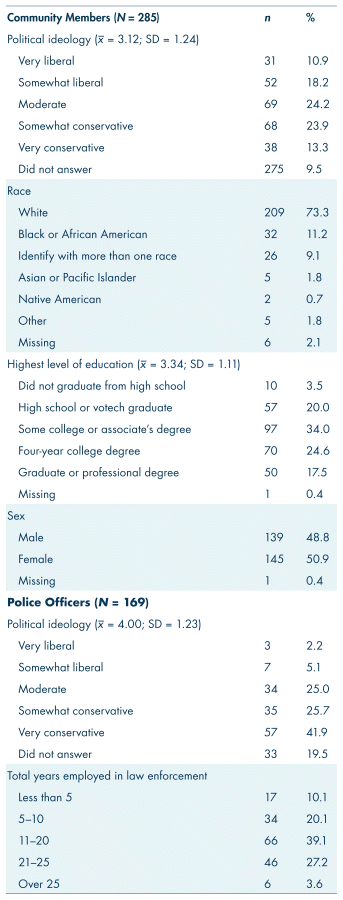
In total, 590 officers received the survey; 169 (28.6%) were sufficiently completed to be included in the present analyses. Although relatively small, our sample size is similar to recent studies of officer experiences and attitudes (Carr & Maxwell, 2018; Kääriäinen & Sirén, 2012). In terms of public response, 362 community members (excluding anyone currently employed in policing) completed the community survey. Of these, 285 (78.7%) drawn from the same five counties represented by police departments were included in the present analysis. Out of concern for officer participation rates, we collected limited demographic data on police respondents to maintain assurances of anonymity (Table I). Human subjects’ research approval was obtained from the Stockton University Institutional Review Board (IRB) (#2019.042).
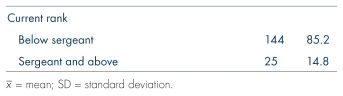
TABLE I Demographic characteristics of sample respondents
SOC measures adapted validated items available in the literature (Peterson et al., 2008) (see Table II). Responses were measured on a five-point Likert scale (1 = strongly disagree to 5 = strongly agree), and a single summative SOC variable was calculated for both community members and police officers. For trust, the team wrote survey items incorporating Stoutland’s (2001) work assessing how both officers and residents evaluate aspects of respect, shared interests/priorities, dependability, and competency in a specific context of police-involved shootings. For this study, we created two different scales of trust – police trust (of community members) and community trust (of police). Each scale was composed of five mirrored items measured on a seven-point Likert scale (1 = completely disagree to 7 = completely agree) (see Table III).
TABLE II Sense of community (SOC) measures in sample respondents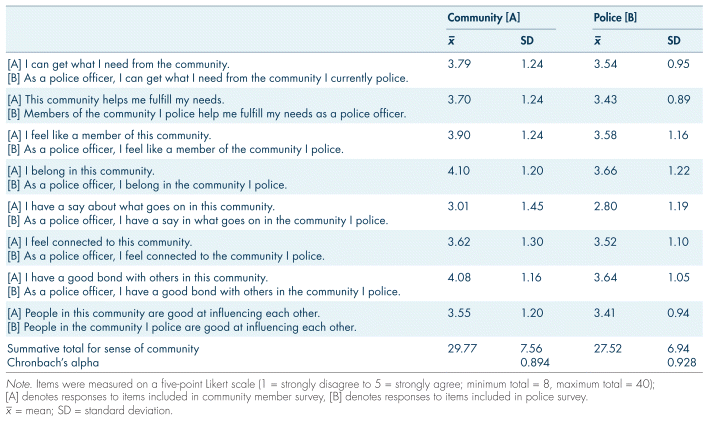
TABLE III Community and police trust measures in the sample respondents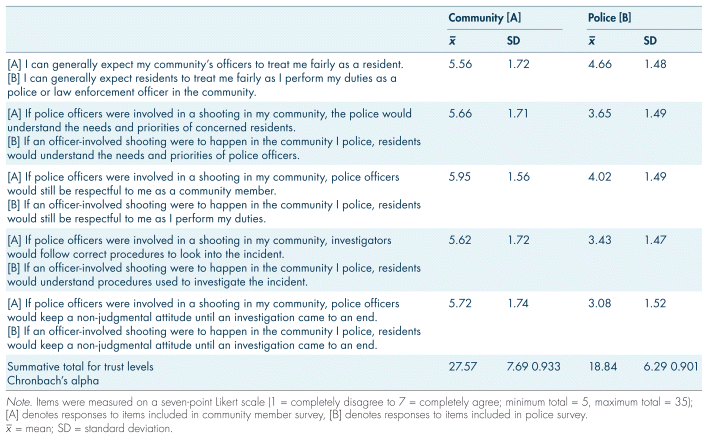
Data analyses were conducted using SPSS 28.01.1. Bivariate analysis consisted of independent samples t-tests and Pearson’s r correlations coefficients. Multivariate analysis included ordinary least squares (OLS) regression analysis.
Descriptive statistics for respondent characteristics are available in Table I. Both community and police samples leaned conservative in political ideology. Only community respondents were asked about their race, sex, and education level. The majority (73.3%) reported being White, with 11.2% Black or African American, and 9.1% identifying with more than one race. For this analysis, we condensed race to a dichotomous variable (1 = White and 0 = non-White). Fifty-one percent (50.9%) of community respondents were female. As for education, 3.5% did not graduate from high school, whereas 20% had high school, General Education Development, or vocational school degree as their highest level of education. Thirty-four percent completed some college or an associate’s degree, 24.6% completed a 4-year college program, and 17.5% had a graduate or professional degree. For police respondents, 30.2% spent 10 or less years in law enforcement, 39.1% spent 11–20 years, and 30.8% had over 20 years of service. Here, the third category (20+ years) was used as the reference category in analyses. Most police respondents (85.2%) held a rank below sergeant.
Summed mean responses for SOC, community trust, and police trust variables are displayed in Tables II and III. Overall, community and police responses for most SOC items indicate somewhat positive feelings, although police held relatively lower levels (27.52; standard deviation (SD) = 6.94) than the community (29.77; SD = 7.56). As with SOC, the summative trust total for police respondents (18.84; SD = 6.29) was relatively lower than for community members (27.57; SD = 7.69). All summed measures showed high degrees of reliability, with all Cronbach’s alpha values equalling or exceeding 0.894.
Bivariate analysis results are shown in Tables IV and V. As hypothesized, SOC is positively correlated with trust levels (Table IV). Table V includes independent sample t-test results, comparing community members to police officers on their scores on the community and trust scales. Although only slightly higher, the difference between community members’ and officers’ SOC values was significant. Cohen’s d indicates a rather small effect size of 0.307. For trust scales, the difference between the summed totals was also statistically significant and had a large effect size (Cohen’s d = 1.22). Results indicate sampled community members hold significantly higher levels of both SOC and trust (in police) compared to police levels of SOC or trust in the community.
TABLE IV Pearson’s r correlation coefficients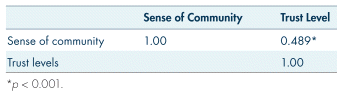
TABLE V Independent sample t-tests results for community and police population comparison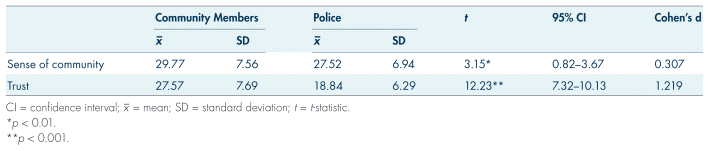
Table VI shows the results of two OLS regression models for trust as a dependent variable. Collinearity diagnostics revealed no problems with multicollinearity. Model 1 includes the summed measure for SOC and political ideology as independent variables. In model 1, only SOC significantly predicted police trust in community members. As SOC values increased, so did trust levels in community members. For community trust levels, both SOC and political ideology were significant predictors. In this case, not only did trust increase with higher levels of SOC, but the more politically conservative community members rated themselves, the higher their levels of trust in police. The R2 value for model 1 for police trust, however, is moderately weak, explaining only 10.7% of the variation in trust levels. For community trust, however, the strength of model 1 is higher, with 42.1% of the variation in trust explained.
TABLE VI Results of OLS regression models of predictors for trust results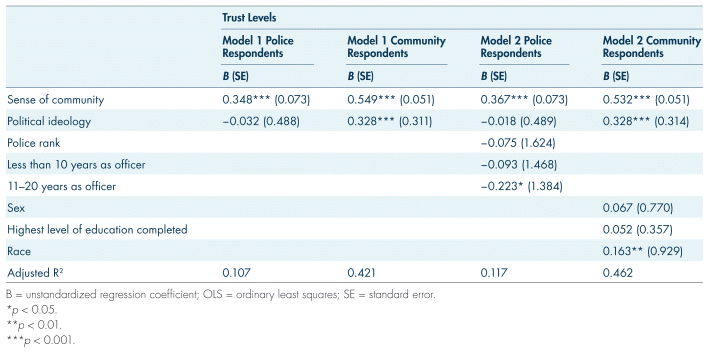
In model 2, additional demographic factors were added to SOC and political ideology. For police officers, SOC again served as a significant predictor, along with specific ranges of length of service. As with model 1, the higher the SOC values, the higher the trust levels. However, having served between 11 and 20 years (being a mid-career officer) resulted in significantly lower levels of trust. Additionally, model 2 once again remains generally weak for police respondents, with only 11.7% of the variation in police trust explained by predictor variables. For community trust, SOC and political ideology remain significant, along with race. Identifying as “White” resulted in higher trust levels in police, compared to “non-White.” For community trust, model 2 again demonstrates moderate strength, with 46.2% of variation in trust explained.
Policing is an emotive subject in the United States, representing the inherent risks of policing to both community members and police officers. Our study provides insights into the dynamics of belonging and trust that can inform conversations on macro-level issues such as legitimacy and confidence (Cao, 2015). Here, we explored community members’ SOC and levels of trust in police officers. Similarly, police officers were asked about their trust levels in residents and their SOC in relation to the communities they serve.
Results confirm our first hypothesis, that community members report higher levels of SOC in comparison to police. Although we did not probe individual item differences, belongingness for officers might be an area to further explore. Our survey instrument asked officers about their feelings not as residents, but as police officers in those communities, stressing their professional role in relation to the communities they serve (Carr & Maxwell, 2018). Whether officers live in the communities they police may contribute to variation in patterns of personal and professional belongingness. These results highlight a source of potential SOC variation when different social or professional roles and identities are considered and may reflect differences in how individuals define community in those roles.
Police officers reported not only a lower level of SOC but also a significantly lower level of trust in community members, confirming our third hypothesis. These results echo previous generalized comparisons of police–community trust (Kääriäinen & Sirén, 2012). For community members, racial identity, political ideology, and SOC were significant predictors of their trust in police. Conversely, among officers, trust levels in community members were predicted only by SOC and mid-career service (11–20 years). Thus, our second hypothesis – that SOC would be associated with higher trust in both populations – was also supported. Most notable, however, were differences in explanatory power between the two groups. While about 42–46% of variation in community members’ responses was explained by predictive variables, only about 10–11% of police trust was explained. Previous research suggests contacts with police, rather than race identification, more heavily influence public attitudes toward the police (Alberton & Gorey, 2018). However, questions persist regarding how social and political identities also interact (Burgason, 2017; Hansen & Navarro, 2023). Our results suggest race and political ideology are two, but certainly not the only, significant factors predicting trust in police in this geographic context. We stress, however, these patterns are not static, and other factors may shift attitudes over time (DiSalvo & Nagler, 2023; Vitro et al., 2022).
Given the variation in model strengths, as well as differences associated with race and political affiliation across the samples, additional factors informing police trust in community must be explored. Again, we suggest this gap might reflect how questions were posed – to respondents either as residents or in professional roles. While SOC might be one factor in trust levels, findings suggest other factors impact how officers envisage community support. Thus, we advocate for direct, constructive engagement with officers about their assessment of localized realities and national-level debates. Relatedly, while officers leaned toward the conservative end of the political spectrum, political ideology was not a predictor of trust; thus, it might be helpful to address sensitivity to, or belief in the prevalence of, “war on cops” narratives as a distinct issue from officers’ political identities.
Previous studies indicate that lack of mutual trust and misunderstandings between police and community members affect levels of officer proactivity and engagement (Mourtgos et al., 2020; Patil & Lebel, 2019). Our study builds on this body of scholarship highlighting factors influencing officers’ trust in the public. Carr and Maxwell (2018), for example, found officers’ trust in communities was significantly affected by their assessments of agency-level organizational justice and community policing approaches. Feelings of organizational justice, however, cannot effectively be measured among members of the public. Our measures of trust also reflect one specific context – officer-involved shootings – thereby, avoiding the vagueness of some more generalized measures.
Our study was limited by relatively small samples of police officers and community members. A larger, systematic sample might provide a more complete picture. In addition, polling and social media limitations meant we could not sample community members at the jurisdictional level to provide more localized comparisons. In the future, we would recommend prioritizing sampling at the jurisdictional level and offering this localized effort as a potential benefit in recruiting police departments. Future studies may also incorporate different models of trust to confirm our findings. Finally, this study measured a cross-section of attitudes during a short period of time; future analyses would be strengthened by repeated efforts at capturing similar data to determine trends in the interaction between trust and SOC.
Results presented here suggest trust community members hold in police and that of police officers in community members varies in response to multiple factors. Our study contributes to an existing body of literature in that we sampled both police and community members in one geographic area in the hopes of documenting localized relationship dynamics. In fact, in the context of national-level public critique and negative media attention surrounding police-related violence, it is notable that community members in the study area continue to demonstrate a relatively high level of trust in localized police practitioners.
Although beyond the scope of this study, historic patterns in localized, regional, and national-level policing are likely to inform the response to police-related violence and perception of evolving threats to officers’ safety, among other issues (White et al., 2023). Highly publicized events of police-related violence may invite negative rhetorics that position police interests as conflicting with those of communities. In presenting these results, we hope to encourage academics, police officers and administrators, community members, and community advocates to keep lines of dialogue open – even when difficult – to proactively address issues impacting police–community relationships at local and national levels.
The authors would like to express their gratitude to the officers and departments who gave their time and effort to respond to the offer to participate in the study. The authors also acknowledge the value of the comments we received from reviewers. The authors would also like to note the support of the Faculty Academic Writing Network (FAWN) at Stockton University for their support in preparing the manuscript. An earlier version of this paper was presented at the 2024 meeting of the Northeastern Association of Criminal Justice Sciences (NEACJS).
This project and manuscript was, in part, supported by a sabbatical granted to the first author by Stockton University.
The authors have no conflicts of interest to declare.
Human subjects’ research approval was obtained from the Stockton University Institutional Review Board (IRB) (#2019.042). Consent of participants was collected via affirmative answers on online surveys or via paper surveys.
*Criminal Justice Program, Stockton University, Galloway, NJ, USA;
†Sociology and Anthropology Program, Stockton University, Galloway, NJ, USA;
‡Physical Therapy Program, Stockton University, Galloway, NJ, USA
Alberton, A. M., Gorey, K. M. (2018). Contact is a stronger predictor of attitudes toward police than race: A state-of-the-art review. Policing: An International Journal, 41(1), 2–23. https://doi.org/10.1108/PIJPSM-06-2017-0070
Crossref
Bonnan-White, J., Tartaro, C., Mastrangelo, M. A., Erbaugh, E., McKnight, W. J., Mulvihill, R. (2022). Officer trust towards community members and critical incidents: A comparison of factors. Journal of Police and Criminal Psychology, 37(3), 602–618. https://doi.org/10.1007/s11896-022-09515-9
Crossref PubMed PMC
Bottoms, A., Tankebe, J. (2012). Beyond procedural justice: A dialogic approach to legitimacy in criminal justice. Journal of Criminal Law and Criminology, 102, 119–170. https://doi.org/10.1093/acprof:oso/9780198701996.003.0001
Burgason, K. A. (2017). Trust is hard to come by: Disentangling the influence of structural characteristics and race on perceptions of trust in the police in a major Southern County. Journal of Ethnicity in Criminal Justice, 15(4), 349–371. https://doi.org/10.1080/15377938.2017.1385558
Crossref
Cao, L. (2015). Differentiating confidence in the police, trust in the police, and satisfaction with the police. Policing: An International Journal of Police Strategies Management, 38(2), 239–249. https://doi.org/10.1108/PIJPSM-12-2014-0127
Crossref
Carr, J. D., Maxwell, S. R. (2018). Police officers’ perceptions of organizational justice and their trust in the public. Police Practice and Research, 19(4), 365–379. https://doi.org/10.1080/15614263.2017.1387784
Crossref
Curtis, K., Alger, M., Shah, P., Bill, R., Nichols, R. (2024a). The impact of family advocates and addressing the social determinants of health for families in South Jersey. Senator Walter Rand Institute for Public Affairs. Retrieved from https://rand.camden.rutgers.edu/wp-content/uploads/sites/32/2024/05/The-Impact-of-Family-Advocates-and-Addressing-the-Social-Determinants-of-Health-for-Families-in-South-Jersey.pdf
Curtis, K., Westley Henson, K., Ekelburg, A., Telesford, P., Ozalp, O. K., Nelson, J. (2024b). The intersection of social work and libraries: A Southern New Jersey perspective for expansion. Senator Walter Rand Institute for Public Affairs. Retrieved from https://sites.camden.rutgers.edu/wri/wp-content/uploads/sites/32/2024/11/complete-NJSL-breakout-SNJ-Report.pdf
DiSalvo, D., Nagler, M. G. (2023). Police unions, race, and trust in the police. Political Science Quarterly, 138(2), 167–188. https://doi.org/10.1093/psquar/qqad005
Crossref
Edwards, K. L., Eaton-Stull, Y. M., Kuehn, S. (2021). Police officer stress and coping in a stress-awareness era. Police Quarterly, 24(3), 325–356. https://doi.org/10.1177/1098611120984162
Crossref
Flexon, J. L., Lurigio, A. J., Greenleaf, R. G. (2009). Exploring the dimensions of trust in the police among Chicago juveniles. Journal of Criminal Justice, 37(2), 180–189. https://doi.org/10.1016/j.jcrimjus.2009.02.006
Crossref
Goldsmith, A. (2005). Police reform and the problem of trust. Theoretical Criminology, 9 (4), 443–470. https://doi.org/10.1177/1362480605057727
Crossref
Haas, N. E., Van Craen, M., Skogan, W. G., Fleitas, D. M. (2015). Explaining officer compliance: The importance of procedural justice and trust inside a police organization. Criminology Criminal Justice, 15(4), 442–463. https://doi.org/10.1177/1748895814566288
Crossref
Hamm, J. A., Trinkner, R., Carr, J. D. (2017). Fair process, trust, and cooperation: Moving toward an integrated framework of police legitimacy. Criminal Justice and Behavior, 44(9), 1183–1212. https://doi.org/10.1177/0093854817710058
Crossref
Hansen, M. A., Navarro, J. C. (2023). Bad apples or rotten orchards? Public attitudes of interactions with police and the role of political ideology. Policing: An International Journal, 46(5/6), 861–877. https://doi.org/10.1108/PIJPSM-07-2023-0098
Crossref
Hawdon, J. (2008). Legitimacy, trust, social capital, and policing styles: A theoretical statement. Police Quarterly, 11(2), 182–201. https://doi.org/10.1177/1098611107311852
Crossref
Jackson, J., Sunshine, J. (2007). Public confidence in policing. The British Journal of Criminology, 47(2), 214–233. https://doi.org/10.1093/bjc/azl031
Crossref
Kochel, T. R. (2019). Explaining racial differences in Ferguson’s impact on local residents’ trust and perceived legitimacy: Policy implications for police. Criminal Justice Policy Review, 30(3), 374–405. https://doi.org/10.1177/0887403416684923
Crossref
Kääriäinen, J., Sirén, R. (2012). Do the police trust in citizens? European comparisons. European Journal of Criminology, 9(3), 276–289. https://doi.org/10.1177/1477370811435737
Crossref
MacDonald, H. (2016a, July 8). The war on cops: The big lie of the anti-cop left turns lethal. Fox News. Retrieved from https://www.foxnews.com/opinion/the-war-on-cops-the-big-lie-of-the-anti-cop-left-turns-lethal
MacDonald, H. (2016b, July 20). The Ferguson effect. The Washington Post. Retrieved from https://www.washingtonpost.com/news/volokh-conspiracy/wp/2016/07/20/the-ferguson-effect/
MacDonald, H. (2017). The war on cops (Forum Series). Center of the American Experiment. Retrieved from https://files.americanexperiment.org/wp-content/uploads/2016/12/12.16-War-on-Cops-by-Heather-Mac-Donald.pdf?v=1488899479
Mourtgos, S. M., Adams, I. T. (2019). The rhetoric of de-policing: Evaluating open-ended survey responses from police officers with machine learning-based structural topic modeling. Journal of Criminal Justice, 64, 101627. https://doi.org/10.1016/j.jcrimjus.2019.101627
Crossref
Mourtgos, S. M., Mayer, R. C., Wise, R. A., O’Rourke, H. (2020). The overlooked perspective of police trust in the public: Measurement and effects on police job behaviors. Criminal Justice Policy Review, 31(5), 639–672. https://doi.org/10.1177/0887403419851850
Crossref
Nix, J., Wolfe, S. E. (2018). Management-level officers’ experiences with the Ferguson effect. Policing: An International Journal, 41(2), 262–275. https://doi.org/10.1108/PIJPSM-11-2016-0164
Crossref
Nix, J., Wolfe, S. E., Campbell, B. A. (2018). Command-level police officers’ perceptions of the “war on cops” and de-policing. Justice Quarterly, 35(1), 33–54. https://doi.org/10.1080/07418825.2017.1338743
Crossref
Patil, S. V., Lebel, R. D. (2019). “I want to serve but the public does not understand”: Prosocial motivation, image discrepancies, and proactivity in public safety. Organizational Behavior and Human Decision Processes, 154, 34–48. https://doi.org/10.1016/j.obhdp.2019.07.002
Crossref
Peterson, N. A., Speer, P. W., McMillan, D. W. (2008). Validation of A brief sense of community scale: Confirmation of the principal theory of sense of community. Journal of Community Psychology, 36(1), 61–73. https://doi.org/10.1002/jcop.20217
Crossref
Shjarback, J. A., Maguire, E. R. (2019). Extending research on the “war on cops”: The effects of Ferguson on nonfatal assaults against U.S. police officers. Crime Delinquency, 67(1), 3–26. https://doi.org/10.1177/0011128719890266
Crossref
Stewart, K., Townley, G. (2020). How far have we come? An integrative review of the current literature on sense of community and well-being. American Journal of Community Psychology, 66(1–2), 166–189. https://doi.org/10.1002/ajcp.12456
Crossref PubMed
Stoutland, S. E. (2001). The multiple dimensions of trust in resident/police relations in Boston. Journal of Research in Crime and Delinquency, 38(3), 226–256.
Crossref
Tartaro, C., Bonnan-White, J., Mastrangelo, M. A., Mulvihill, R. (2021). Police officers’ attitudes toward mental health and crisis intervention: Understanding preparedness to respond to community members in crisis. Journal of Police and Criminal Psychology, 36(3), 579–591. https://doi.org/10.1007/s11896-021-09459-6
Crossref
Velazquez, E., Hernandez, M. (2019). Effects of police officer exposure to traumatic experiences and recognizing the stigma associated with police officer mental health: A state-of-the-art review. Policing: An International Journal, 42(4), 711–724. https://doi.org/10.1108/PIJPSM-09-2018-0147
Crossref
Vitro, C., Clark, D. A., Sherman, C., Heitzeg, M. M., Hicks, B. M. (2022). Attitudes about police and race in the United States 2020–2021: Mean-level trends and associations with political attitudes, psychiatric problems, and COVID-19 outcomes. PLoS One, 17(7), e0271954. https://doi.org/10.1371/journal.pone.0271954
Crossref PMC
White, M. D., Dario, L. M., Shjarback, J. A. (2019). Assessing dangerousness in policing: An analysis of officer deaths in the United States, 1970–2016. Criminology Public Policy, 18(1), 11–35. https://doi.org/10.1111/1745-9133.12408
Crossref
White, M. D., Monk, K., Watts, S. (2023). A half-century investigation of police officer line-of-duty deaths: Putting the recent spike in long-term context. Police Practice and Research, 25(4), 419–436. https://doi.org/10.1080/15614263.2023.2267728
Crossref
Correspondence to: Jess Bonnan-White, School of Social and Behavioral Sciences, Stockton University, 101 Vera King Farris Drive, Galloway, NJ 08205, USA. Telephone: +1-609-652-4453. E-mail: Jess.Bonnan-White@stockton.edu
1Data collection ended just prior to the onset of coronavirus disease 2019-related lockdown measures to reduce viral spread.
This work is licensed under the Creative Commons Attribution-NonCommercial-NoDerivatives 4.0 International License. To view a copy of this license, visit http://creativecommons.org/licenses/by-nc-nd/4.0/. For commercial re-use, please contact sales@sgpublishing.ca.
Journal of CSWB, VOLUME 10, NUMBER 2, June 2025