Lara Snowdon*,†, Zara Quigg*, Conan Leavey*
ABSTRACT
In recent years, there has been a surge of interest in violence as a public health issue. Preventing violence before it occurs and developing effective response strategies are key to achieving the United Nations Sustainable Development Goals and improving health and well-being. This systematic scoping review explores the role of public health frameworks in the primary prevention of interpersonal violence. A systematic literature search was undertaken to identify frameworks from both academic and grey literature. Extracted records (n = 17) were thematically analyzed to explore themes, divergences, and theoretical underpinnings. Most frameworks were published in the last decade by national and international public health bodies. The majority were from high-income countries and explored a range of interpersonal violence types. Nine themes were identified, which provide opportunities for violence prevention across the socio-ecological model, including: families, caregivers, and early years; early identification and support; schools, education, and skill development; safe community environments; safe activities and trusted adults; social norms and values; empowerment and equality; policy and legislation; and poverty reduction. These frameworks evidence the leadership role played by public health in the development and implementation of the primary prevention of violence. However, to effectively embed a public health approach, the review identified several areas which warrant further attention. These included redressing disparities in evidence, particularly from low-income countries; building the evidence base for addressing community and structural determinants of violence such as gender, poverty, and inequality; and investing in research which explores the implementation of primary prevention approaches.
Key Words Primary prevention; public health approach; evidence-based practice; violence prevention.
Interpersonal violence contributes to the global burden of premature death and injury, as well as having serious, life-long consequences for health and well-being (Krug et al., 2002). Interpersonal violence involves the intentional use of physical force or power against other persons by an individual or small group of individuals and may be physical, sexual, or psychological, or involve deprivation and neglect. Interpersonal violence can be further divided into family, partner, and community violence (Mercy et al., 2017). Preventing interpersonal violence before it occurs and developing effective response strategies are key to achieving the United Nations (UN) Sustainable Development Goals (Quigg et al., 2020), improving the health and well-being of individuals and communities, and benefitting the economy and society (WHO, 2021).
Following the 1996 World Health Assembly resolution (WHA49.25) which declared violence a major and growing public health problem across the world and the 2002 World Health Organization (WHO) World Report on Violence and Health (Krug et al., 2002), there has been a surge of interest in violence as a public health issue. The public health approach premises that violence can be predicted and prevented from occurring through understanding and modifying risk factors, prevention programming, policy interventions, and advocacy (Krug et al., 2002). Public health bodies from across the globe have increasingly published frameworks designed to support the implementation of a public health approach to violence prevention (i.e., Our Watch (2015), David-Ferdon et al. (2016), WHO (2016), and WHO (2019)). Typically, these frameworks provide an epidemiological analysis of violence as a public health issue, outline the process of developing a public health approach, and provide guidance on evidence-based practice for prevention.
The range of regional, national, and international frameworks seek to realize a collective ambition to apply public health concepts to the management of a problem historically regarded as a criminal justice concern (Krug et al., 2002). However, there is large variation in the approach, content, and structure of these frameworks. At a time when the public health approach to violence prevention is becoming increasingly prominent (WHO, 2022), an exploration of the public health role, including an analysis of the messaging on primary prevention, is an important contribution. Particularly, in supporting the adoption, implementation, and embedding of a public health approach to violence prevention across countries, that builds on the international evidence.
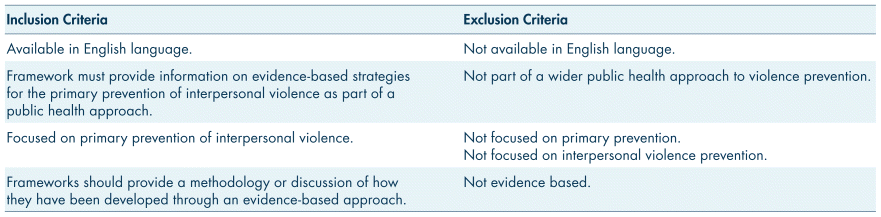
A systematic literature search was undertaken to identify violence prevention frameworks from academic and grey literature. The search included two phases. Phase one (December 2022) included a search of academic databases (CINAHL, Medline, and Web of Science) using a defined search strategy (Table I) and eligibility criteria (Table II). Phase two (January 2023) identified grey literature through hand searching relevant organizational websites, international evidence repositories, and Google, in addition to contacting international experts to request relevant records. Backward searches were completed for all records that met the inclusion criteria.
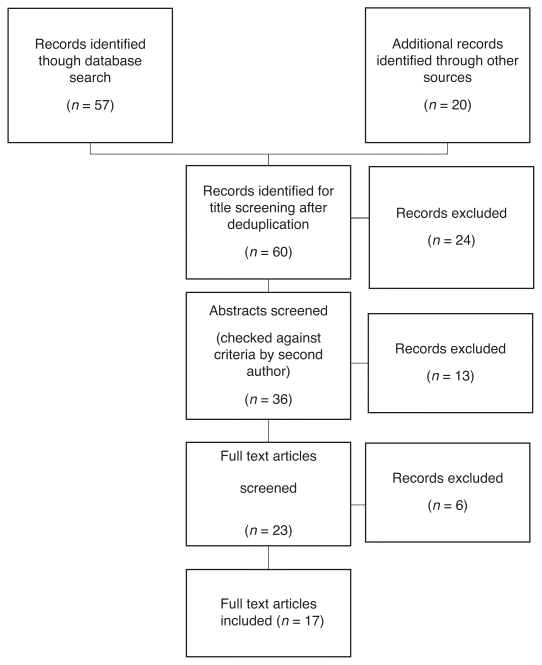
The first author screened records for eligibility, extracted data, and removed duplicates. All records were assessed against the inclusion/exclusion criteria and for accuracy and consistency by the second author. Where there were multiple papers describing one framework, these were clustered together for the purpose of analysis. The systematic review was guided by the Preferred Reporting Items for Systematic Reviews and Meta-Analyses (PRISMA) checklist (PRISMA, 2015), outlined in the flow diagram (Figure 1). Following full-text review, 17 frameworks were included. The extracted data were analyzed using thematic analysis (Braun & Clarke, 2006).
|
| ||
|
FIGURE 1 PRISMA flow diagram of search and inclusion process. | ||
Most records were published by national public health agencies (53%) and international organizations (24%). The remaining records were regional (6%) (i.e., a group of countries) or sub-national (18%) (state or region). Analysis of publication dates demonstrates that there has been a rapid increase in the number of frameworks published in the past 10 years (82%).
Aside from international frameworks (24%), geographic1 distribution was uneven, with over half from the Region of the Americas (53%), two from the Western Pacific Region (12%), and one each from the African (6%) and European Regions (6%). No frameworks were identified from the Eastern Mediterranean or Southeast Asian Regions. Most frameworks were from high-income countries (59%), and 18% were from middle-income countries.2 No frameworks were identified from low-income countries. However, one international framework (Mercy et al., 2008) is a framework for preventing violence in developing countries.
Most frequently, frameworks (35%) focused on violence against women (VAW). Within this category, one framework from Australia focused specifically on violence against Aboriginal and Torres Strait Islander women and their children (Our Watch, 2018). Other violence types included interpersonal violence (18%), youth violence (12%), violence against children (12%), sexual violence (6%), intimate partner violence (IPV) (6%), family violence (6%), and gun violence (6%).
All frameworks promoted the implementation of multi-component violence prevention programming as part of a whole-system approach. According to public health science, to generate population scale impact, an integrated, systemic model should be utilized in which there are multiple theory and evidence-based interventions implemented across the socio-ecological model (Krug et al., 2002). This model aims to address the range of factors that can contribute to violence across the life course at an individual, relationship, community, and societal level. Given the range of modifiable, interrelated risk and protective factors for violence, there is growing evidence that multi-component approaches which address multiple factors across the socio-ecological model are more effective in preventing violence than those with a single component (Degue et al., 2014; Nation et al., 2003). Thus, through a whole-system approach, interventions function together to reinforce the conditions for interpersonal violence prevention in a comprehensive and sustainable way (David-Ferdon et al., 2016).
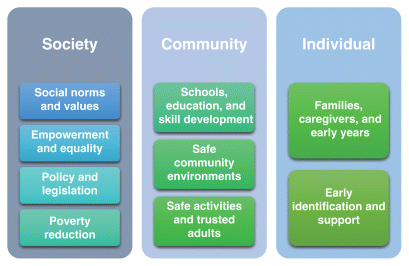
To promote this multi-component programming, all frameworks provided a range of strategies for the primary prevention of violence, as part of a public health approach. Through thematic analysis, nine themes were identified that describe the range of violence prevention strategies included in the frameworks across all forms of interpersonal violence represented. The themes are organized across the socio-ecological model (Figure 2).
|
| ||
|
FIGURE 2 Violence primary prevention themes mapped against the socio-ecological model. | ||
This theme was represented commonly within the frameworks (David-Ferdon et al., 2016; Matzopoulos & Myers, 2014; Mercy et al., 2008; Our Watch, 2021; Wells & Ferguson, 2012; WHO, 2016). It describes how investing in a child’s early years can benefit health and well-being across the life course, as a protective factor for violence prevention (Darling et al., 2020; WHO, 2016). Examples of interventions identified included antenatal and postnatal care, childhood home visitation, parenting skills and family relationship programs, affordable and accessible childcare, pre-school enrichment, quality education in the early years, domestic abuse prevention programs, and enhanced services to support families/children with parents in prison.
Many frameworks (Basile et al., 2016; David-Ferdon et al., 2016; Matzopoulos & Myers, 2014; Niolon et al., 2017; UNDP, 2014; Wells & Ferguson, 2012; WHO, 2016, 2019) stressed the importance of early identification and support to ensure that individuals are identified and receive appropriate support when they are at-risk of and/or have experienced violence. While this is classified as secondary prevention, it plays a critical role in complementing primary prevention services which are often delivered universally, as many people may have experienced violence or trauma during childhood or adulthood. Interventions included helplines, trauma-informed training, specialist services, identification and referral in healthcare and custody settings, and safeguarding.
Education settings play a crucial role in violence prevention. These are places where children and young people socialize, learn about relationships, develop a sense of belonging, and acquire knowledge, skills, and experiences (WHO, 2016). The majority of frameworks identified education as a key setting for prevention (Basile et al., 2016; David-Ferdon et al., 2016; Fortson et al., 2016; Mercy et al., 2008; Niolon et al., 2017; Our Watch, 2021; Rajan et al., 2022; Tekkas Kerman & Betrus, 2020; UN Women, 2015; WHO, 2016, 2019). Strategies for violence prevention included increasing children’s access to effective, gender-equitable education, socio-emotional learning and life-skills training, whole school approaches, schemes to prevent exclusion, trauma-informed schools, bystander programs, relationship and dating violence prevention programs, and ensuring that education environments are safe, enabling, and free from violent punishment.
Children and young people’s risk of becoming involved in violence can be reduced through strong connections with caring adults and undertaking activities that encourage skill development (including development of healthy relationships), creativity, learning, and growth (David-Ferdon et al., 2016; Mercy et al., 2008; Niolon et al., 2017; WHO, 2016). These relationships can have a positive influence on children and young people’s choices and prevent them from experiencing violence and engaging in health risk behaviours (e.g., using alcohol and drugs/harmful sexual behaviour) (David-Ferdon et al., 2016). Activities included play, sports, arts, and cultural activities; grassroots community-led schemes (particularly in marginalized communities); after-school programs; and youth work. These activities are used universally and/or targeted toward those who have experienced or are at-risk of violence to prevent further violence/risks.
Many frameworks included a focus on the provision of safe community environments to ensure that people feel safe where they live, work, and play (Abt, 2017; Basile et al., 2016; David-Ferdon et al., 2016; Niolon et al., 2017; Oregon Department of Human Services, 2005; Rajan et al., 2022; Tekkas Kerman & Betrus, 2020; WHO, 2016, 2019). Communities can include places with any defined population with shared characteristics and environments. Characteristics of a community’s environment can influence how a person/group acts, creating a context that can have a positive or negative effect on their behaviour. Approaches that modify the characteristics of these places are considered community-level ways of working (WHO, 2016). Examples included improving the built environment to create appealing, safe, and accessible community spaces or identifying violence hotspots to inform the development and targeting of prevention activity, including alcohol-licensing decisions, transport planning, or policing.
Group and individual behaviours are influenced by social norms and values. For example, social norms and values guide attitudes and behaviours around child-rearing, gender roles, sexuality, inclusion, and the acceptability of violence within a group or society. Violence prevention efforts in this area seek to strengthen social norms and values that support non-violent, respectful, nurturing, positive, and gender-equitable relationships. This type of violence prevention strategy was prominent in frameworks which seek to prevent gender-based violence (Basile et al., 2016; Fortson et al., 2016; Mercy et al., 2008; Oregon Department of Human Services, 2005; Our Watch, 2018, 2021; Wells & Fotheringham, 2022; WHO, 2019), but also featured in other frameworks to prevent violence against children (WHO, 2016). Examples of interventions included group work to challenge adherence to restrictive and harmful social and gender norms; interventions to challenge social norms relating to child marriage; community mobilization programs; active (positive) bystander interventions; as well as social norms marketing campaigns.
Cross-national evidence indicates that rates of violence are lower in countries where there is less inequality between groups, as social inequalities relating to gender, race, ethnicity, sexuality, disability, and migrant status increase the likelihood of violence taking place (David-Ferdon et al., 2016). In turn, violence further ingrains and perpetuates those inequalities, leaving marginalized populations more vulnerable to violence, exploitation, harm, neglect, maltreatment, trauma, and its consequences. As such, many frameworks promoted the use of primary prevention strategies which seek to promote the empowerment of women and marginalized groups (Basile et al., 2016; Matzopoulos & Myers, 2014; Our Watch, 2018, 2021; UN Women, 2015; WHO, 2019). Examples of interventions included gender mainstreaming3 and gender budgeting;4 minimum basic income schemes; strengthening economic programs to promote full and equal labour force participation; and strengthening leadership opportunities, including political participation for people from marginalized groups.
A robust legislative and policy framework lays the groundwork to prevent violence, address risk factors (and promote protective factors), and legislate for employing a human rights and gender equality approach. It can also provide a structure for protecting, responding to, and supporting victims, witnesses, and children. While laws alone cannot reduce violence, implementing and enforcing them strengthens violence prevention efforts (WHO, 2016). This strategy for primary prevention was more frequent in international frameworks or those from middle-income countries, where rule of law to safeguard children and young people and marginalized groups may not be as well established (Matzopoulos & Myers, 2014; Mercy et al., 2008; Tekkas Kerman & Betrus, 2020; UN Women, 2015; WHO, 2016). Examples of policy and legislation included prohibiting violent punishment of children by parents, teachers, or other caregivers; criminalizing sexual abuse and exploitation of children; preventing alcohol misuse through minimum age purchase limits; preventing child mariage; limiting access to firearms and weapons; and increasing statutory funding for prevention programs.
The adverse impacts of violence are most severe in communities with high levels of socioeconomic deprivation. Reducing poverty and income inequality is a fundamental building block in preventing violence and improving community safety (Bourguignon, 2000). A range of frameworks included strategies to tackle poverty and socio-economic inequality as a key focus for the primary prevention of violence (Niolon et al., 2017; UNDP, 2014; WHO, 2016). Examples of interventions included minimum basic income schemes; strengthening economic programs to promote full and equal labour force participation; strengthening leadership opportunities for people from marginalized groups; and gender budgeting.
In 2002, the “World Report on Violence and Health” (Krug et al., 2002) set out for the first time a global, public health approach to violence prevention. Since then, international bodies (e.g., WHO/UN) have invested significantly in this approach, most recently, through the development of the INSPIRE framework and technical package to prevent violence against children (WHO, 2016), and the RESPECT framework to prevent VAW (WHO, 2019). Despite the WHA recognizing violence as a major public health issue over two decades ago, our study demonstrates that while there has been a proliferation of this approach internationally, this has predominantly been in recent years, with 82% of the frameworks identified published in the past decade.
For many, the involvement of public health in the violence prevention agenda is a welcome one, particularly regarding its focus on primary prevention (Nation et al., 2021). However, for some, it represents public health “empire building” (Keithley & Robinson, 2000) or even part of a post-colonial agenda that embeds structural global inequality (Richardson, 2020). While these opinions may be uncomfortable for public health practitioners to consider, Orchowski (2019) argues that, criticisms notwithstanding, preventing violence is of such importance to promoting human health and well-being, it warrants critical attention to improve evidence, theory, and practice.
As a science-based approach which focuses on improving population health, public health is inherently interdisciplinary. Interdisciplinary research and practice can bring new insights and understanding across disciplinary boundaries to address sophisticated or so-called “wicked” problems (van Teijlingen et al., 2019), such as violence (Krug et al., 2002). This systematic review demonstrates the breadth of interdisciplinary theory and evidence that has now been collated to produce a range of strategies for primary prevention which seek to modify risk pathways for violence across the social ecology (Figure 2). However, significant gaps in the research remain which warrant attention if public health wants to truly “walk the talk” of preventing violence. Nation et al. (2021) argue that while public health has had success in tackling youth violence, by focusing on individual and interpersonal factors such as healthy relationships, developing problem solving, and diffusing interpersonal conflict (Farrell & Flannery, 2006), it has had less success in demonstrating population-level effects or diminishing race and class inequities in violence-related outcomes (Golden & Earp, 2012).
Similarly, this systematic review provides clear evidence of a global inequity in the development of public health frameworks and violence prevention research. Most frameworks identified in this study were from high-income countries, with only a small representation from middle-income countries (n = 3), and none from low-income countries. However, >90% of violence-related deaths worldwide occur in low- to middle-income countries, where the mortality rate due to violence is almost 2.5 times greater than that in high-income countries (Matzopoulos et al., 2008). Overall, there is a lack of literature exploring violence prevention interventions in low-income countries. Lester et al. (2017) suggest that despite the prevalence of sexual assault rates in Africa, Eastern Mediterranean, and Southeast Asia, most programs are implemented and evaluated in the United State of America. This global inequity should be a priority for international bodies as the implementation of violence prevention interventions is likely to differ between high and low resource settings, and in different political, cultural, and social contexts.
One of the striking messages laid out for the first time in the World Report on Violence and Health (Krug et al., 2002) is the extent to which all forms of violence are interlinked. The report presents a typology which proposes how different types of violence are fundamentally diverse expressions of the same human behaviour (Krug et al., 2002). This idea has since been developed by public health researchers, based on evidence of risk and protective factors which are shared across multiple forms of violence, and has been used to advocate for the use of approaches which address multiple, “overlapping” risk factors to prevent siloed working and improve impact (Wilkins et al., 2018).
Indeed, our study demonstrates that there is considerable homogeneity between primary prevention strategies proposed across different forms of interpersonal violence, such as investment in early years or whole school approaches. However, a notable difference was evident when examining frameworks to prevent VAW, which invoked feminist theory and placed a gender transformative approach at the heart of solutions, despite global evidence that men are more likely to perpetrate nearly all types of interpersonal violence than women (Fleming et al., 2015).
The WHO recommends that a “gender transformative” paradigm is used for the prevention of VAW (Brush & Miller, 2019). However, no similar recommendation is made for the prevention of other forms of violence, despite evidence that adherence to “traditional masculinity ideologies” is associated with poor health outcomes and violence perpetration for men, and increased violence victimization and poor health outcomes for women (Barker et al., 2007; Jewkes et al., 2011). Furthermore, interventions designed to increase gender-equitable attitudes and behaviours have evidenced impact on other health risk behaviours such as alcohol use, substance use, transactional sex, as well as the prevention of VAW and other forms of interpersonal violence perpetration and victimization (Coker et al., 2017; Jewkes et al., 2008). As such, this potential bias in the implementation of evidence-based primary prevention requires further scrutiny.
Another area which warrants attention are more pragmatic concerns regarding the implementation of a public health approach, particularly on a global scale. Vincenten et al. (2019) write how improving public health outcomes through successful uptake of evidence-based interventions is not a simple or quick task. Instead, it involves the co-ordinated efforts of public health experts to influence commissioning, decision-making, and policy. Several authors have reported barriers to achieving uptake of evidence-based practice within complex public health systems (Cairney, 2012; Damschroder et al., 2009; Oliver et al., 2014). However, there is little global research into the implementation of violence prevention programming specifically.
In one multi-agency study in Sweden, Jakobsson et al. (2012) report on a range of barriers to the implementation of IPV prevention among multi-agency professionals, including lack of knowledge and commitment, professional disillusion, and deferment of responsibility. Similarly, Matzopoulos & Myers (2014) explore successes and challenges to the implementation of the Western Cape Government’s Integrated Provincial Violence Prevention Policy Framework. They highlight intra-departmental priorities and the impact of competing policies and directives as early barriers to implementation. However, these critical reflections on the implementation of primary prevention approaches represent a small, but growing, area of research.
While this research comprehensively reviewed global public health frameworks for violence prevention, a key limitation is that the search was conducted in the English language. As such, there may be a range of frameworks not identified in the review.
This study explored the extent and content of international public health frameworks for violence prevention, assessing the guidance and messaging that public health bodies provide regarding the primary prevention of interpersonal violence through a public health approach. Nine primary prevention themes were identified, providing opportunities for violence prevention across the socio-ecological model. However, we identified several areas for further attention including addressing evidence gaps and tensions, and investing in research which explores the implementation of prevention approaches. Consideration of both; the common approaches across frameworks and gaps identified is critical for transforming and embedding a public health approach to violence prevention at a global and community level.
The authors thank Dr. Jo Hopkins, Dr. Alex Walker, Bryony Parry, Emma Barton, and Muqaddasa Abdul Wahid from Public Health Wales and Dr. Hannah Timpson from Liverpool John Moores University for their support in developing this research.
The authors have no conflicts of interest to declare.
*School of Public and Allied Health, Public Health Institute, World Health Organization Collaborating Centre for Violence Prevention, Liverpool John Moores University, Liverpool, UK;
†World Health Organization Collaborating Centre on Investment for Health and Wellbeing, Policy and International Health, Public Health Wales, Cardiff, UK.
1World Health Organization regions.
2World Bank country classification by income.
3Gender transformative approaches are concerned with redressing gender inequalities, removing structural barriers, such as unequal roles and rights, and empowering disadvantaged populations.
4Gender budgeting involves conducting a gender-based assessment of budgetary decisions.
Abt, T. P. (2017). Towards a framework for preventing community violence among youth. Psychology, Health Medicine, 22, 266–285. https://doi.org/10.1080/13548506.2016.1257815
Crossref
Barker, C. R., Thomas, G., Nascimento, M. (2007). Engaging men and boys in changing gender-based inequity in health: Evidence from programme interventions. Geneva, Switzerland: World Health Organization.
Basile, K. C., DeGue, S., Jones, K., Freire, K., Dills, J., Smith, S. G., Raiford, J. L. (2016). STOP SV: A technical package to prevent sexual violence. National Center for Injury Prevention and Control, Centers for Disease Control and Prevention. https://stacks.cdc.gov/view/cdc/39126
Bourguignon, F. (2000). Crime, violence and inequitable development. In Annual World Bank Conference on development economics 1999 (pp. 199–220). World Bank.
Braun, V., Clarke, V. (2006). Using thematic analysis in psychology. Qualitative Research in Psychology, 3(2), 77–101.
Crossref
Brush, L., D., Miller, E. (2019). Trouble in paradigm: “gender transformative” programming in violence prevention. Violence Against Women, 25(14), 1635–1656. https://doi.org/10.1177/1077801219872551
Crossref PubMed
Cairney, P. (2012). Complexity theory in political science and public policy. Political Studies Review, 10, 346–358.
Crossref
Coker, A. L., Bush, H. M., Cook-Craig, P. G., Degue, S., Clear, E., R, Brancato, M. S., Fisher, B. S., Recktenwald, E., A. (2017). RCT testing bystander effectiveness to reduce violence. American Journal of Preventative Medicine, 52(5), 566–578. https://doi.org/10.1016/j.amepre.2017.01.020
Crossref
Damschroder, L. J., Aron, D. C., Keith, R. E., Kirsh, S. R., Alexander, J. A., Lowery, J. C. (2009). Fostering implementation of health services research findings into practice: A consolidated framework for advancing implementation science. Implement Science, 4, 50. https://doi.org/10.1186/1748-5908-4-50
Crossref
Darling, J. C., Bamidis, P. D., Burberry, J., Rudolf, M. C. J. (2020). The First Thousand Days: Early, integrated and evidence-based approaches to improving child health: Coming to a population near you? Archives of Disease in Childhood, 105(9), 837–841. https://doi.org/10.1136/archdischild-2019-316929
Crossref PubMed
David-Ferdon, C., Vivolo-Kantor, A. M., Dahlberg, L. L., Marshall, K. J., Rainford, N., Hall, J. E. (2016). A comprehensive technical package for the prevention of youth violence and associated risk behaviors. https://stacks.cdc.gov/view/cdc/43085
Crossref
Degue, S., Valle, L. A., Holt, M. K., Massetti, G. M., Matjasko, J. L., Tharp, A. T. (2014). A systematic review of primary prevention strategies for sexual violence perpetration. Aggression and Violent Behavior, 19, 346–362. https://doi.org/10.1016/j.avb.2014.05.004
Crossref PubMed PMC
Farrell, A. D., Flannery, D. J. (2006). Youth violence prevention: Are we there yet? Aggression Violent Behaviour, 11(2), 138–150. https://doi.org/10.1016/j.avb.2005.07.008
Crossref
Fleming, P. J., Gruskin, S., Rojo, F., Dworkin, S. L. (2015). Men’s violence against women and men are inter-related: Recommendations for simultaneous intervention. Social Science Medicine (1982), 146, 249–256. https://doi.org/10.1016/j.socscimed.2015.10.021
Crossref
Fortson, B. L., Klevens, J., Merrick, M. T., Gilbert, L. K., Alexander, S. P. (2016). Preventing child abuse and neglect: A technical package for policy, norm, and programmatic activities. National Center for Injury Prevention and Control, Centers for Disease Control and Prevention. https://stacks.cdc.gov/view/cdc/38864
Golden, S. D., Earp, J. L. (2012). Social ecological approaches to individuals and their contexts: Twenty years of health education behavior health promotion interventions. Health Education Behaviour, 39(3), 364–372. https://doi.org/10.1177/1090198111418634
Crossref
Jakobsson, A., von Borgstede, C., Krantz, G., Spak, F., Hensing, G. (2012). Possibilities and hindrances for prevention of intimate partner violence: Perceptions among professionals and decision makers in a Swedish medium-sized town. International Journal of Behavioural Medicine, 20(3), 337–343. https://doi.org/10.1007/s12529-012-9238-1
Jewkes, R., Nduna, M., Levin, J., Jama, N., Dunkle, K., Puren, A. (2008). Impact of stepping stones on incidence of HIV and HSV-2 and sexual behavior in rural South Africa: Cluster randomized controlled trial. British Medical Journal, 10, 1–11. https://doi.org/10.1136/bmj.a506
Jewkes, R., Dunkle, K., Morrell, R., Sikweyiya, Y. (2011). Gender inequitable masculinity and sexual entitlement in rape perpetration South Africa: Findings of a cross-sectional study. PLoS One, 6, e29590. https://doi.org/10.1371/journal.pone.0029590
Crossref
Keithley, J., Robinson, F. (2000). Violence as a public health issue. The Policy Press, 28(1), 6–77. https://doi.org/10.1332/0305573002500839
Krug, E. G., Dahlberg, L. L., Mercy, J., Zwi, A. B., Lazano, R. (2002). World report on violence and health. World Health Organization. https://apps.who.int/iris/bitstream/handle/10665/42495/9241545615_eng.pdf
Lester, S., Lawrence, C., Ward, C. L. (2017). What do we know about preventing school violence? A systematic review of systematic reviews. Psychology, Health Medicine, 22, 187–223. https://doi.org/10.1080/13548506.2017.1282616
Crossref PubMed
Matzopoulos, R., Bowman, B., Butchart, A., Mercy, J. A. (2008). The impact of violence on health in low- to middle-income countries. International Journal of Injury Control and Safety Promotion, 15(4), 177–187. https://doi.org/10.1080/17457300802396487
Crossref PubMed
Matzopoulos, R., Myers, J. E. (2014). The Western Cape Government’s New Integrated Provincial Violence Prevention Policy Framework: Successes and challenges. Aggression Violent Behavior, 19(6), 649–654. https://doi.org/10.1016/j.avb.2014.09.009
Crossref
Mercy, J. A., Butchart, A., Rosenberg, M. L., Dahlberg, L., Harvey, A. (2008). Preventing violence in developing countries: A framework for action. International Journal of Injury Control and Safety Promotion, 15(4), 197–208. https://doi.org/10.1080/17457300802406955
Crossref PubMed
Mercy, J. A., Hillis, S. D., Butchart, A., Bellis, M. A., Ward, C., Fang, X., Rosenberg, M. L. (2017). Chapter 5 Interpersonal violence: Global impact and paths to prevention. In C. N. Mock, R. Nugent O. Kobusingye (Eds.), Injury prevention and environmental health (3rd ed.). The International Bank for Reconstruction and Development/The World Bank. https://www.ncbi.nlm.nih.gov/books/NBK525208/
Nation, M., Chapman, D. A., Edmonds, T., Cosey-Gay, F. N., Jackson, T., Marshall, K. J., Gorman-Smith, D., Sullivan, T., Trudeau, A. T. (2021). Social and structural determinants of health and youth violence: shifting the paradigm of youth violence prevention. American Journal of Public Health, 111(S1), S28–S31. https://doi.org/10.2105/ajph.2021.306234
Crossref PubMed PMC
Nation, M., Crusto, C., Wandersman, A., Kumpfer, K. L., Seybolt, D., Morrissey-Kane, E., Davino, K. (2003). What works in prevention: Principles of effective prevention programs. American Psychologist, 58(6–7), 449.
Crossref
Niolon, P. H., Kearns, M., Dills, J., Rambo, K., Irving, S., Armstead, T., Gilbert, L. (2017). Preventing intimate partner violence across the lifespan: A technical package of programs, policies, and practices. Division of Violence Prevention, National Center for Injury Prevention and Control, Centers for Disease Control and Prevention. https://stacks.cdc.gov/view/cdc/45820
Oliver, K., Innvar, S., Lorenc, T., Woodman, J., Thomas, J. (2014). A systematic review of barriers to and facilitators of the use of evidence by policymakers. BMC Health Services Research, 14, 2. https://doi.org/10.1186/1472-6963-14-2
Crossref PubMed PMC
Orchowski, L. M. (2019). “Trouble in paradigm” and the social norms approach to violence prevention. Violence Against Women, 25(14), 1672–1681. https://doi.org/10.1177/1077801219872561
Crossref PubMed
Oregon Department of Human Services. (2005). Oregon violence against women prevention plan. Office of Disease Prevention and Epidemiology, Oregon Department of Human Services. http://www.ncdsv.org/images/ODPH_OregonVAWPreventionPlan_10-2005.pdf
Our Watch. (2015). Change the story: A shared framework for the primary prevention of violence against women and their children in Australia. Our Watch. https://dvac.org.au/wp-content/uploads/2021/04/Change-the-story-framework-prevent-violence-women-children-AA-new.pdf
Our Watch. (2018). Changing the picture: A national resource to support the prevention of violence against Aboriginal and Torres Strait Islander women and their children. Our Watch. https://media-cdn.ourwatch.org.au/wp-content/uploads/sites/2/2020/09/20231759/Changing-the-picture-Part-2-AA.pdf
Our Watch. (2021). Change the story: A shared framework for the primary prevention of violence against women in Australia (2nd ed.). Our Watch. https://media-cdn.ourwatch.org.au/wp-content/uploads/sites/2/2021/11/18101814/Change-the-story-Our-Watch-AA.pdf
PRISMA. (2015). Transparent reporting of systrematic review and mete-analyses. PRISMA. http://www.prisma-statement.org/
Quigg, Z., Butler, N., Passmore, J., Yon, Y., Nihlen, A. (2020). Factsheet – Sustainable Development Goals (SDGs): Health targets. Violence, health and sustainable development. World Health Organization.
Rajan, S., Reeping, P. M., Ladhani, Z., Vasudevan, L. M., Branas, C. C. (2022). Gun violence in K-12 schools in the United States: Moving towards a preventive (versus reactive) framework. Preventive Medicine, 165, 107280–107280. https://doi.org/10.1016/j.ypmed.2022.107280
Crossref PubMed
Richardson, E. T. (2020). Epidemic illusions: On the coloniality of global public health. MIT Press.
Crossref
Tekkas Kerman, K., Betrus, P. (2020). Violence against women in Turkey: A social ecological framework of determinants and prevention strategies. Trauma, Violence Abuse, 21(3), 510–526. https://doi.org/10.1177/1524838018781104
Crossref
UN Women. (2015). A framework to underpin action to prevent violence against women. UN Women. https://www.unwomen.org/en/digital-library/publications/2015/11/prevention-framework
UNDP. (2014). General Secretariat of SICA: Strategic framework for the prevention of violence. United Nations Development Programme and the General Secretariat of the Central American Integration System – SG-SICA, Violence Prevention Coordination, Democratic Security Directorate. https://www.undp.org/sites/g/files/zskgke326/files/migration/latinamerica/SICA---MARCO-ingles-web.pdf
van Teijlingen, E. R., Regmi, P. R., Adhikary, P., Aryal, N., Simkhada, P. (2019). Interdisciplinary Research in Public Health: Not quite straightforward. Health Prospect, 18(1), 4–7. https://doi.org/10.3126/hprospect.v18i1.19337
Crossref
Vincenten, J., Mackay, J. M., Schröder-Bäck, P., Schloemer, T., Brand, H. (2019). Factors influencing implementation of evidence-based interventions in public health systems – A model. Central European Journal of Public Health, 27(3), 198–203. https://doi.org/10.21101/cejph.a5234
Crossref PubMed
Wells, L., Ferguson, J.; Interdepartmental Committee on Family Violence and Bullying. (2012). Family violence hurts everyone: A framework to end family violence in Alberta 2013–2018. Shift: The Project to End Domestic Violence, The University of Calgary. https://prism.ucalgary.ca/bitstream/handle/1880/51909/R9_Shift_2012_Framework_to_End_Family_Violence_in_Alberta_Source_Document.pdf?sequence=4isAllowed=y
Wells, L., Fotheringham, S. (2022). A global review of violence prevention plans: Where are the men and boys? International Social Work, 65(6), 1232–1248. https://doi.org/10.1177/0020872820963430
Crossref
WHO. (2016). INSPIRE: Seven strategies for ending violence against children. World Health Organization. https://www.who.int/publications/i/item/inspire-seven-strategies-for-ending-violence-against-children
WHO. (2019). RESPECT Women: Preventing violence against women. World Health Organization. https://www.unwomen.org/sites/default/files/Headquarters/Attachments/Sections/Library/Publications/2019/RESPECT-Women-Preventing-violence-against-women-en.pdf
WHO. (2021). Violence against women. World Health Organization. Retrieved November 19, 2022, from https://www.who.int/news-room/fact-sheets/detail/violence-against-women
WHO. (2022). World Health Organization Violence Prevention Unit: Approach, objectives and activities, 2022–2026. World Health Organization. https://cdn.who.int/media/docs/default-source/documents/social-determinants-of-health/who_2022_plv_strategy_2022-2026_finalfile.pdf?sfvrsn=c819ff54_3download=true
Wilkins, N., Myers, L., Kuehl, T., Bauman, A., Hertz, M. (2018). Connecting the dots: state health department approaches to addressing shared risk and protective factors across multiple forms of violence. Journal of Public Health Management and Practice, 24(Suppl 1 Injury and Violence Prevention), S32–S41. https://doi.org/10.1097/phh.0000000000000669
Crossref PMC
Correspondence to: Lara Snowdon, School of Public and Allied Health, Public Health Institute, World Health Organization Collaborating Centre for Violence Prevention, Faculty of Health, Liverpool John Moores University, 3rd Floor, Exchange Station, Tithebarn Street, Liverpool, L2 2QP, UK. E-mail: l.c.snowdon@2021.ljmu.ac.uk
This work is licensed under the Creative Commons Attribution-NonCommercial-NoDerivatives 4.0 International License. To view a copy of this license, visit http://creativecommons.org/licenses/by-nc-nd/4.0/. For commercial re-use, please contact sales@sgpublishing.ca.
Journal of CSWB, VOLUME 9, NUMBER 4, December 2024