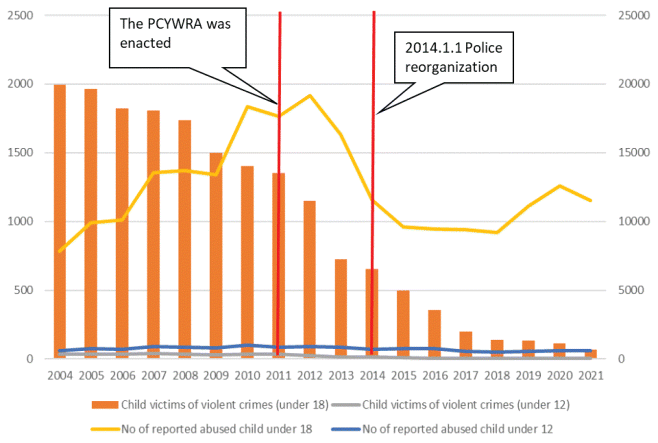
FIGURE 1 Percentage of cases reported by compulsory reporting agencies, 2006 to 2022.
Lanying Huang*, Yi-Fen Lu†, Yi-Chun Yu†, Chuen-Jim Sheu†
ABSTRACT
Child abuse and exploitation pose significant threats to the health and well-being of children. While the Taiwanese government introduced the Protection of Children and Youth Welfare and Rights Act in 2011 to address these issues, progress has been slow. This paper aims to examine the evolution of Taiwan’s child protection system (CPS), with a particular focus on interdepartmental collaboration. Through the collection of legislation, statistics, conference proceedings, and reports, this study analyzes the working model between law enforcement and public health. Three cases of collaboration between law enforcement and public health at the community level are presented: social safety net programs, early intervention for child abuse, and trauma-informed training for first responders. The accomplishments and challenges of each project are discussed, along with a review of the CPS in relation to the United Nations (UN) strategy INSPIRE’s approaches. Although Taiwan has shown a commendable emphasis on prevention and family support, the collaboration between law enforcement and public health is still in its early stages. The next crucial step is to strengthen integration in the early stages of identifying, assessing, and referring cases of child abuse and neglect. This can be achieved by generating more evidence on effective working models and promoting their implementation.
Key Words Child abuse, prevention, family support, law enforcement, public health, social safety net
Violence is estimated to affect one in two children aged 2–17 globally each year (WHO, 2020). The World Health Organization (WHO) launched the “INSPIRE” program in 2016 to help countries to prevent and respond to violence against children (WHO, 2022). Following the uptake of INSPIRE, building national coordination structures and capacity has been one of the priorities. However, issues have been identified by previous scholars.
First of all, among the government departments most frequently listed, health departments are well represented but underfunded in many countries (WHO, 2021). Child protection to date has received less attention than it deserves. The second issue is the balance between different abuse prevention approaches in the intra-agency decision-making mechanism (Devaney et al., 2022; Sanders et al., 1996). The complex relationship between family support and child protection is demonstrated differently in different contexts, depending on varying organizational arrangements, resource allocation, and program implementation.
Child abuse and exploitation have greatly threatened children’s health and well-being in Taiwan. From 2011 to 2020, it is estimated that an average of 21.3 children and youth lost lives per year from abuse (Sheu et al., 2021). An earlier study of child physical abuse among children 9 to 15 years old shows that the lifetime prevalence is 34%, with that for boys (38.1%) slightly more than girls (29.8%) (Chou et al., 2011). This survey also shows that 30.7% of these youngsters report full or partial post-traumatic stress disorder (PTSD) symptoms. A recent nationwide paired cohort study on the longitudinal health insurance database (2000–2015) found that child abuse increased the chances of psychiatric disorders as much as 2.15-fold (Wang et al., 2020).
Although Taiwan’s child protection system (CPS) has not been in existence very long, it went through a dramatic change in the last three decades, beginning with the development of child abuse treatment in the 1990s. The UN 1989 Children’s Rights Convention outlined the state’s responsibility for preventing children from abuse and exploitation. As a consequence, the 1973 Child Welfare Act was amended in 1993, as the first milestone in the CPS development, to include the statutory responses to child abuse and make the “best interest of children” a priority in Taiwan. The CPS has since included compulsory reporting, emergency relocation, and deprivation of guardianship from abusive parents. This “treatment-oriented” child protection in the early days provided very limited leverage for social workers and created a dilemma between “replacement” and “staying at home” when dealing with cases. Social workers usually took a family preservation model rather than “children first” (Hsu & Cheng, 2003).
In 2003, the Child Welfare Act and Juvenile Welfare Act were combined into the Child Protection Act. In addition to strengthening compulsory reporting, the Act requires that “multi-professional collaboration, including doctors, nurses, social workers, clinical psychiatrists, educators, child protectors, and police, should take responsibility to report events of child abuse and neglect” (Chou et al., 2019). It was found that 2 years after the Child Protection Act was enacted, the incidence of children hospitalized for physical abuse decreased (Chou et al., 2019). In April 2006, Taiwan introduced a system of severe child abuse case reviews to learn from past failures.
The Protection of Children and Youth Welfare and Rights Act 2011 (PCYWRA) outlined the Taiwanese official policy on child and youth wellness and is the first comprehensive policy to address prevention, investigation, and treatment. It expands the horizon of child protection to consider both children and family and exemplifies a turn towards a family preservation approach, with extra resources for the family. In 2013, the newly established Ministry of Health and Welfare combined several central departments to become the highest commanding authority for public health, medical, and social welfare services. Since then, the exchange of information between medical and social welfare systems has become more convenient.
In November 2014, Taiwan further enacted the Implementation Act of the Convention on the Rights of the Child (CRC). Article 5 of this legislation demands that authorities concerned with safeguarding children’s rights coordinate and communicate to accomplish their duties. In 2015, the PCYWRA further enacted different procedures for different levels of reports.
In addition, the Ministry of Health and Welfare began a pilot program on “child death review” (CDR) in 2016. It coincides with the 2017 Presidential Committee of Judicial Reform and its conclusions on “reviewing the child abuse policy thoroughly.” The newly amended 2019 PCYWRA included an article on compulsory child death review and, since then, has established the office of CDR in Cheng-Kung Hospital. The 2019 revision also stresses early identification and judicial investigation of child abuse cases and increases criminal penalties for abusers.
Devaney et al. (2022) conceptualize “prevention” as a continuum of primary, secondary, and tertiary prevention, which is also adopted in Taiwan. Below is a review of the current shortcomings of child abuse prevention in Taiwan.
Physical punishment of children is usually tolerated in Taiwan as a way of disciplining children and is not considered a form of physical abuse (Chou et al., 2011). As part of a society which embraces filial piety (Xiao), combined with patriarchal cultural values, Taiwanese parents tend to regard children as their possession, and asserting authority and inflicting punishment on their children are still tolerated (Feng & Levine, 2005). Between 2011 and 2020, 107 children were murdered by their parents, who later committed suicide (Sheu et al., 2021). Parents are the primary abusers in child abuse cases, but the percentage has been decreasing in recent years (Sheu et al., 2021). Physical punishment comprises 7% of all child abuse reports in 2020. The promotion of children’s rights as individual rights has yet to be emphasized.
Once a case is reported, it is up to the responsible social worker to decide whether the case needs further attention. However, many vulnerable families remain unidentified as at risk and receive insufficient support from social services. Social workers receive little help from other agencies in terms of risk assessment and family support. Preventing vulnerable families from becoming abusive families has been a challenge. From 2005 to 2019, 240,000 to 490,000 families at high risk were included in local programs of supportive welfare services (Sheu et al., 2021).
There has been criticism of residential institutions for victims of child abuse as not being safe places. Children who suffered from intra-familial maltreatment are repeatedly mistreated after placement. In addition, the parent abusers are often themselves the victims of adverse childhood experiences and have a high risk of continuing to abuse their other children. The system usually neglects that the abusers also need treatment to prevent them from repeating their offences.
The fragmentation of the welfare and justice system has taken a toll on children’s safety. Children at high risk of domestic abuse fail to be identified as early as possible. First responders are either poorly trained in identifying child abuse risk factors or reluctant to report according to the Act. In addition, limited resources and information often prevent the cases from benefiting from continuous follow-up by caseworkers.
The current paper aims to review the last decade’s child abuse and exploitation phenomenon and responses to it in Taiwan, focusing on the collaboration between law enforcement and public health. This study examined legislation, statistics, conference proceedings, and reports to identify the working model between law enforcement and public health. A focus group was conducted to review the initial findings.
Child protection cases refer to reported cases of violating the PCYWRA 2011, including but not limited to intra-familial maltreatment cases. Taking the year 2020 as an example, the total number of reported cases is 82,713. Nearly 80% of child protection cases come from educational staff (40%), followed by police (21%) and social workers (19%) (see Figure 1).
|
| ||
|
FIGURE 1 Percentage of cases reported by compulsory reporting agencies, 2006 to 2022. | ||
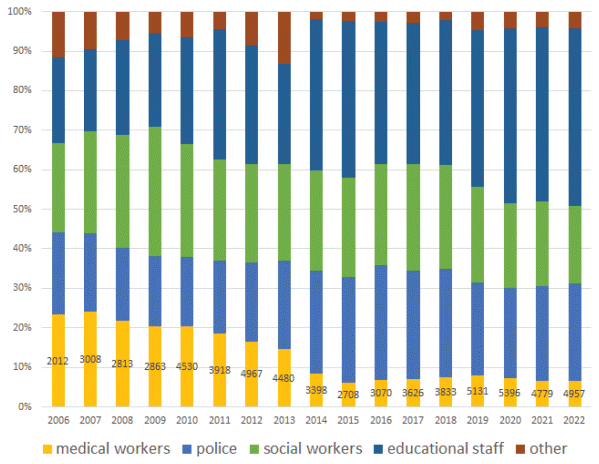
Since the Ministry of Health and Welfare took over child protection statistics in 2012, the annual number of abused children is approximately between 10,000 and 17,000. Two milestones are noted in Figure 2. First, the PCYWRA enactment coincides with the peak of reported abused cases in 2012. Both the number of reported cases and police-recorded child victims of violence declined significantly after 2011. Second, police-recorded violent crime against children continued to drop after police reorganization in 2014, and the reported child abuse cases remain steady, without a significant rise, since 2015 (see Figure 2).
|
| ||
|
FIGURE 2 Child protection cases and child victims from 2004 to 2021. In 2014, the police re-organized their women and children’s affairs, moving this unit from the Criminal Investigation Bureau to the Crime Prevention Division under the Police Agency, which is the headquarters of the central police. | ||
We present three cases of LEPH collaborations at the community level: first, the social safety net; second, early intervention of child abuse; and finally, trauma-informed training for domestic violence networks. We then discuss the achievements and challenges of each project.
The current social safety net program was initiated after a 4-year-old girl, nicknamed “little bulb” was brutally murdered on March 28, 2016. The offender, who was sentenced to life, had a history of mental health problems combined with drug addiction. The long-neglected vacuum in terms of community mental health and welfare service was then brought to light. On the other hand, it has been criticized that the secondary prevention and tertiary prevention of child protection are divided into two different departments, causing policy fragmentation (Wang, 2021). While it is the Social and Family Affairs administration that deals with vulnerable families, these families fall under the authority of the Department of Protective Services once they are found to suffer from domestic violence. Nevertheless, the boundary is usually blurred and therefore causes policy gaps. The 2017 social safety net program is intended to integrate the services for vulnerable families and high-risk families with a history of domestic violence by screening all of the reported cases through one local case intake agency.
Child abuse has been considered a social welfare matter and suffers from a lack of networking at central and local levels. The social safety net program is supposed to refer vulnertable families to be assessed by the social welfare department and actively provide necessary services, depending on the problem families encounter. The ultimate aim is to prevent future harm. The social safety net program has been through the stages of preparation (2017–2018), infrastructure establishment (2018–2020), and model development (2021–2024). Currently, the focus is on deepening the community-based and family-centred service model. Although the evidence shows that networking is useful, it also reveals great variation in networking practices in different communities.
It was not until 1993 that the revised Children’s Welfare Law required healthcare professionals to report suspected cases of child abuse (Feng & Levine, 2005). Even so, there are still cases of children under 6 years old dying from abuse that are only discovered when the child is supposed to register for elementary school at age 7. Since the abusers are usually family members, mandatory reporting is often impractical when a younger child is kept isolated from the outside world. Surveys and interviews with kindergarten teachers in Taiwan found that teachers were reluctant to report suspected child abuse cases, and 11% stated that they had failed to report at least one case in their career (Feng et al., 2009; Feng et al., 2010).
In Taiwan, healthcare providers underreport child abuse because they have inadequate knowledge or training on the mandatory reporting law related to child protection (Feng & Levine, 2005). In a survey of 1,400 nurses, up to 1 in 5 reported failing to report suspected child abuse incidents (Feng & Levine, 2005). A study of 157 hospitalized children aged 0 to 3 between 2007 and 2009, before the PCYWRA 2011 was in place, shows that 13 cases were categorized as child abuse and another 17 cases were categorized as the seemingly high-risk unknown-intent group (Wu et al., 2015). Among them, 11 of the 13 child abuse cases (including one child who died during hospitalization) had at least one missed diagnosis, 8 cases had never been identified as child abuse, and the longest delay in diagnosis was 870 days (Wu et al., 2015).
Several measures have been taken to improve first responders’ child abuse identification capabilities. Since 2018, 7 hospitals have opened child protection medical integrative centres. There are plans to expand this number to 10 centres in the future. For those hospitals without integrative centres, a children’s protection medical unit must be in place to screen suspected child abuse cases. Admitted children in these centres are evaluated by the paediatrics department, and if it is suspected that these children are abused, their cases will be investigated by the police. The statistics show that among 100 cases admitted to the centres, 42.6 are suspected child abuse and 24 are investigated by the police and prosecutors (see Table I). On 1 May 2019, the Ministry of Justice enacted a protocol for investigating serious child abuse cases.
TABLE I Cases admitted to Child Protection Medical Integrative Centres from July 2018 to December 2020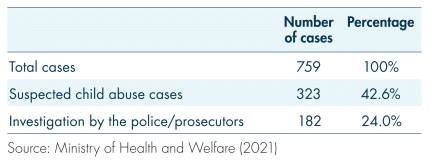
The goals of the early identification and intervention program are twofold: identifying children who died from abuse and preserving evidence for future prosecution, and categorizing severe child abuse for criminal investigation. In the cases where death has occurred, post-mortem examinations are undertaken to determine the cause. For children under 6, a mandatory death review meeting is held. From May 2019 to July 2021, prosecutors assessed 381 deaths, finding 74 (19.4%) involving child abuse. Cases with victims under 6 undergo further review for policy implications. For serious abuse cases, social workers and police evaluate the need for prosecutor involvement based on medical reports, and the different key players coordinate via social media.
Trauma-informed training programs are more bottom-up than top-down measures. They are promoted as the backbone of the child abuse services curriculum for all first responders, including social workers, the police, prosecutors, judges, and medical practitioners. In 2020, the Domestic Violence and Sexual Assault Centre in Kaohsiung and Kaohsiung Municipal Ta-Tung Hospital cooperated to develop trauma-informed care for treating child abuse victims. In 2021, the Taiwan Coalition Against Violence published the Trauma and Violence Informed Care (TCAV) Toolkit (TCAV, 2021). The TCAV has taken a victim-centred approach to trauma, and the violence-informed care network facilitates cooperation through a series of workshops and conferences.
In reviewing the seven strategies recommended by INSPIRE, we found that the current CPS in Taiwan fulfills many approaches but falls short in two areas, namely a safe environment and income and economic strengthening. In other areas, there is also room for improvement. For example, the Educational Fundamental Act bans corporal punishment by teachers, but not by parents. We need to build a consensus that punishment should no longer be used as an excuse for child cruelty. Supporting parents and caregivers is also needed at the community level, especially focusing on parenting and social skills (see Table II).
TABLE II INSPIRE Approaches and the Status of Taiwan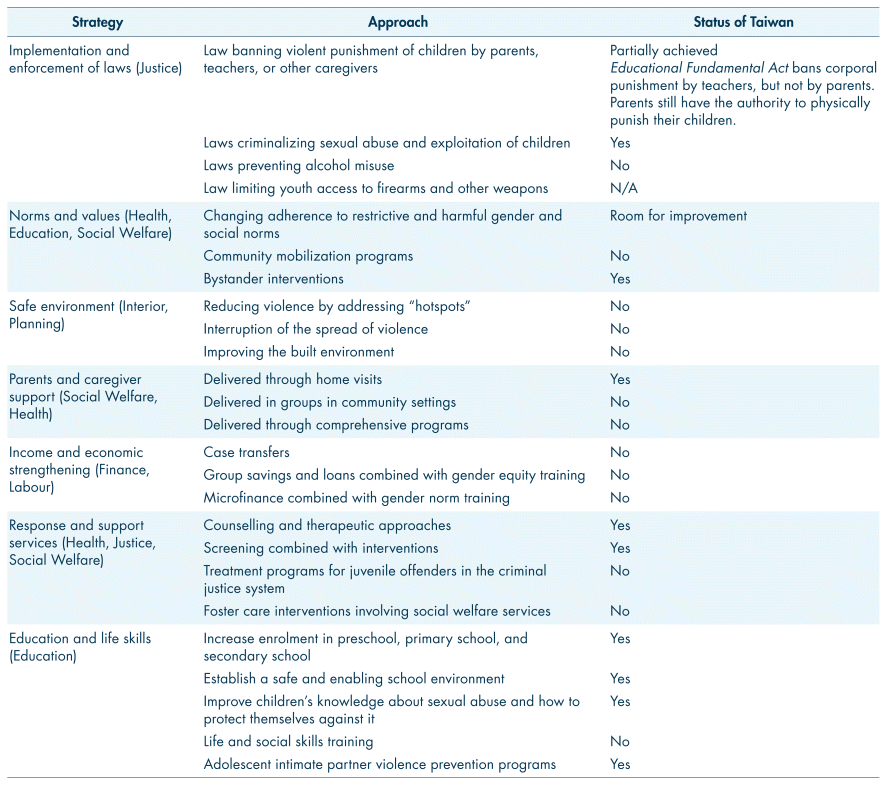
Based on the three projects described, the next challenge in terms of system change is “integration,” including shared goals, training, standards, and information and coordination between public sectors. We found that the 2017 social safety net programs created a clear process of care, including identification, reporting, referrals, investigation, treatment, and follow-up. Unfortunately, the CPS has not developed integration at each stage of the process. For example, the community-level case intake agencies have not developed any coordination for case assessment, safety plans and referrals with partner sectors. Creating a safe environment for children in need remains disproportionately shouldered by social workers with too little leverage available to them.
The early identification and intervention mechanisms are criticized for being too passive in prosecuting and punishing abusers, since the current focus is on serious child abuse and death cases. The limited number of child protection medical integrative centres also shows insufficient investment by the health department. Current trauma-informed resources for training first responders are funded by non-government organizations (NGOs), meaning that the majority of practitioners might not have access to the training resources. In addition, a trauma-informed system also needs to recognize that the abusers also need assistance for their traumatic experiences in their earlier life.
Devaney et al. (2022) categorize the child protection system into three types: protective risk management, welfare-oriented, and community-oriented. It seems that the current CPS in Taiwan has moved from risk management to more emphasis on the welfare- and community-oriented. This evolution of the system is in keeping with the current child protection trend of prevention through family support (Biehal, 2019; Devaney et al., 2022).
The three projects discussed respond to many priorities put forth by INSPIRE (see Table I). Trauma-informed training is used to raise awareness of child maltreatment among the first responders. Counselling and therapeutic approaches are also proposed through social welfare services in responding to reports. The social safety net project acts as the national coordination structure. Early identification and intervention create a mechanism to implement and enforce laws.
Although child abuse has been emphasized increasingly in the official agenda, the resources remain inadequate in responding to the seriousness of the problem. In the past three decades, the CPS has shifted its focus from treatment-oriented to prevention-oriented. However, it is only when the Ministry of Health and Welfare integrated the protection and prevention system in 2013 that the transfer of context and component became significant.
We, therefore, urge that the community safety net program reinforce the integration of social welfare, law enforcement, and public health as early as the process of identifying, assessing, and referring cases. It will require more pre-employment and onsite training with a trauma-informed element. Secondly, system changes to the CPS fall short of building evidence-based policy and practice. More studies are needed to find out what intervention models are used to support families with children in need. What are the intervention projects that work for preventing child abuse and neglect in our cultural context? In the new era of child protection, we need a comprehensive evaluation of the system reform in terms of its effectiveness and the extent of the balance between prevention, investigation, and treatment.
Funding: This project was partially funded by the Academy for the Judiciary, Ministry of Justice (grant number: 110-A-002)
The authors have no conflicts of interest to declare.
*Graduate School of Criminology, National Taipei University, New Taipei City, Taiwan;
†Department of Criminal Justice, Ming Chuan University, Taoyuan City, Taiwan.
This article is related directly to the First European Conference on Law Enforcement and Public Health (LEPH) held in Umea, Sweden in May 2023.
Biehal, N. (2019). Balancing prevention and protection: Child protection in England. In L. Merkel-Holguin, J. D. Fluke, R. D. Krugman (Eds.), National systems of child protection: Understanding the international variability and context for developing policy and practice (pp.51–73). Springer.
Crossref
Chou, C.-Y., Su, Y.-J., Wu, H.-M., Chen, S.-H. (2011). Child physical abuse and the related PTSD in Taiwan: The role of Chinese cultural background and victims’ subjective reactions. Child abuse neglect, 35(1), 58–68.
Crossref
Chou, I.-J., Kong, S.-S., Chung, T.-T., See, L.-C., Kuo, C.-F., Lin, J.-J., Wang, H.-S., Lin, K.-L., Hung, P.-C., PCHAN Study Group. (2019). Evaluation of the effect of the child protection acts on serious child physical abuse in Taiwan. Child abuse neglect, 95, 104066.
Crossref
Devaney, C., Shaw, A., Canavan, J., McGregor, C. (2022). Introducing systems change in child protection and welfare through prevention, partnership and family support. In J. Canavan, C. Devaney, C. McGregor, A. Shaw (Eds.), Understanding system change in child protection and welfare (pp. 1–15). Routledge.
Feng, J.-Y., Chen, S.-J., Wilk, N. C., Yang, W.-P., Fetzer, S. (2009). Kindergarten teachers’ experience of reporting child abuse in Taiwan: Dancing on the edge. Children and Youth Services Review, 31(3), 405–409.
Crossref
Feng, J.-Y., Huang, T.-Y., Wang, C.-J. (2010). Kindergarten teachers’ experience with reporting child abuse in Taiwan. Child Abuse Neglect, 34(2), 124–128.
Crossref
Feng, J.-Y., Levine, M. (2005). Factors associated with nurses’ intention to report child abuse: A national survey of Taiwanese nurses. Child Abuse Neglect, 29(7), 783–795.
Crossref
Hsu, J.-Y., Cheng, L.-C. (2003). Risk assessment and treatment decision on child abuse cases in Taiwan. Social Policy Social Work, 7(1), 163–213.
Sanders, R., Jackson, S., Thomas, N. (1996). The balance of prevention, investigation, and treatment in the management of child protection services. Child Abuse Neglect, 20(10), 899–906.
Crossref
Sheu, C.-J., Shiew, W. Y., Huang, L., Lu, Y.-F., Yu, Y.-J. (2021). National Crime Victimization Report 2021: The first preliminary investigation of the trend and victim services from official records.
TCAV. (2021). Trauma and Violent Informed Care Toolkit. Taiwan Coalition Against Violence. http://www.tcav.org.tw/OnePage.aspx?tid=156id=298
Wang, D.-S., Chung, C.-H., Chang, H.-A., Kao, Y.-C., Chu, D.-M., Wang, C.-C., Chen, S.-J., Tzeng, N.-S., Chien, W.-C. (2020). Association between child abuse exposure and the risk of psychiatric disorders: A nationwide cohort study in Taiwan. Child Abuse Neglect, 101, 104362.
Crossref
Wang, M.-Y. (2021). Children and Young People Protection System (Investigation Report NO:110-0019). The Control Yuan, ROC (Taiwan). https://www.cy.gov.tw/CyBsBoxContent.aspx?n=133s=17712
WHO. (2020). Global status report on preventing violence against children 2020. World Health Organization.
WHO. (2021). WHO global plan of action to strengthen the role of the health system within a national multisectoral response to address interpersonal violence, in particular against women and girls, and against children. World Health Organization.
WHO. (2022). INSPIRE: Seven strategies for ending violence against children. Uptake between 2016 and 2021. World Health Organization.
Wu, M.-F., Lu, T.-H., Lin, C.-J., Feng, J.-Y. (2015). Risk factors and physical signs of child abuse in hospitalized children in Taiwan. Children and Youth Services Review, 58, 137–141.
Crossref
This work is licensed under the Creative Commons Attribution-NonCommercial-NoDerivatives 4.0 International License. To view a copy of this license, visit http://creativecommons.org/licenses/by-nc-nd/4.0/. For commercial re-use, please contact sales@sgpublishing.ca.
Journal of CSWB, VOLUME 8, NUMBER 4, December 2023